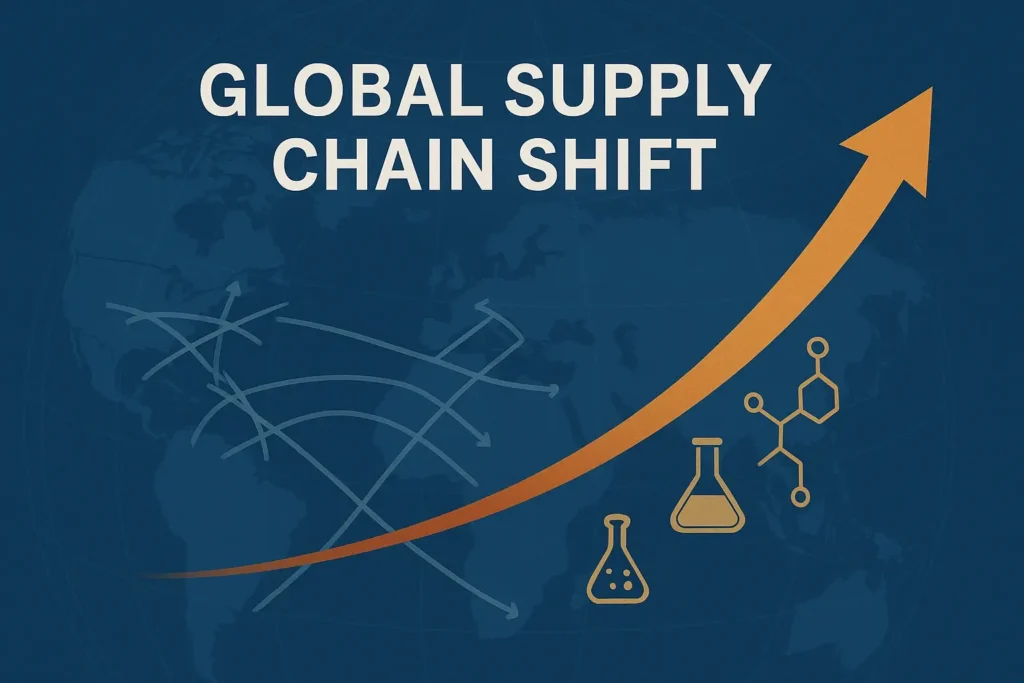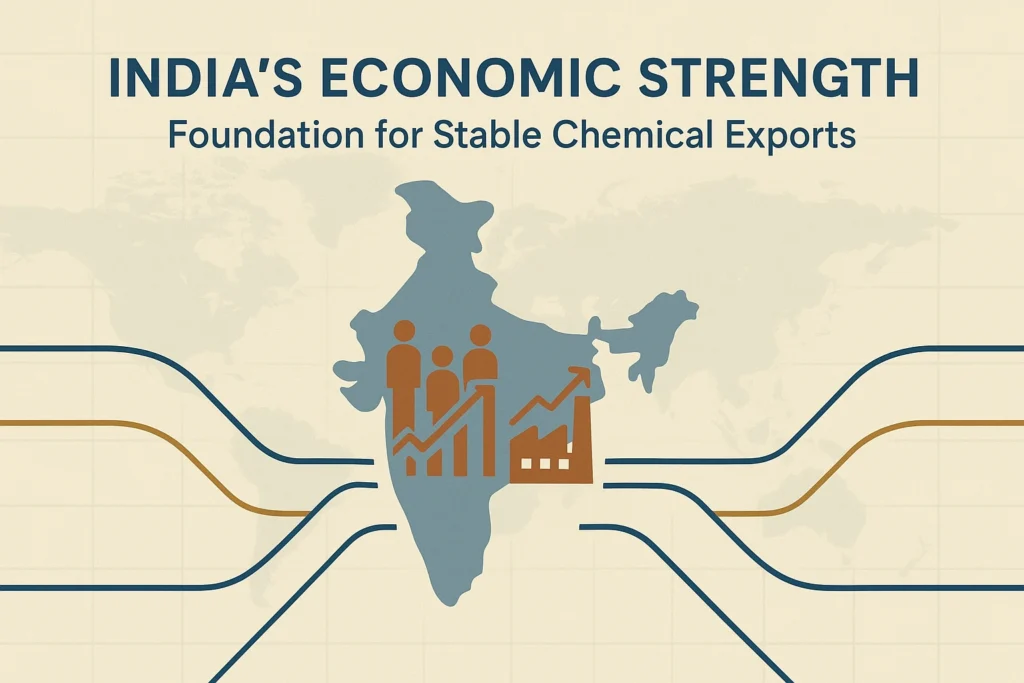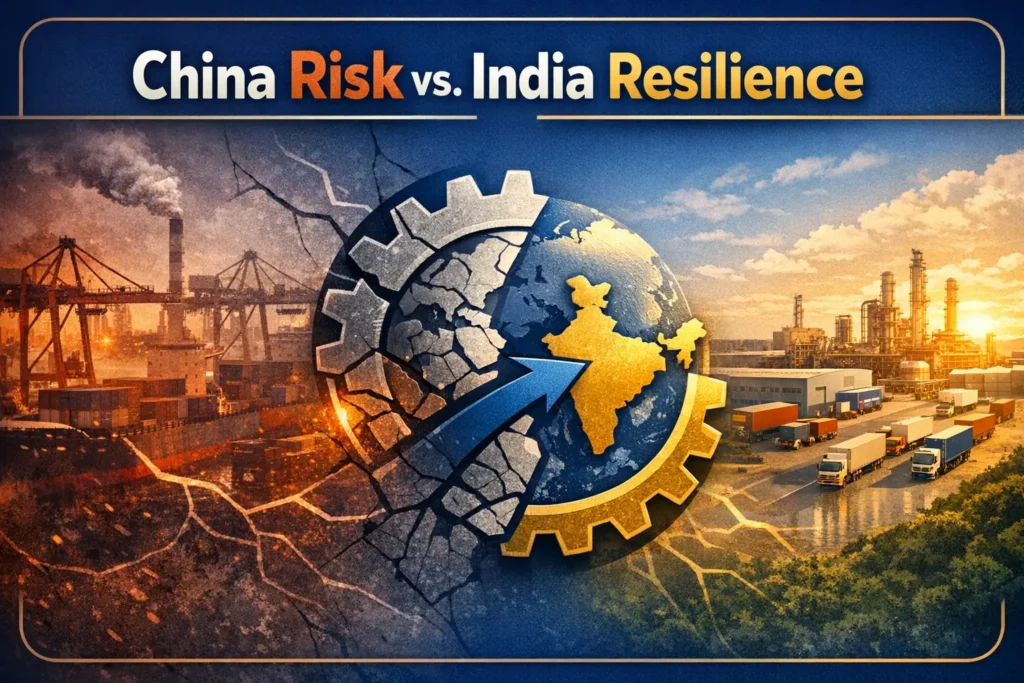
You just got the alert. A key port in Eastern China is facing an unexpected lockdown, halting shipments for the next three weeks. Your production line relies on a specialty chemical that only ships from that port. Suddenly, your entire quarter is at risk, and you’re left scrambling for answers.
This scenario isn’t hypothetical anymore; it’s the new reality for procurement leaders. Over-reliance on a single sourcing region has shifted from a cost-saving strategy to a high-stakes gamble. As a result, the “China +1” strategy isn’t just a buzzword; it’s an urgent business imperative, and India has emerged as the leading contender. But is shifting your supply chain as simple as changing the country of origin on a purchase order?
The answer is far more complex. Building true supply chain resilience requires a deep understanding of the geopolitical, regulatory, and industrial landscapes of both nations. It’s about moving beyond simply finding a new supplier and instead, building a truly diversified and shock-proof sourcing network.
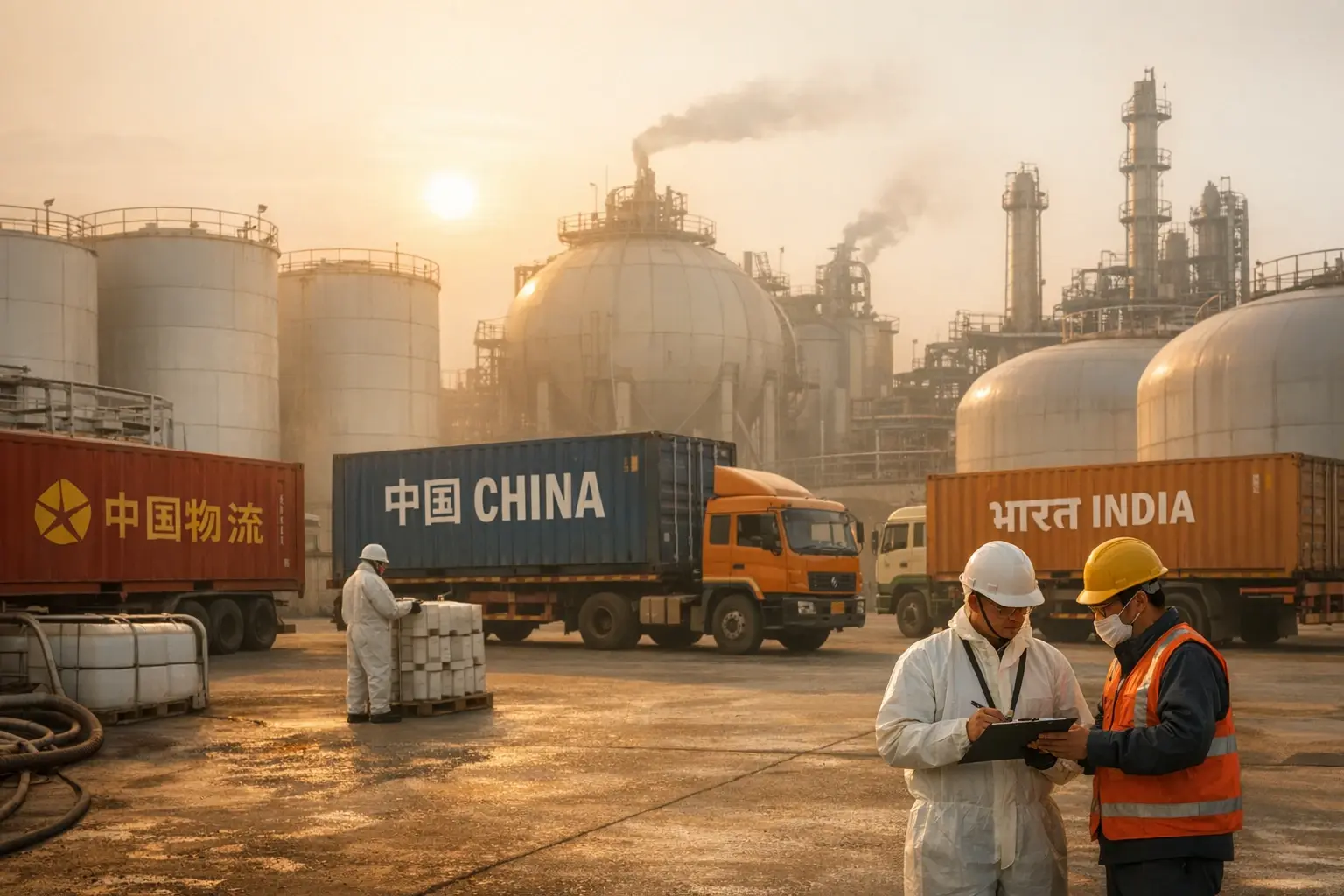
The Shifting Tectonic Plates: Why Geopolitical Risk Matters Now
For decades, China has been the undisputed “world’s factory,” especially for the chemical industry. Research from intelligence firm Valona highlights what they call the “44% problem”—China’s staggering control over 44% of global chemical production. This concentration creates a massive single point of failure.
Geopolitical risk isn’t just about headlines and trade wars. It translates into tangible business disruptions:
- Sudden Tariffs: Trade disputes can add unexpected costs, eroding your margins overnight.
- Export Controls: Nations may restrict the export of critical chemicals for national security reasons, cutting off your supply.
- Regulatory Shifts: Abrupt changes in environmental or safety regulations can halt production at your supplier’s facility.
- Port Closures & Logistical Snarls: As we’ve seen, regional tensions or domestic policies can shut down critical infrastructure.
This volatility has pushed companies to adopt a China +1 strategy, where they maintain a presence in China while actively developing a second supply chain in another country. India, with its democratic government, growing manufacturing base, and large talent pool, is often the first choice. But a smart evaluation goes much deeper.
India vs. China: A Head-to-Head Comparison for Chemical Sourcing
Choosing your “plus one” requires a careful, data-driven comparison across several key domains. Here’s how India and China stack up for chemical procurement.
Geopolitical Stability & Foreign Relations
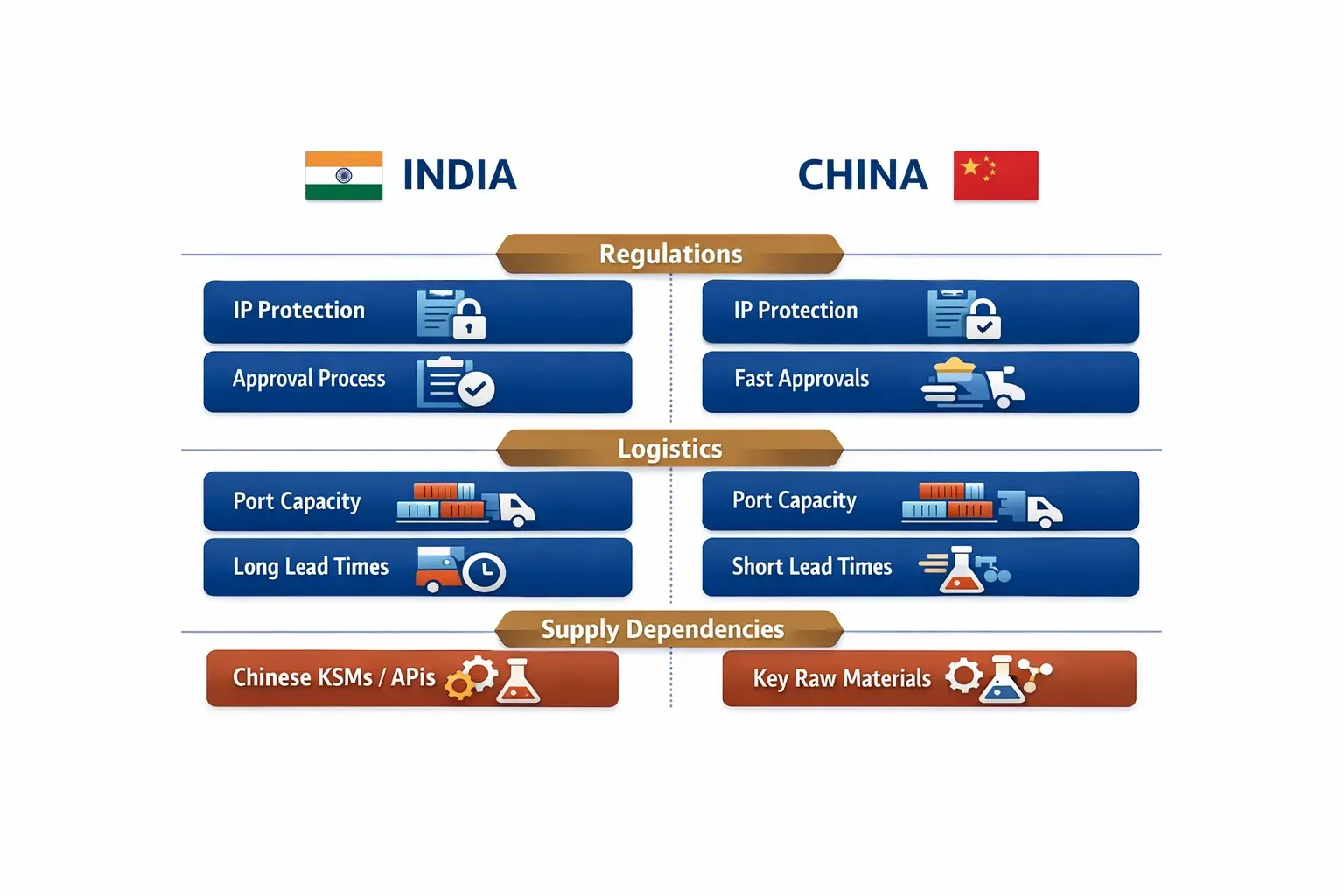
China: Operates under a single-party system, which allows for rapid, decisive policy implementation and massive infrastructure projects. However, this also creates opacity. Tensions with the U.S. and neighbors, particularly concerning Taiwan, pose significant risks. A conflict in the Taiwan Strait, as Valona Intelligence notes, could severely disrupt global supply chains for everything from specialty chemicals to electronics.
India: As the world’s largest democracy, India’s political landscape is more transparent but can also be slower to enact change. It maintains strategic partnerships with Western nations (e.g., the “Quad” alliance), making it a key player in “friend-shoring” initiatives. While it has its own regional tensions, its alignment with Western democracies is often seen as a stabilizing factor for long-term partnerships.
Regulatory Frameworks & IP Protection
China: Has made strides in strengthening environmental regulations (the “Blue Sky” policy), which has led to factory closures and supply disruptions. Intellectual Property (IP) protection remains a significant concern for companies with proprietary chemical formulations.
India: India’s regulatory environment is built on a common law system, which is more familiar to Western companies. While bureaucracy can be a challenge, the legal framework for IP protection is robust. For chemical sourcing, this means a more predictable environment for compliance support and protecting sensitive product information.
Infrastructure & Logistics Maturity
China: Possesses world-class infrastructure. Its ports, highways, and rail networks are incredibly efficient, enabling short lead times and reliable logistics for massive volumes.
India: Is rapidly investing in its infrastructure through initiatives like the National Logistics Policy. While it still lags behind China in overall maturity, major ports and industrial corridors are highly capable. The key is working with a partner who understands the nuances of Indian export logistics to navigate potential bottlenecks.
Cost Structures & Labor Dynamics
China: Labor costs have been rising steadily for years, eroding its initial cost advantage. The workforce is highly skilled and efficient, but demographic shifts are creating long-term labor pressures.
India: Offers a significant cost advantage with a massive, young, and increasingly skilled workforce. While manufacturing productivity is still catching up to China’s, the combination of lower labor costs and government incentives makes it an attractive financial alternative.
The ‘Aha’ Moment: Uncovering Hidden Dependencies in Your ‘China +1’ Strategy
Here’s the critical insight that many procurement teams miss: diversifying to India doesn’t automatically mean you’ve de-risked from China. This is because the global chemical supply chain is a deeply interconnected web.
A Brookings Institution report highlights a crucial vulnerability: India’s pharmaceutical industry, a major global supplier, is heavily dependent on China for Key Starting Materials (KSMs) and Active Pharmaceutical Ingredients (APIs). This dependency extends to many other chemical sectors. Your new Indian supplier might be sourcing critical raw materials or intermediate chemicals from China.
What this means for you: A disruption in China could still impact your “diversified” Indian supply chain. True resilience isn’t about switching flags on a map; it’s about gaining end-to-end visibility. You need to ask your potential partners: Where do you source your raw materials from?
This is where having on-the-ground expertise becomes invaluable. A partner with a deep vetted supplier network can perform the necessary audits to map the supply chain beyond just your Tier 1 supplier, identifying and mitigating these hidden, secondary risks.
A Practical Framework for De-risking Your Chemical Supply Chain
Inspired by frameworks from MIT Sloan Management Review and other leading institutions, here’s an actionable approach to building a resilient sourcing strategy.
Step 1: Understand and Map Your Entire Value Chain
Go beyond your direct (Tier 1) supplier. Work with your partners to identify your Tier 2 and Tier 3 suppliers—the companies that provide the raw materials for your finished chemical. This is the only way to uncover hidden dependencies on a single region like China.
Step 2: Quantify Your Exposure
Once mapped, analyze your risks. What percentage of your raw materials originates from a high-risk geopolitical zone? What would be the financial impact of a 30-day disruption? Assigning a number to the risk transforms it from an abstract fear into a concrete business case for action.
Step 3: Develop a Diversification Scorecard
Evaluate potential partners in India (or other locations) against a consistent set of criteria. Don’t just look at price. Your scorecard should include:
- Supplier Qualification: Technical capabilities, financial stability, and track record.
- Quality Assurance: Processes for batch testing, COA/SDS management, and compliance with Western standards.
- Logistical Competence: Expertise in handling hazardous materials, GHS-compliant labeling, and navigating customs.
- Communication: Responsiveness, transparency, and cultural alignment.
Step 4: Build Relationships with Vetted, On-the-Ground Partners
You cannot manage geopolitical risk from a desk thousands of miles away. True resilience comes from having a trusted partner on the ground who can provide real-time intelligence, conduct factory audits, oversee quality assurance, and manage logistics. This transforms your supply chain from a reactive liability into a proactive, strategic asset.
Frequently Asked Questions (FAQ)
What is geopolitical risk in a supply chain?
It refers to disruptions caused by political events, government policies, or conflicts between nations. For chemical sourcing, this can mean anything from tariffs and trade wars to export bans, regulatory changes, and port shutdowns that stop the flow of goods.
What are the biggest risks of sourcing from India?
While India offers many advantages, challenges can include navigating bureaucracy, ensuring consistent quality across different suppliers, and managing logistics in a country with developing infrastructure. These risks are best mitigated by working with an experienced partner who has a vetted supplier network and on-the-ground operational teams.
Isn’t diversifying my supply chain expensive and complicated?
The initial investment in finding and qualifying new suppliers can be significant. However, the cost of not diversifying—such as a complete production shutdown due to a single point of failure—is far higher. A phased approach, starting with one or two critical chemicals, can make the process more manageable.
The Path Forward: Building a Future-Proof Supply Chain
The global supply chain is undergoing a once-in-a-generation realignment. The question is no longer if you should diversify away from China, but how and with whom.
India presents a powerful strategic alternative, offering a unique combination of scale, skill, and geopolitical alignment. However, success requires navigating its unique complexities with diligence and local expertise. By understanding the true nature of geopolitical risk, uncovering hidden dependencies, and building partnerships based on transparency and trust, you can move beyond simply reacting to crises and start architecting a chemical supply chain that is truly resilient, reliable, and ready for the future.