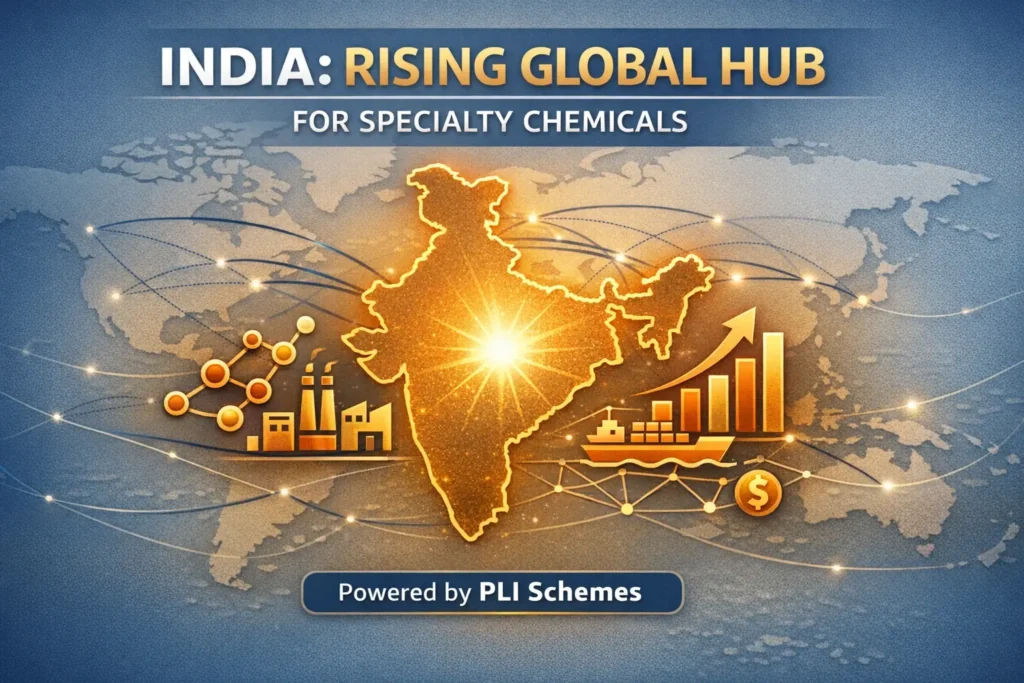
The phrase “supply chain disruption” has gone from industry jargon to a business page headline. For procurement leaders in the chemical sector, the pressure is on to find reliable, high-quality alternatives and build resilience. As companies actively pursue a “China +1” strategy, one country is making a strategic, government-backed play to become the world’s next chemical manufacturing powerhouse: India.
At the heart of this transformation is the Production Linked Incentive (PLI) scheme, a powerful policy designed to attract investment and supercharge domestic production. But what is it, and more importantly, how does it directly impact your search for speciality chemical suppliers?
Let’s break it down. Think of it less as a complex government policy and more as a clear signal to the world: India is open for business and ready to compete.
First, What Exactly Is the PLI Scheme?
Launched as a cornerstone of the ‘Atmanirbhar Bharat’ (Self-Reliant India) initiative, the Production Linked Incentive scheme is refreshingly straightforward in its goal: to reward companies for increasing their manufacturing output within India.
Instead of just offering tax breaks for setting up a factory, the PLI scheme pays an incentive (typically 4-18%) directly on the incremental sales of goods manufactured in India over a base year. In simple terms: the more you produce and sell, the more you earn back from the government.
This policy has already been rolled out across 14 key sectors, from electronics to pharmaceuticals, with a total outlay of over $26 billion. The results have been tangible, with electronics exports surging and India reducing its dependency on imported Active Pharmaceutical Ingredients (APIs). Now, that same energy is being focused on the chemical industry.
Why Specialty Chemicals?
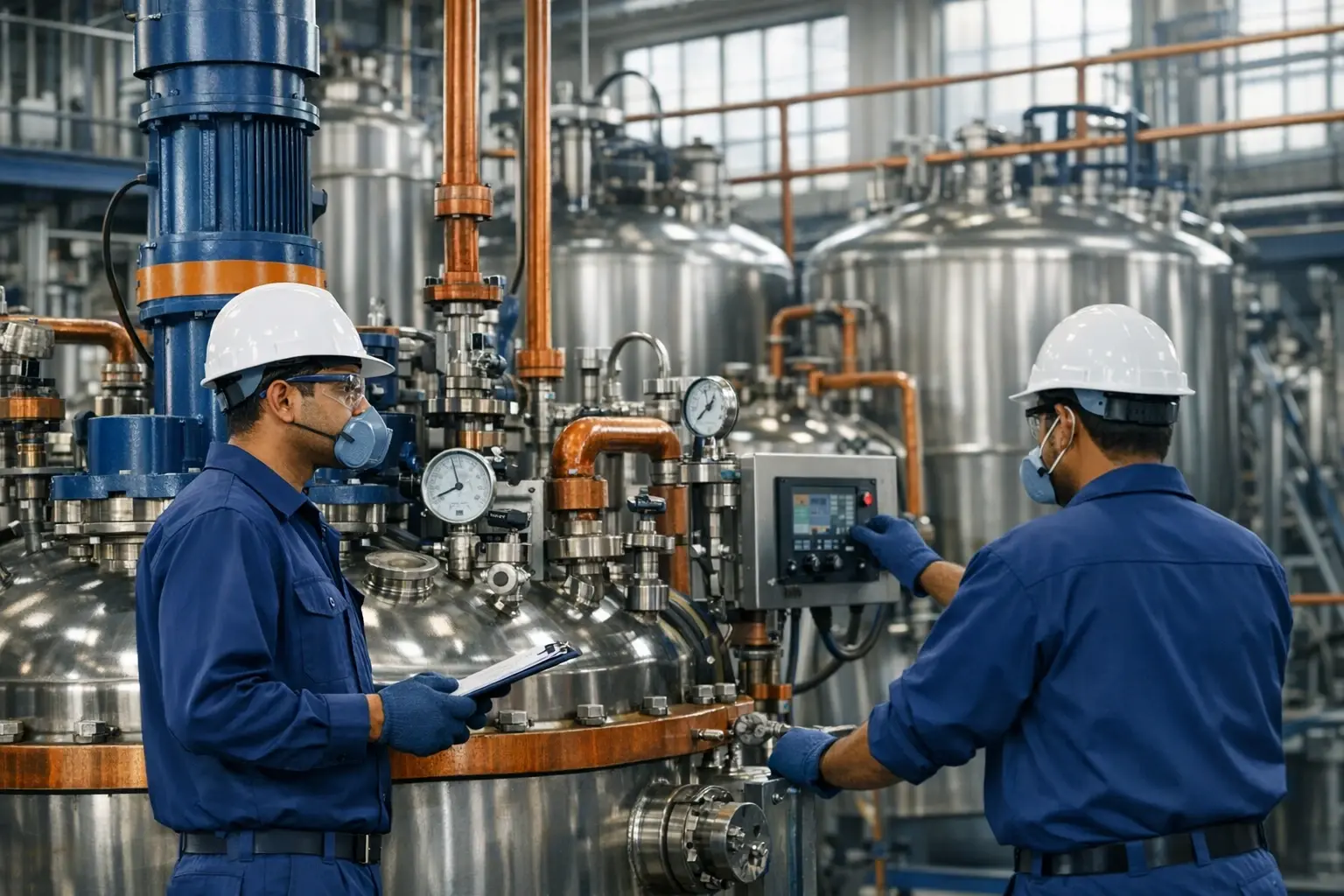
Specialty chemicals are the high-value, performance-driven ingredients that form the backbone of countless industries—from the coatings on our cars to the surfactants in our soaps and the agrochemicals that protect our crops.
They are critical, complex, and represent a massive opportunity for India to move up the global value chain. The Indian government recognizes this and is strategically positioning the country to become a global hub for their production.
PLI for Specialty Chemicals: The Current Landscape
This is where many international procurement managers get stuck. If you search for a dedicated PLI scheme for “Specialty Chemicals,” you might not find a single, official announcement. And you’d be right.
As of today, a broad, dedicated PLI scheme specifically for the entire chemicals and petrochemicals sector is still under active consideration by the Indian government.
However, this is the “aha moment” many miss: the specialty chemical sector is already benefiting significantly from existing, approved PLI schemes.
Because specialty chemicals are essential inputs for other priority industries, savvy chemical manufacturers are leveraging the incentives from related sectors. Here’s how:
- PLI for Pharmaceuticals & KSMs: The PLI for Active Pharmaceutical Ingredients (APIs) and Key Starting Materials (KSMs) has been a game-changer. Many of these KSMs are, in fact, advanced specialty chemicals. Indian chemical companies producing these building blocks for the pharma industry are eligible for and are receiving PLI benefits.
- PLI for Advanced Chemistry Cell (ACC) Batteries: The global push for electric vehicles and energy storage has ignited demand for ACC batteries. The PLI scheme for this sector directly benefits manufacturers of specialty chemicals used in electrolytes, binders, and cathode materials.
- PLI for Specialty Steel: This scheme includes incentives for coated and plated steel products, which rely heavily on specialty chemicals for coatings, alloys, and treatment processes.
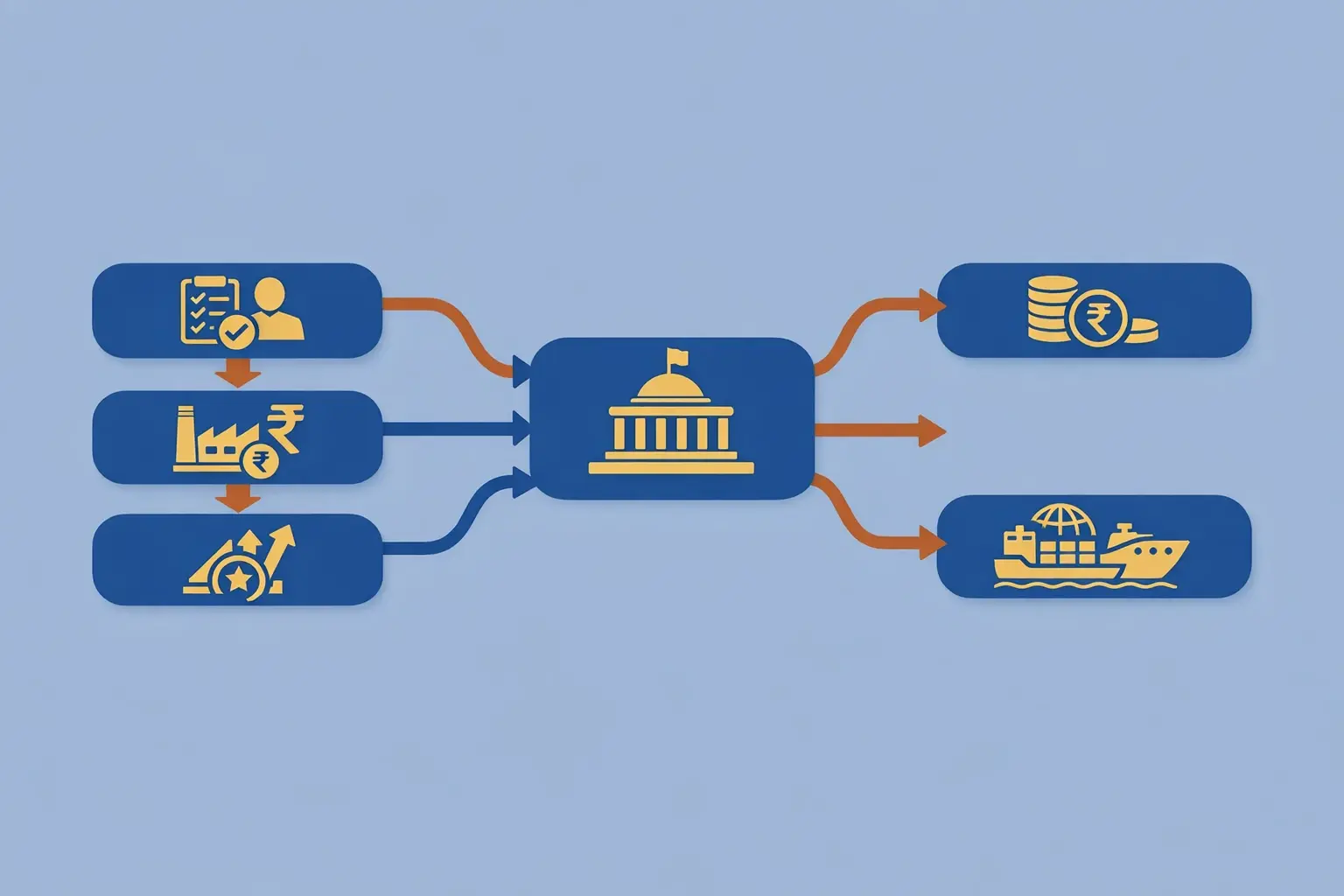
For a procurement leader, this means your potential Indian suppliers may already be scaling up production, investing in new technology, and improving their cost-competitiveness thanks to these indirect PLI benefits. A thorough supplier Qualification process should include asking potential partners how they are engaging with these government initiatives.
How PLI Directly Fuels Your “China +1” Strategy
The PLI scheme isn’t just a domestic policy; it’s a strategic move designed to integrate India into global supply chains. For companies diversifying away from China, this has profound implications.
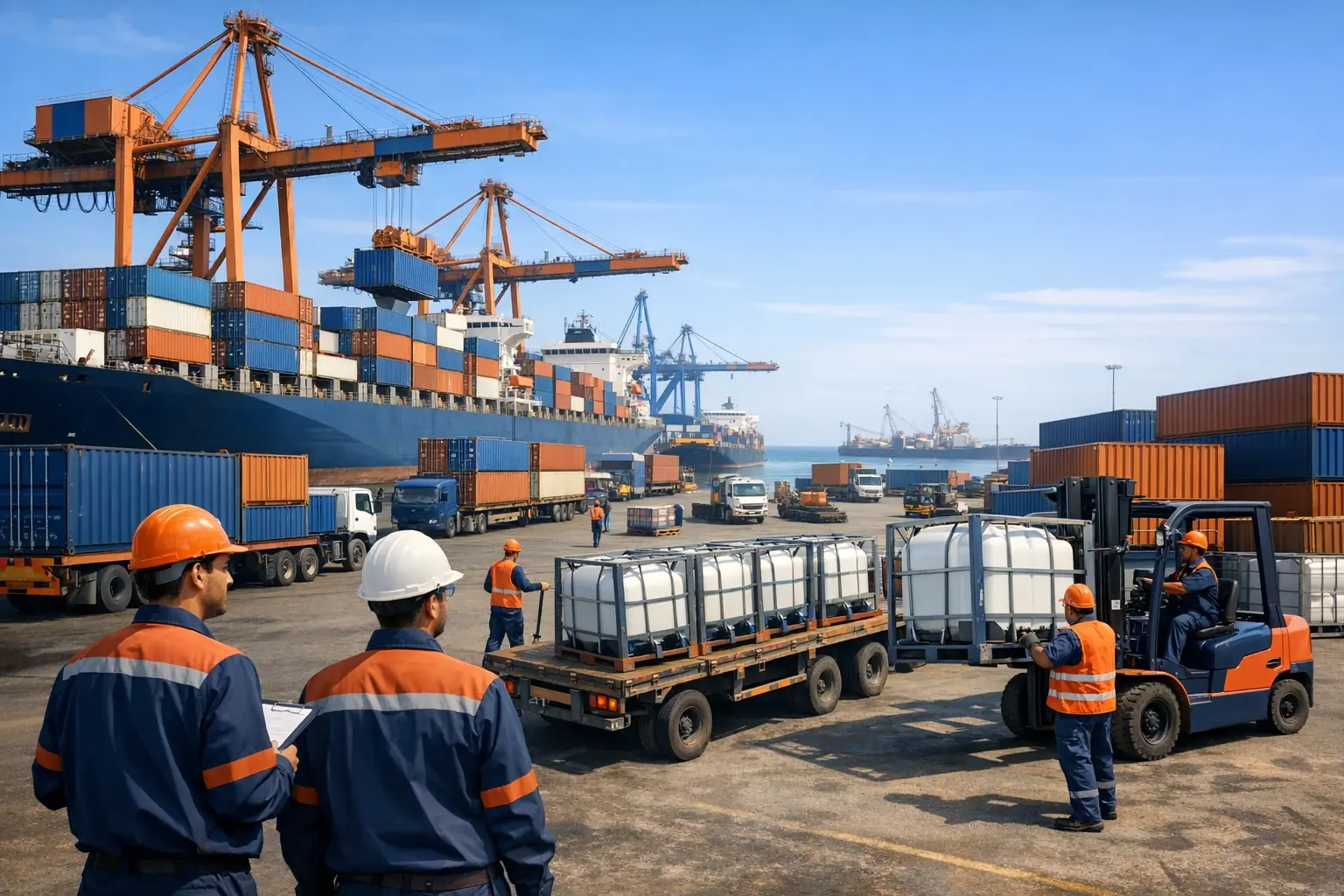
1. De-risking and Diversification: The most obvious benefit. PLI encourages the creation of large-scale manufacturing capacities in India, providing a viable, stable, and democratic alternative for your sourcing needs.
2. Cost Competitiveness: By directly incentivizing sales, the PLI scheme helps Indian manufacturers mitigate the high initial capital costs associated with building world-class facilities. This translates into more competitive pricing without sacrificing quality.
3. Quality and Technology Upgrades: A key requirement for PLI eligibility is often a minimum investment threshold in new plant and machinery. This pushes companies to adopt modern technology, leading to better process controls, higher purity levels, and more consistent batches—a critical factor that requires robust quality assurance checks.
4. Building a Resilient Ecosystem: The scheme incentivizes the entire value chain. As large manufacturers scale up, a supporting ecosystem of raw material suppliers, logistics providers, and R&D labs grows around them, creating a more robust and self-sufficient industrial base. This makes the entire sourcing process, from production to export logistics, more streamlined and reliable.
Key Takeaways for Procurement Leaders
Navigating a new sourcing destination can be complex, but understanding the policy drivers is the first step toward making a strategic decision.
- Look Beyond the Headlines: Don’t wait for a dedicated “Specialty Chemical” PLI. The opportunity is already here, embedded in related schemes.
- Ask the Right Questions: When vetting potential suppliers, inquire about their involvement in PLI. Are they a supplier to a PLI-beneficiary in the pharma or battery sector? Their participation is a strong signal of their growth ambitions and alignment with national priorities.
- Focus on the Long-Term: The PLI scheme is a multi-year commitment from the Indian government. Companies investing now are building capacity for the future, making them stable, long-term partners.
- Partner for Success: The Indian landscape has its own unique regulatory and operational nuances. Working with a partner on the ground who understands both Western business expectations and the local ecosystem can bridge the gap, ensuring transparency from sourcing to delivery.
India’s journey to becoming a specialty chemical giant is well underway, and the PLI scheme is the fuel in its engine. For procurement leaders willing to look closer, it represents a powerful opportunity to build a more resilient, competitive, and diversified global supply chain.
Frequently Asked Questions (FAQ)
Q1: What is the main objective of India’s PLI scheme?The primary goal is to make India a more attractive manufacturing destination by providing a financial incentive on incremental sales. This boosts domestic production, reduces import dependency, creates jobs, and attracts foreign investment.
Q2: How is the PLI incentive calculated?The incentive is calculated as a percentage (usually 4-18%) of the incremental sales of manufactured goods over a defined base year. For example, if a company’s sales grow by $1 million over the base year, they could receive a $40,000-$60,000 incentive, depending on the scheme’s specifics.
Q3: Is the PLI scheme only for Indian companies?No, the scheme is open to both domestic and foreign companies that register and manufacture in India. This is a key part of its strategy to attract global leaders to set up production facilities in the country.
Q4: What are the main challenges for chemical companies trying to leverage PLI?Challenges include meeting the significant minimum investment thresholds, ensuring consistent raw material (feedstock) supply, navigating complex environmental compliance, and competing with established global players. This is why a phased, strategic approach is essential.
Q5: Besides PLI, what other advantages does India offer for chemical sourcing?India offers a large pool of skilled chemists and engineers, a strong domestic market, a robust legal and IP framework, and a government focused on improving the ease of doing business. When considering a custom Procurement strategy, these factors create a compelling case alongside the PLI benefits.