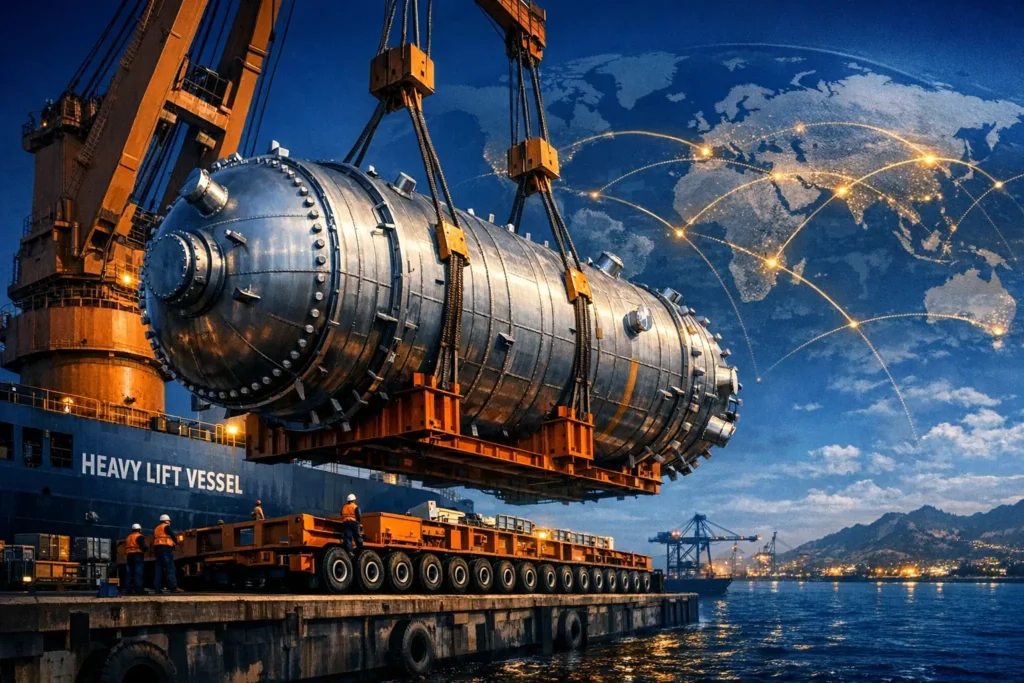
Imagine this: a 72-ton, multi-million-dollar chemical reactor, the new heart of your manufacturing plant, is ready for shipment from a factory in Gujarat, India. But getting it to your facility in Houston isn’t like sending a standard container. Every kilometer of road, every bridge, every permit, and every port operation represents a critical point of failure. One miscalculation in the planning phase could lead to catastrophic delays, costing hundreds of thousands in unforeseen fees.
This is the high-stakes world of heavy lift and project cargo. As India solidifies its position as a global manufacturing powerhouse for industrial components, understanding how to navigate its unique logistics landscape is no longer an option—it’s a critical business advantage.
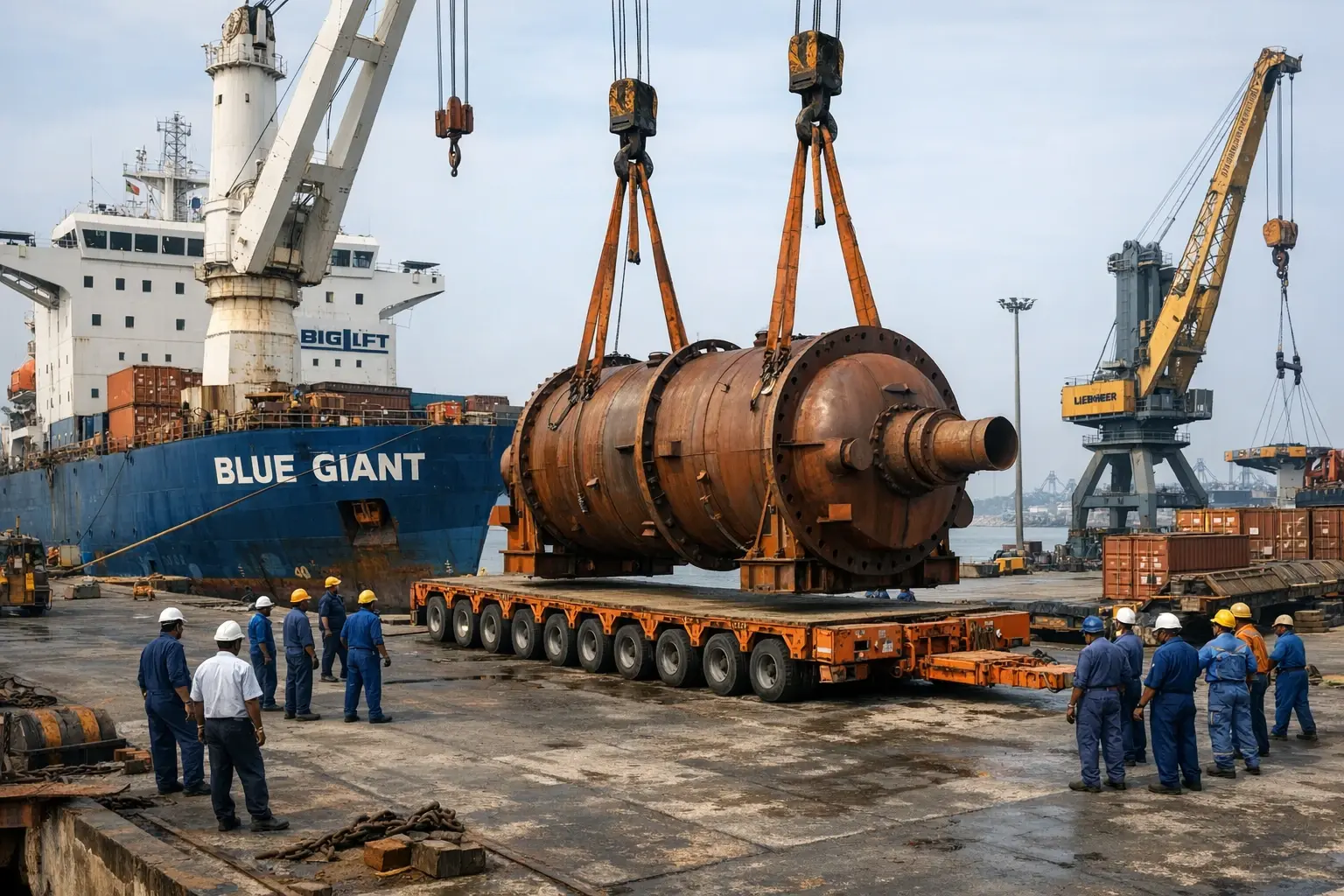
This guide is designed to be your first touchpoint, transforming complex industry jargon into a clear roadmap. Let’s walk through what it really takes to move giants from India to the world.
What Exactly is Heavy Lift & Project Cargo? (And Why It’s Different in India)
Before we dive into the strategy, let’s get our terms straight. You’ll often hear these phrases used together, but they mean slightly different things.
- Project Cargo: Think of this as the entire puzzle. It includes all the materials, equipment, and components needed for a large-scale industrial project, like building a new factory or an energy plant. It’s a coordinated logistical symphony, not just a single shipment.
- Heavy Lift: These are the giant puzzle pieces. A heavy lift item is a single piece of cargo that is exceptionally heavy or large, like a turbine, generator, or industrial boiler. Its sheer size or weight means it cannot be broken down and must be transported as one unit.
- Over Dimensional Cargo (ODC): This is the official term used in India for any cargo that exceeds the standard dimensions or weight allowed on roads. Moving ODC requires special permits and escorts.
The “aha moment” for many procurement leaders is realizing that the rules of standard freight simply don’t apply here. You can’t just book this on a website. Success depends on custom-engineered solutions, deep local knowledge, and military-grade planning—especially in India. The country’s diverse geography, monsoon seasons, and multi-layered regulatory system add complexities that can quickly derail a project planned from afar.
The End-to-End Journey: Navigating India’s Project Cargo Landscape
Shipping project cargo from India is a multi-phased operation where every step builds on the last. Missing a detail in Phase 1 can cause a complete standstill in Phase 3.
Phase 1: Meticulous Planning – The Route Survey
Long before a single bolt is loaded, the real work begins. A route survey isn’t just checking Google Maps; it’s a boots-on-the-ground engineering assessment of the entire path from the factory to the port.
In India, this is non-negotiable. Surveyors physically inspect every kilometer of the proposed route, looking for:
- Road Conditions: Pavement strength, turning radii at intersections, and overall stability.
- Obstacles: Low-hanging power lines, narrow culverts, weak bridges, and overhead signboards that must be temporarily removed.
- Local Factors: Village restrictions, timing limitations for movement, and the immense impact of the monsoon season, which can render roads impassable for months.
This survey determines the feasibility of the project and dictates the type of equipment needed for the journey.
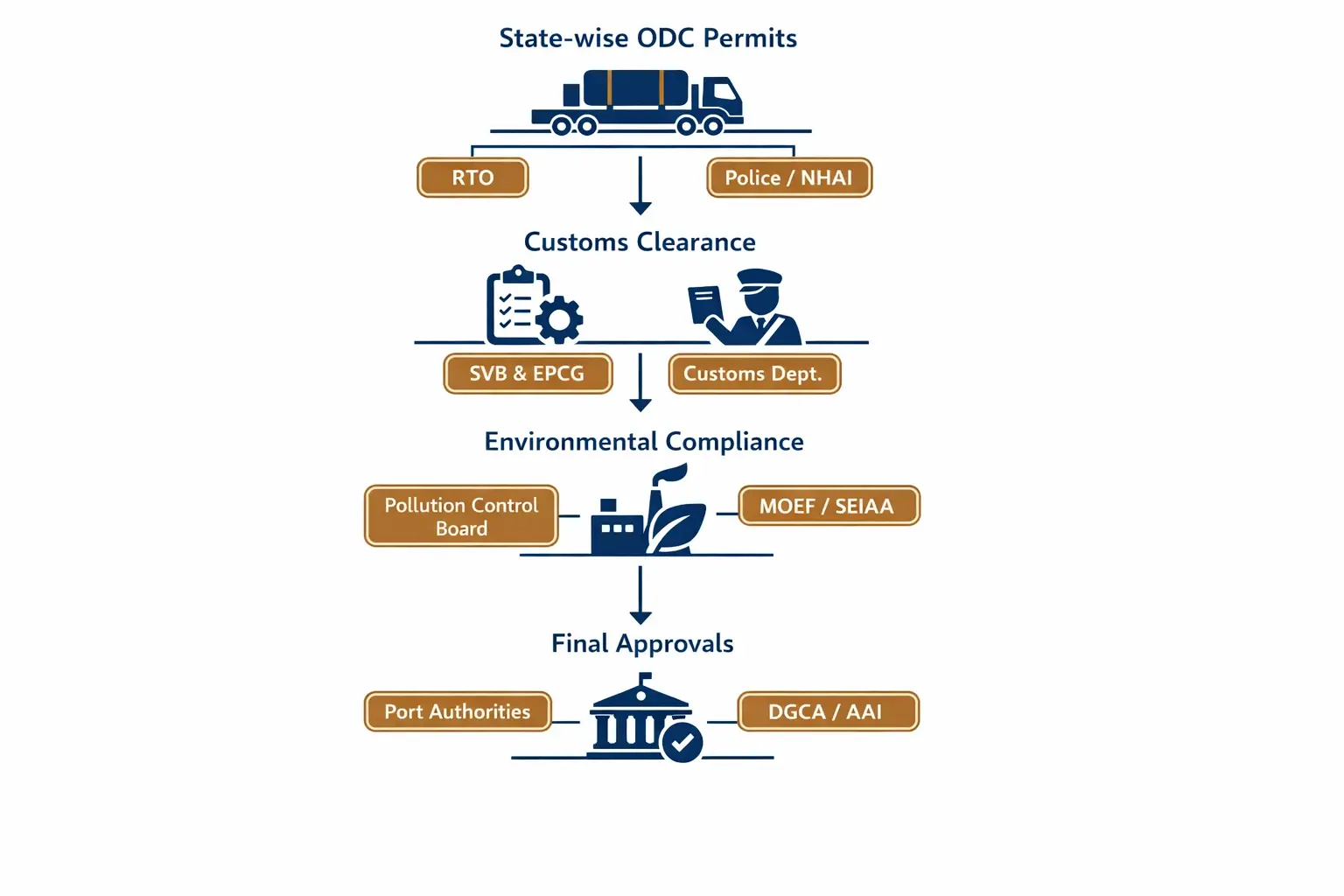
Phase 2: The Regulatory Maze – Permits and Customs in India
This is often where global companies face the biggest hurdles. India’s regulatory landscape is managed at both the national and state levels, creating a complex web of required approvals.
- State-Wise ODC Permits: Moving oversized cargo across India isn’t covered by a single national permit. Each state the cargo passes through requires its own ODC permit from authorities like the Public Works Department (PWD) or the National Highways Authority of India (NHAI). This requires intricate coordination, as a delay in one state can have a domino effect.
- Customs Clearance Nuances: Standard customs processes don’t always apply. You’ll encounter India-specific frameworks like the Special Valuation Branch (SVB), which investigates transactions between related parties, and schemes like Project Imports Registration, which can offer duty concessions but require extensive upfront documentation. Getting this wrong can lead to your multi-million dollar asset sitting at a port, racking up demurrage fees that can exceed ₹5-10 lakh ($6,000-$12,000) per day.
Navigating this maze requires deep expertise and robust compliance support to ensure every document is in perfect order.
Phase 3: The Right Tools for the Job – Carriers & Port Operations
You can’t move a 100-ton press in a standard truck. This phase is about deploying highly specialized equipment.
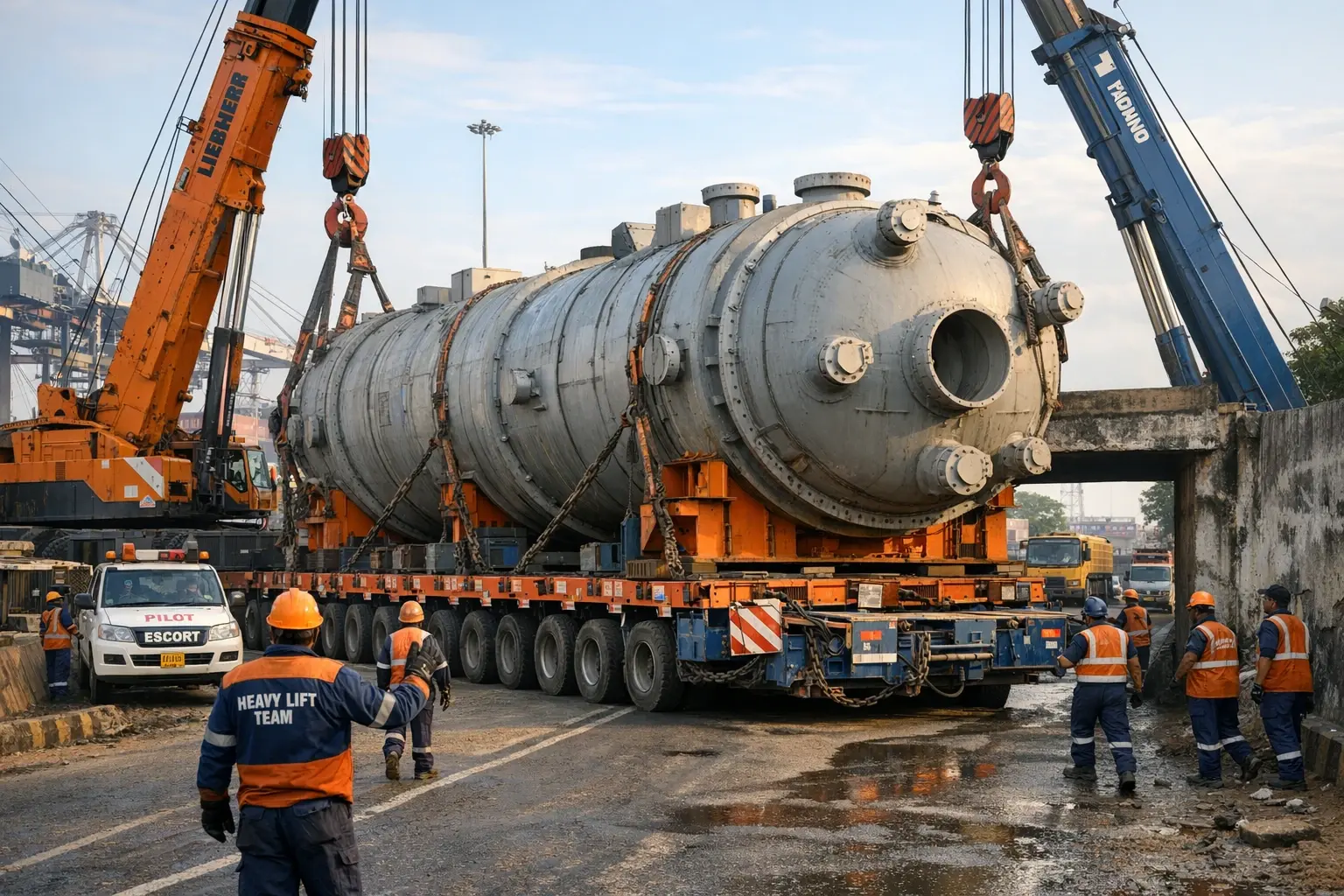
- On Land: Self-Propelled Modular Transporters (SPMTs) are often used. These are multi-axle, computer-controlled platforms that can distribute immense weight and maneuver with incredible precision.
- At Sea: The cargo is loaded onto specialized vessels like breakbulk carriers (with their own powerful cranes) or Roll-on/Roll-off (Ro-Ro) ships designed for wheeled cargo.
- Indian Port Capabilities: Not all ports are created equal. Major Indian ports like JNPA (Mumbai), Mundra, Pipavav, and Hazira have heavy-lift capabilities, but they differ in equipment availability, berth depth (draft), and connectivity to inland transport networks. Choosing the right port is a strategic decision based on your cargo and its origin.
Phase 4: Connecting the Dots – Multimodal Transport
The journey is rarely a straight line. It’s an integrated strategy combining road, rail, and sea. India’s infrastructure, particularly the new Dedicated Freight Corridors (DFC), is a game-changer, enabling faster and more reliable movement of heavy cargo by rail from industrial hubs to coastal ports.
A seamless export logistics plan ensures smooth transitions between these modes, minimizing handling and risk from the factory floor to the final destination.
Top 5 Mistakes to Avoid When Shipping Project Cargo from India
Learning from others’ missteps can save you millions. Here are the most common pitfalls we see.
- Underestimating the Route Survey: Assuming a major highway is clear without a physical check. A new, unmapped flyover or a sudden local road closure can bring your entire project to a halt.
- Ignoring the Permit Timeline: Treating state-level permits as a quick formality. In reality, they can take weeks of persistent follow-up and are subject to bureaucratic delays.
- Providing Inaccurate Cargo Specs: Being off by just a few centimeters on the technical drawings can be the difference between clearing a bridge and needing a complete, costly re-route.
- Misunderstanding Customs Nuances: Using the wrong HS code or being unprepared for an SVB inquiry can trap your cargo in a regulatory limbo, triggering massive port storage and detention fees.
- Choosing a Partner Without On-Ground India Expertise: A global forwarder without a dedicated team in India won’t have the local relationships or real-time knowledge to navigate unforeseen challenges. Just as you’d perform rigorous supplier qualification for a critical chemical, the same diligence is required for your logistics partner.
Frequently Asked Questions (FAQ) About Indian Heavy Lift Shipping
What is the difference between heavy lift and project cargo?
Project cargo is the entire scope of materials for a project. Heavy lift refers to a single, oversized, or overweight item within that project (or as a standalone shipment).
How long does it take to ship project cargo from India?
There’s no standard answer. Unlike a 30-day ocean transit for a container, a project cargo timeline is determined by the planning phase. It can take several months from the initial route survey and permit applications to the final delivery.
What specialized equipment is needed?
The most common equipment includes Self-Propelled Modular Transporters (SPMTs) for road transport, heavy-lift cranes (mobile or gantry), and specialized ocean vessels like breakbulk carriers, Ro-Ro ships, or even semi-submersible ships.
How are costs calculated for project cargo?
Costs are not based on weight or volume alone. A final quote is a complex calculation including route engineering, permit fees, crane and equipment rentals, escort vehicles, customs clearance, and ocean freight. The goal should always be a transparent, all-inclusive landed cost.
What are the biggest risks?
The biggest risks are delays caused by permit or customs issues, physical damage from improper handling or securing, and significant cost overruns stemming from poor initial planning.
Your Next Step: Building a Resilient Heavy Lift Strategy
Successfully executing a heavy lift or project cargo shipment from India isn’t about luck; it’s about transforming a complex, high-risk operation into a predictable and managed process. It requires a partner who combines global standards with deep, on-the-ground Indian expertise.
Understanding the challenges outlined here is the crucial first step. The next is to find a partner who has already mastered them. A true end-to-end partner doesn’t just book freight; they manage the entire process, from initial custom procurement of the equipment to final delivery, ensuring visibility and control at every stage.
To see how an experienced partner like Sourcing Pros bridges the gap between Western expectations and India’s operational realities, explore our detailed services and success stories.