You’re standing on the precipice of a major logistics decision. Your company needs to move a massive shipment of steel beams or thousands of tonnes of industrial aggregates from a supplier in India to your facility overseas. The choice you make next—between bulk and breakbulk shipping—could be the difference between a smooth, profitable transaction and a cascade of unforeseen costs, delays, and damaged goods.
This isn’t just about picking a type of ship; it’s about aligning your cargo’s unique profile with a logistical strategy that protects your investment and keeps your supply chain moving. For international businesses sourcing from India’s vast industrial market, understanding this choice is fundamental. So, how do you decide which path is right for your cargo?
Let’s break it down, starting with the basics.
The Foundation: Understanding the Two Pillars of Non-Containerized Shipping
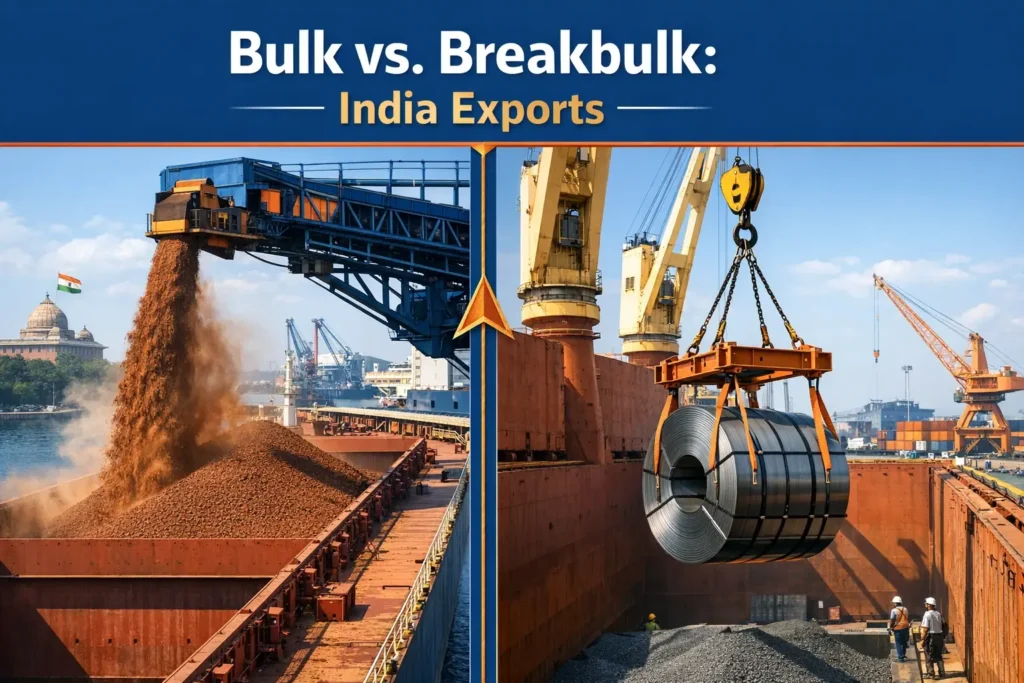
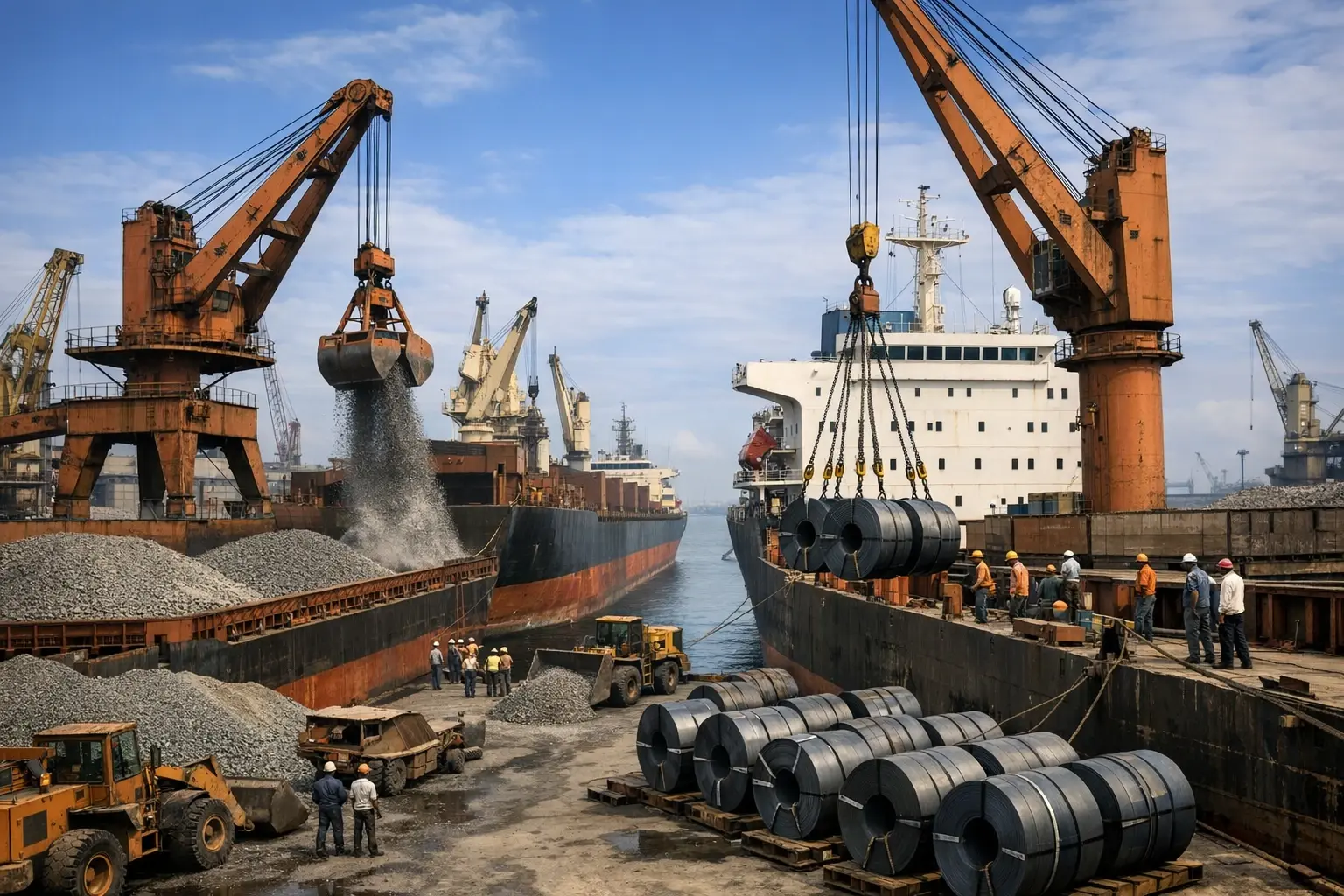
Before we can optimize, we need to clarify. Think of this as the fundamental rule: bulk cargo is poured, while breakbulk cargo is lifted.
What is Bulk Cargo? The World of Pourables and Loose Goods
Imagine a commodity that can be loaded directly into a ship’s hold without any packaging, like pouring sand into a bucket. That’s the essence of bulk cargo.
- Definition: Bulk cargo consists of loose, unpackaged goods shipped in large quantities. It can be dry (like grains or minerals) or liquid (like oil or chemicals).
- Handling: It’s handled by specialized equipment like conveyor belts, cranes with scoops, or pipelines.
- Vessels: Shipped on dedicated bulk carriers or tankers designed for maximum volume.
- Indian Examples: Iron ore from Odisha, construction aggregates from Gujarat, grains from Punjab, or coal being imported into Mundra Port.
What is Breakbulk Cargo? The Art of Handling Individual Units
Now, picture items that can’t be poured or pumped—cargo that must be handled individually. This is the world of breakbulk. The term itself comes from “breaking bulk,” meaning separating parts of a ship’s cargo for different consignees.
- Definition: Breakbulk cargo consists of individual items that are loaded one by one. These goods are often oversized, overweight, or unconventionally shaped, making them unsuitable for standard containers.
- Handling: It’s a more labor-intensive process involving cranes, slings, and specialized equipment to lift, place, and secure each piece.
- Vessels: Shipped on general cargo or multi-purpose vessels equipped with their own cranes.
- Indian Examples: Large steel coils from Jamshedpur, heavy machinery for an international construction project, massive wind turbine blades, or bagged cement.
Bulk vs. Breakbulk: A Quick Comparison
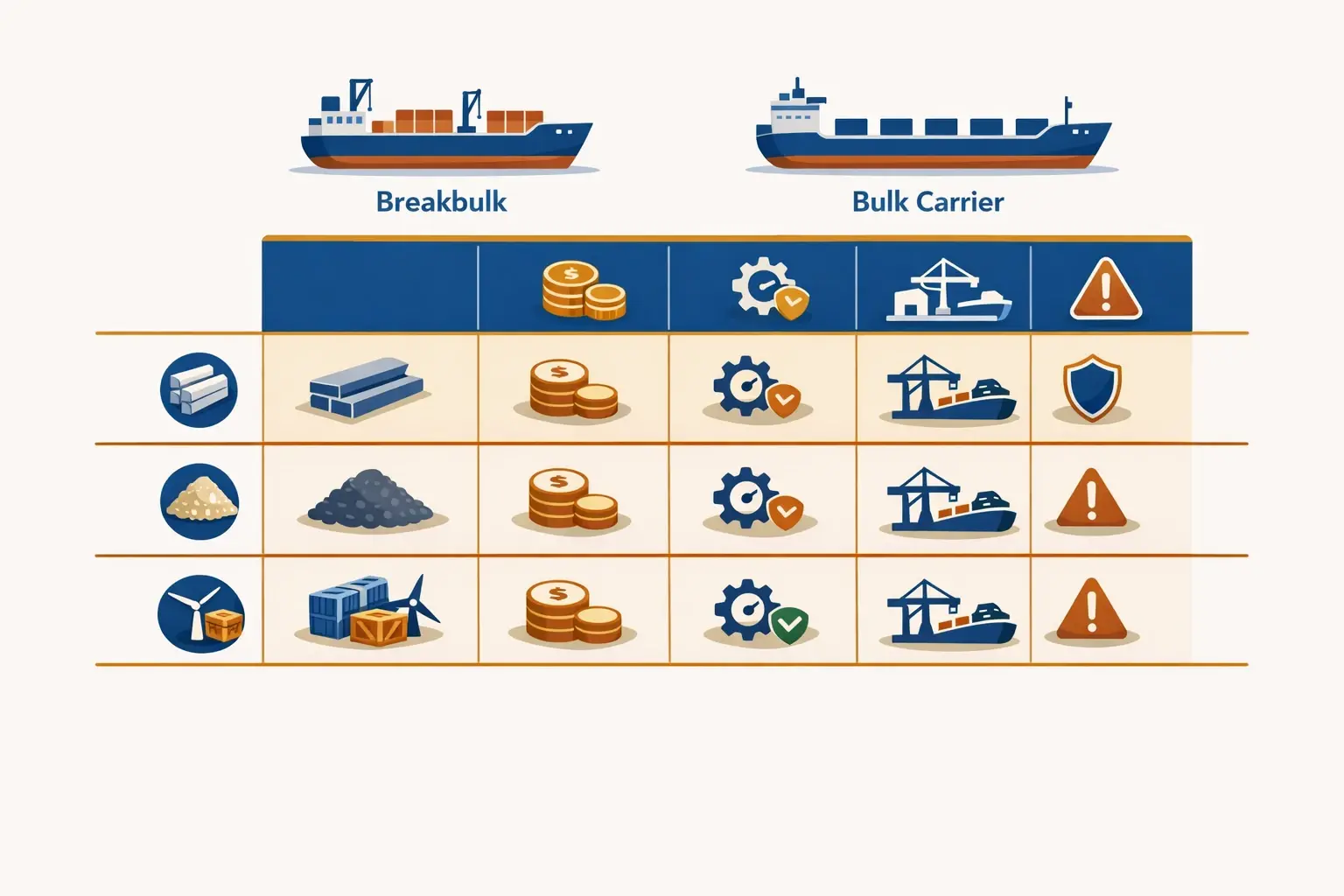
For a clear visual, here’s how they stack up against each other:
| Feature | Bulk Cargo | Breakbulk Cargo |
|---|---|---|
| Cargo Form | Loose, unpackaged, uniform | Individually packaged or handled units |
| Loading Method | Poured, pumped, or scooped | Lifted, slung, placed individually |
| Cost Structure | Priced per metric ton (lower rate) | Priced per metric ton or cubic meter (higher rate) |
| Vessel Type | Bulk carriers, tankers | General cargo ships, multi-purpose vessels |
| Handling Speed | Very fast for the entire volume | Slower, more meticulous, and labor-intensive |
| Ideal For | High volumes of a single commodity | Oversized, heavy, or project-specific items |
The Decision Framework: How to Choose for Your Indian Exports
Now that we have the definitions down, let’s move from theory to practice. The right choice depends on a careful analysis of your specific needs, especially within the context of the Indian market.
Here are the key factors to guide your decision:
Factor 1: Your Cargo’s Profile is King
This is the most crucial element. The nature of your product dictates the shipping method.
- Choose Bulk If: You are shipping a high volume of a single, homogenous commodity. If you have 50,000 tonnes of iron ore or aggregates, chartering a bulk carrier is the only economically viable option. The per-ton cost is significantly lower because you are leveraging economies of scale.
- Choose Breakbulk If: Your cargo is non-uniform, oversized, or requires individual handling. A prime example is an Indian steel exporter shipping coils of various sizes and grades to multiple buyers. Each coil must be logged, lifted, and stowed carefully to prevent damage, a task impossible on a bulk carrier. The same applies to project cargo like factory equipment or large pipes.
Factor 2: The Real Cost Breakdown (An India-Specific Look)
Don’t fall for the simple “bulk is cheaper” myth. The true cost is far more nuanced.
- Bulk Costs: The freight rate per ton is low, but you’re often chartering an entire vessel or a significant portion of it. This requires massive capital outlay. Furthermore, you’re exposed to port costs like demurrage (fees for delaying the ship beyond the agreed loading time) and despatch (a bonus for loading faster). Efficient port operations are critical to managing these costs.
- Breakbulk Costs: The freight rate per unit is higher due to the intensive labor (stevedoring) and materials (lashing, securing) required. However, you only pay for the space your cargo occupies. This provides more flexibility for smaller or mixed shipments. The “hidden” costs here often come from improper handling leading to cargo damage—a risk that demands expert on-the-ground supervision. A transparent partner can provide a full landed cost analysis, ensuring you see all charges from the Indian port to your final destination.
Factor 3: Indian Port Infrastructure & Capabilities
Not all ports are created equal. India has a long coastline with ports specializing in different cargo types.
- Bulk-Ready Ports: Ports like Paradip, Kandla, and Mundra have massive stockyards and high-speed conveyor systems designed to load bulk carriers at an astonishing pace. Trying to handle complex breakbulk here would be inefficient.
- Breakbulk-Focused Ports: Ports like Mumbai and Chennai have a long history of handling general cargo. They have more versatile crane capabilities, ample storage for individual items, and a workforce skilled in securing complex cargo.
Choosing a port that is ill-equipped for your cargo type can lead to significant delays and increased handling costs.
Common Pitfalls When Shipping from India (And How to Avoid Them)
Navigating logistics from India presents unique challenges. Being aware of these common mistakes can save you from costly headaches.
Pitfall #1: Underestimating the Monsoon Season
From June to September, the Indian monsoon can bring torrential rain, severely disrupting port operations. Open-hatch loading of sensitive bulk cargo like grains can be impossible, and wet conditions make handling heavy, slick steel coils in a breakbulk operation extremely hazardous.Solution: Work with a logistics partner who can create contingency plans, schedule shipments around peak monsoon periods, and ensure cargo is properly covered and protected.
Pitfall #2: Inadequate Lashing and Securing
This is the number one cause of damage in breakbulk shipping. A multi-ton piece of machinery that shifts during a rough sea voyage can cause a catastrophic chain reaction.Solution: Insist on a pre-shipment survey and demand photographic evidence of how your cargo is lashed, blocked, and braced inside the ship’s hold. This requires a trusted agent on the ground to oversee the process.
Pitfall #3: Documentation Discrepancies
Indian customs procedures are thorough. A minor error on a Bill of Lading, packing list, or export declaration—such as a misstated weight or incorrect cargo description—can halt your entire shipment for days or even weeks.Solution: Triple-check all documents. A reliable sourcing partner will manage the complex documentation process, coordinating with the supplier and the Custom House Agent (CHA) to ensure full compliance.
Frequently Asked Questions (FAQ)
1. Isn’t bulk always cheaper?Not necessarily. It’s only cheaper per ton if you have the massive volume to fill a bulk carrier. For smaller or mixed shipments, the flexibility of breakbulk is far more cost-effective than paying for unused space on a giant vessel.
2. What is “neo-bulk”?Neo-bulk is a sub-category of breakbulk. It refers to uniform items that are handled individually but shipped in large quantities, like logs, steel, or cars. While they are loaded one by one, their uniformity allows for more organized and repetitive stowage.
3. Can my single oversized machine go by bulk carrier?No. A bulk carrier’s holds are designed for loose cargo. There is no equipment or space to safely secure a single, heavy item. Your machine would require a breakbulk service on a multi-purpose vessel.
4. How important is a local partner in India for managing this?For non-containerized cargo, it’s critical. A local partner with on-the-ground expertise acts as your eyes and ears. They oversee the complex loading process, verify documentation, navigate port-specific challenges, and ensure your cargo is handled correctly from the moment it leaves the factory to the moment it’s secured on the vessel.
Your Path to Smarter Shipping
Choosing between bulk and breakbulk is a strategic decision that directly impacts your supply chain’s efficiency and your company’s bottom line. By moving beyond simple definitions and analyzing your cargo, costs, and the specific operational landscape in India, you can make an informed choice.

Here’s your checklist for getting started:
- Assess Your Cargo Profile: Is it a homogenous, high-volume commodity or a collection of individual, oversized, or heavy units?
- Request a Full Landed Cost Analysis: Look beyond the base freight rate to understand all potential charges, including port fees, handling, and insurance.
- Evaluate Port Capabilities: Ensure your chosen port in India and the destination port are properly equipped to handle your type of cargo efficiently.
- Partner with an Expert: The complexities of breakbulk and bulk shipping from India demand deep local knowledge. Working with a sourcing and logistics partner who understands Western standards and has a strong on-the-ground presence is the surest way to mitigate risk and ensure a smooth, transparent process from procurement to delivery.