
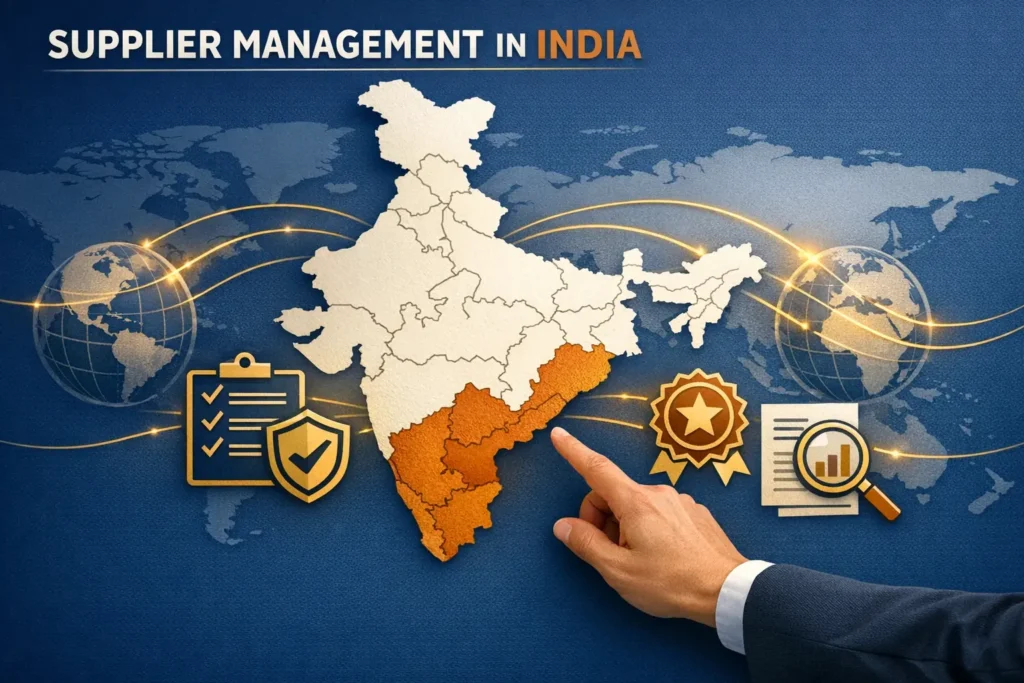
The global supply chain is actively restructuring, and the data proves it: currently, 65% of US and EU buyers are shifting a portion of their sourcing to South Asia as part of a broader diversification strategy. Following a post-pandemic increase in Indian agri-product exports, the appeal of India’s expansive agricultural sector is undeniable.
But as an industry expert, you already know that identifying a potential supplier on a B2B platform is just the easy part. Real resistance begins during the evaluation and management phases.
You aren’t just looking for competitive pricing on spices, processed foods, or coconut derivatives. You’re looking to mitigate risk. According to recent supply chain resilience studies, a staggering 40% of offshore sourcing disruptions occur not because of poor product quality, but due to documentation lapses, regulatory failures, and mismanaged supplier relationships.
To prevent production stoppages and avoid customs firefighting, you need more than a simple factory audit. You need a comprehensive “Supplier Relationship Operating System”—or SRMOS, a rigorous framework for vetting, onboarding, and actively managing Indian agri-food suppliers to strict Western standards.
The Qualification Blueprint: Beyond the Basic Audit
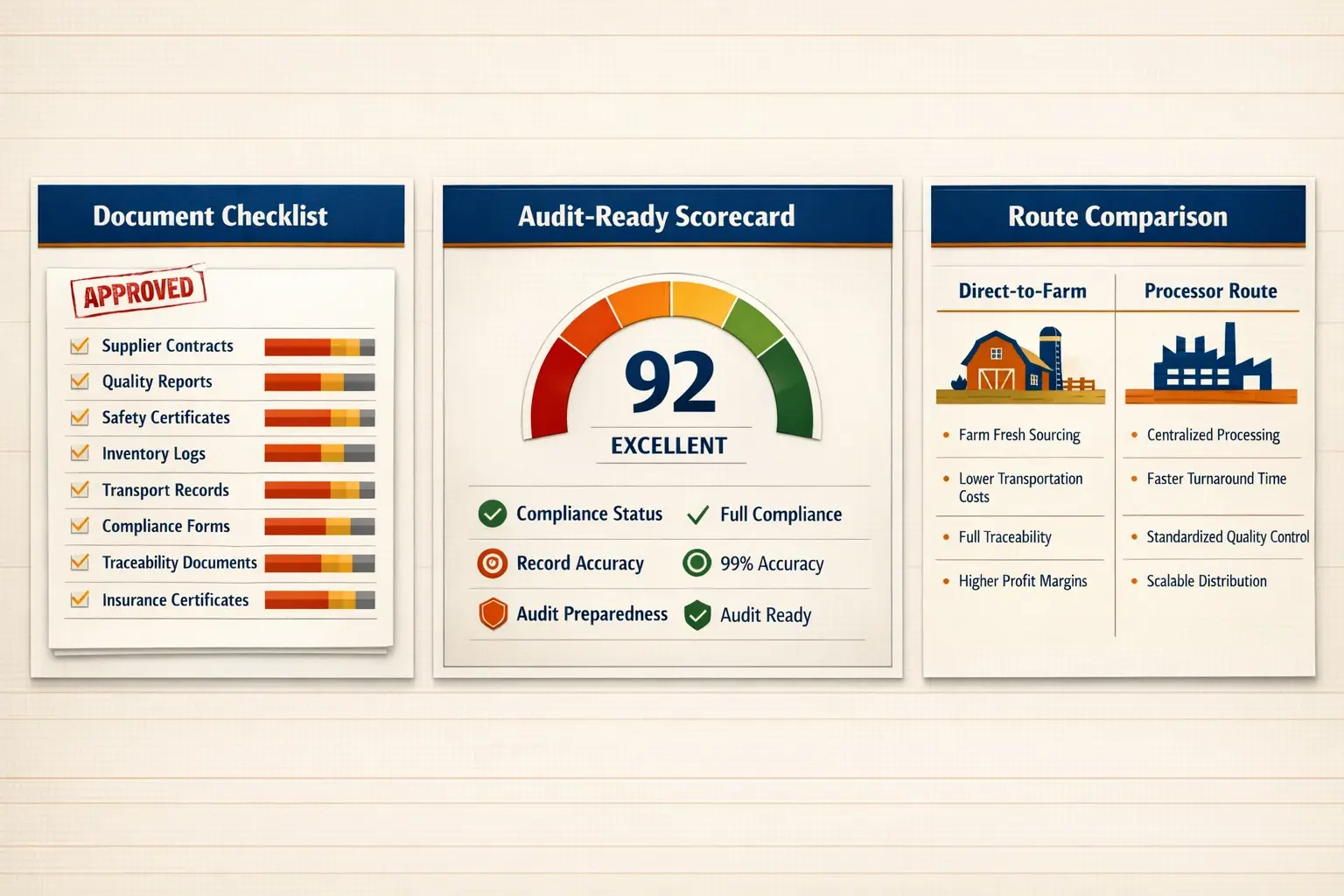
In the Indian agri-food export market, documentation is your first line of defense. Food exporters from India require 8 to 10 mandatory documents to clear international customs—roughly 20% more paperwork than general industrial exporters.
When evaluating a new supplier, passing a superficial quality check is insufficient. To ensure long-term viability under the strict 2025-26 Export Quality Control standards, your qualification process must drill down into their regulatory foundation.
Bridging FSSAI and GlobalGAP
Many Indian suppliers operate under the Food Safety and Standards Authority of India (FSSAI). While an FSSAI Central License is the non-negotiable baseline for export, it doesn’t automatically translate to Western regulatory compliance (like FSMA in the US or BRC/GlobalGAP globally).
A robust qualification blueprint verifies:
- FSSAI Central License Validity: Ensuring the license matches the exact manufacturing premises, not just a corporate office.
- APEDA Registration: Confirming the supplier is recognized by the Agricultural and Processed Food Products Export Development Authority.
- Traceability Protocols: Assessing whether the supplier can trace a contaminated batch back to the specific farm or cooperative.
Direct-to-Farm vs. Food Processors
When structuring your Indian supply chain, you’ll need to choose between sourcing directly from farmer co-operatives or utilizing established food processors. Direct-to-farm offers unparalleled pricing and raw material control but carries high health and handling risks. Food processors offer consolidated compliance and standard packaging but require deep-dive factory audits to ensure batch consistency.
For smallholder co-operatives, standard factory metrics don’t apply. Instead, evaluate them on specialized KPIs like raw-material spoilage rates versus collection efficiency.
Regional Focus: Navigating South Indian Food Suppliers
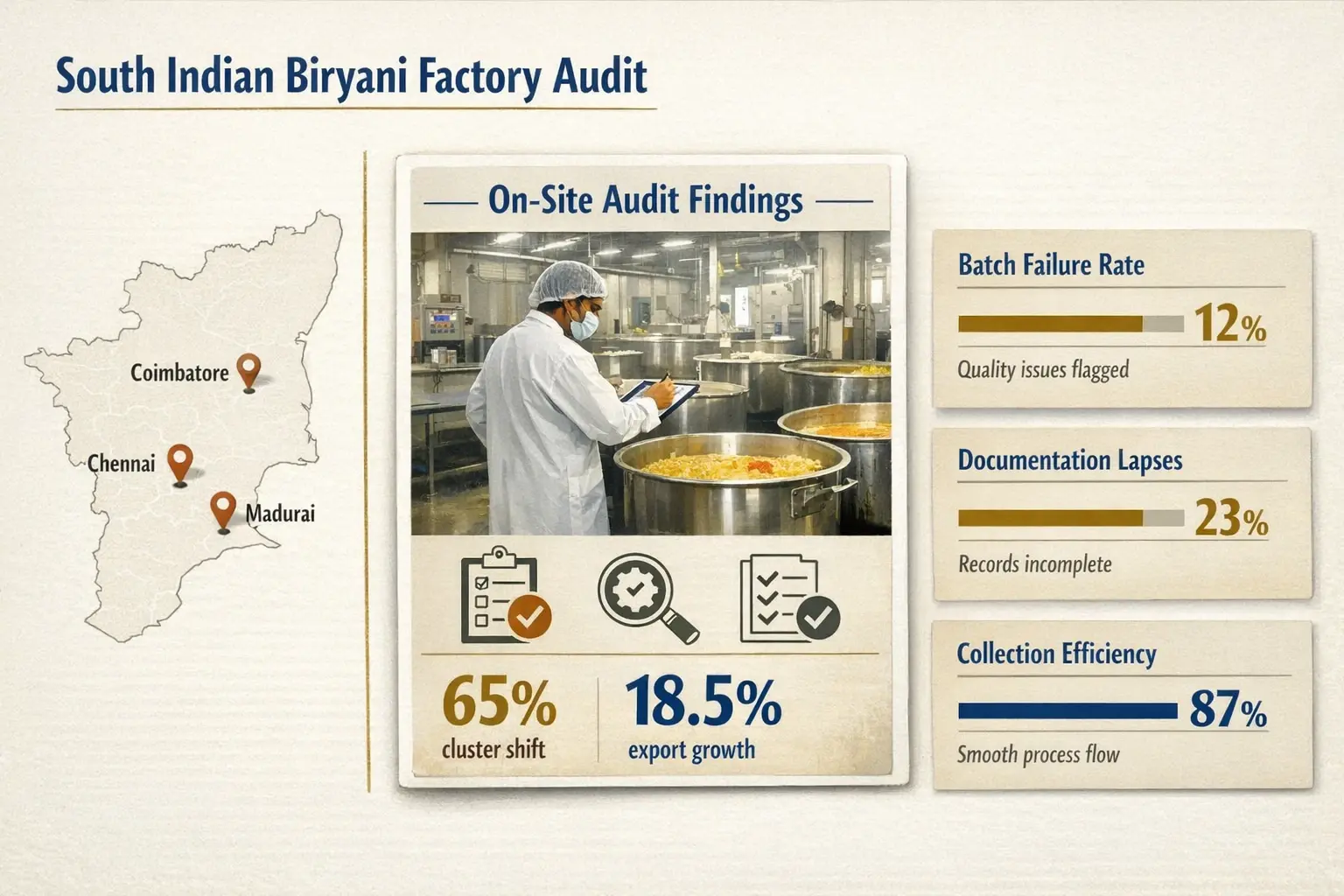
Treating India as a monolith is a common procurement mistake. The country operates through highly specialized regional clusters. If you are sourcing processed foods, spices, or coconut derivatives, your focus will naturally shift to South Indian hubs like Coimbatore, Chennai, and Madurai in Tamil Nadu and Kerala.
These clusters offer exceptional manufacturing capabilities but come with unique environmental and infrastructural variables. Evaluating a South Indian supplier requires a deep understanding of local cold-chain logistics, monsoon-season humidity controls, and regional port efficiency.
Case Study: Auditing Ready-to-Eat (RTE) Biryani Factories
Consider the fast growing export sector of frozen and Ready-to-Eat (RTE) Indian cuisine. An international buyer looking to import frozen biryani cannot rely on a standard dry-goods audit.
An effective on-site assessment for a South Indian biryani manufacturer must evaluate high-risk variables:
- Thermal Processing Validation: Are the retort pouches structurally sound and properly sterilized?
- Cross-Contamination Controls: Is there a strict physical separation between raw meat handling and cooked rice packaging?
- Cold Chain Custody: How is the product temperature maintained from the factory floor in Madurai to the shipping container in Chennai? What effect does unstable temperature changes have on shelf life?
The CAPA Protocol: Performance Monitoring & Corrective Actions
Most sourcing guides tell you how to find a supplier. Very few tell you what to do when things go wrong. In most evaluations, your primary concern is managing post-audit relationships. What happens when a supplier fails a batch test or misses a critical delivery window?
This is where the CAPA (Corrective and Preventive Action) Protocol becomes your most valuable tool.
Cultural friction often arises here. When an issue is flagged, a supplier might offer a quick “Self-Correction”—a signed document stating the issue is resolved. Western procurement teams need to know how to distinguish a genuine operational fix from a mere paperwork patch, so there is no repetition of past mistakes.
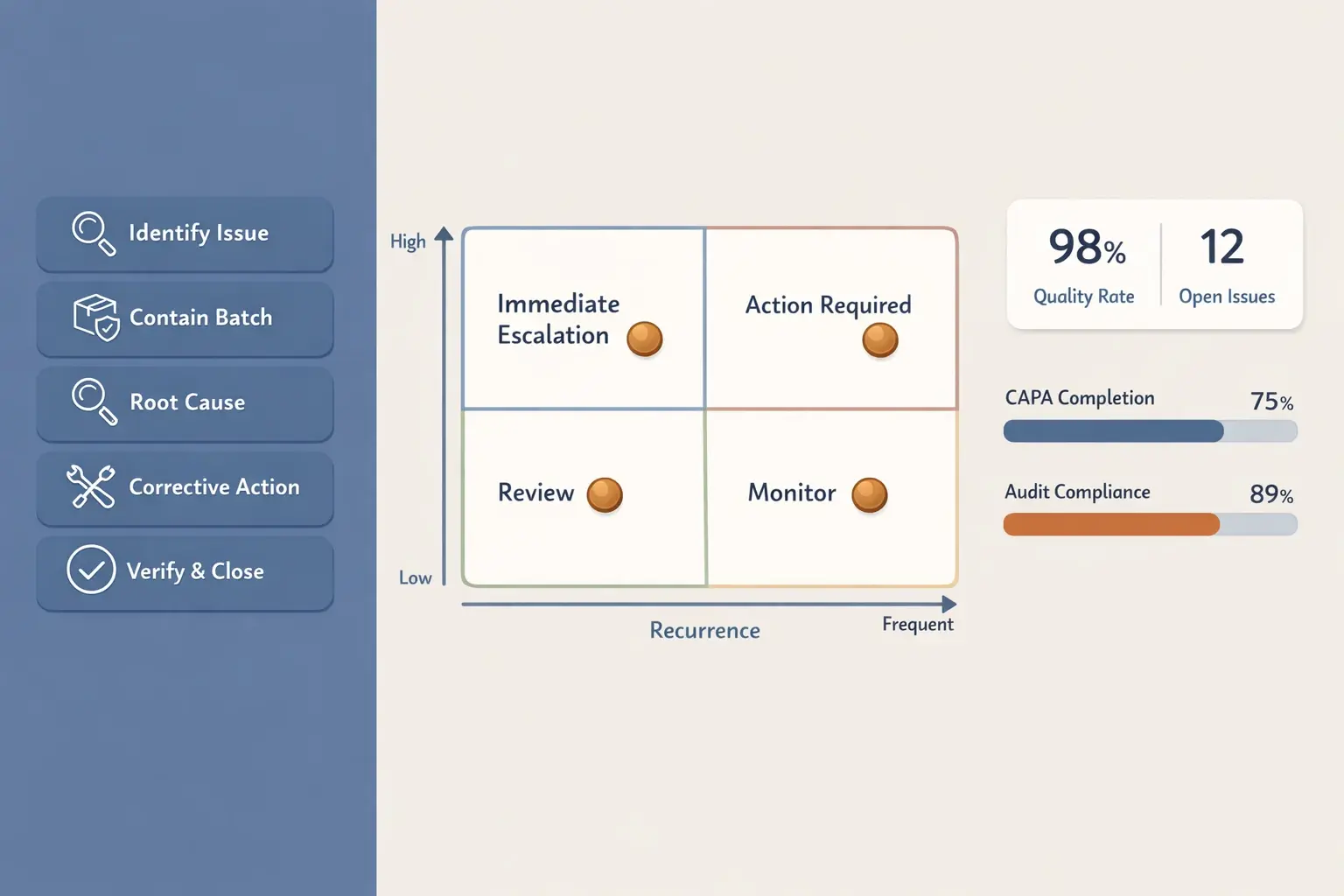
Implementing a Bulletproof CAPA Workflow
When an Indian agri-food supplier falls short of performance metrics, a structured CAPA workflow ensures accountability without permanently burning a valuable supplier relationship:
- Root Cause Identification: Move beyond the symptom. If a spice shipment arrived with high moisture content, was the root cause poor packaging, or a failure in the factory’s dehumidification system?
- Immediate Containment: Isolate the affected batches locally in India before they incur global freight costs.
- On-Ground Verification: This is where a boots-on-the-ground partner is vital. Corrective actions must be physically verified at the Indian facility to ensure new SOPs are actually being followed by line workers.
- Continuous KPI Tracking: Re-evaluate the supplier over the next three shipment cycles, specifically monitoring the previously failed metric.
Global Distribution Logistics: From India to the World
Securing a high-quality supplier is meaningless if the logistics eat away your margins or if customs seize your goods. Shipping agri-food products from India to diverse global markets—whether you’re distributing street food kits to Vermont, supplying the hospitality sector in Curacao, or exporting bulk ingredients to Houston—requires flawless export compliance.
A true end-to-end partner manages the entire export lifecycle. This includes phytosanitary certificate generation, managing complex landed-cost structures with total transparency, and navigating the specific labeling requirements of your destination country. By controlling the logistics phase, you eliminate the risk of hidden handling fees and port delays that typically plague international procurement.
Frequently Asked Questions (FAQ)
How do I verify if an Indian supplier’s FSSAI and organic certifications are legitimate?Certification fraud is a valid concern. Never accept a PDF certificate at face value. A rigorous vetting process involves cross-referencing the FSSAI license number directly through the Indian government’s central portal and conducting on-site audits to verify that the certified processes are actively practiced on the factory floor.
What is the biggest hidden cost when importing agri-food products from India?Unplanned compliance and documentation delays at the port of origin. Because agri-food exports require 8-10 mandatory documents, a single error can lead to demurrage charges or spoiled goods. Working with a sourcing partner who provides transparent landed-cost structures ensures there are no surprises.
How do we handle a supplier who consistently delivers late?Late deliveries are often a symptom of capacity overpromising. Instead of immediately terminating a supplier, initiate a CAPA process to audit their production planning. If they are prioritizing larger domestic clients over your export orders, it may be time to leverage a sourcing partner to enforce contractual SLAs or smoothly transition to a pre-vetted backup supplier.
Can we implement Western QA standards in Indian food processing facilities?Absolutely. While the baseline may be local, top-tier Indian facilities are highly adaptable. The key is clearly communicating your specific COA (Certificate of Analysis) and packaging requirements upfront, and enforcing them through regular, unannounced boots-on-the-ground audits.
Take Control of Your India Sourcing Strategy
Evaluating and managing an Indian agri-food supply chain doesn’t have to mean accepting unpredictable risks, cultural communication barriers, or opaque pricing. As industry experts seek to diversify their global footprint, success hinges on bridging Western quality expectations with India’s vast manufacturing capabilities.
You need a strategy that moves beyond transactional sourcing. By implementing rigorous qualification blueprints, executing on-site audits, and strictly enforcing CAPA protocols, you transform your supply chain from a reactive liability into a resilient, strategic asset. Partnering with a team that offers American-led communication standards alongside a deep, on-ground presence in India ensures your production runs smoothly, your costs are fully transparent, and your brand reputation remains protected.