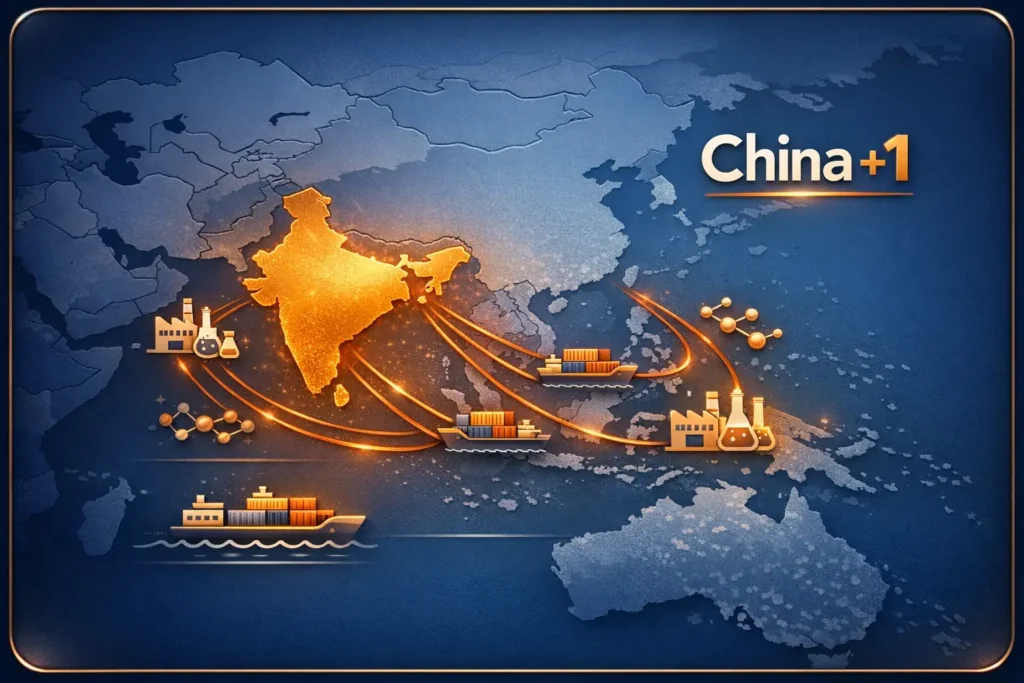
You’ve seen the memos and sat in the strategy meetings. The message is clear: diversify your supply chain. For years, “Made in China” was the default, but rising geopolitical tensions, trade disputes, and pandemic-era disruptions have made single-sourcing from any one country a high-stakes gamble. The ‘China +1’ strategy isn’t just a buzzword anymore; it’s an urgent operational necessity.
As a procurement leader in the chemical industry, your search for a viable “+1” has likely led you to India—a manufacturing powerhouse with a deep pool of chemical expertise. But as you dig deeper, you run into a confusing alphabet soup of trade agreements: ASEAN, AITIGA, RCEP.
You hear that India isn’t part of the RCEP, the world’s largest trade bloc, which includes China. Does that mean higher costs? More red tape? Is India on the outside looking in?
The truth is more nuanced and, for chemical sourcing, far more promising. India’s decision to opt out of RCEP wasn’t a step backward; it was a strategic move to position itself as a more stable, reliable, and quality-focused alternative. Let’s break down what this means for you.
The Acronyms Unpacked: Understanding the Playing Field
Before we dive into the strategy, let’s clear up the key terms. Think of it as knowing the players before watching the game.
- ASEAN (Association of Southeast Asian Nations): A cooperative organization of ten Southeast Asian countries (like Vietnam, Thailand, and Singapore). India has a long-standing trade relationship with this bloc.
- RCEP (Regional Comprehensive Economic Partnership): This is the big one. It’s a massive free trade agreement between the 10 ASEAN members plus China, Japan, South Korea, Australia, and New Zealand. Its goal is to make trade cheaper and easier among its members.
- AITIGA (ASEAN-India Trade in Goods Agreement): This is India’s existing trade deal with the ASEAN bloc, which has been in place for over a decade.
- ‘China +1’: This isn’t an official policy, but a global business strategy. It means companies continue to source from China while also establishing operations or finding suppliers in at least one other country to reduce risk.
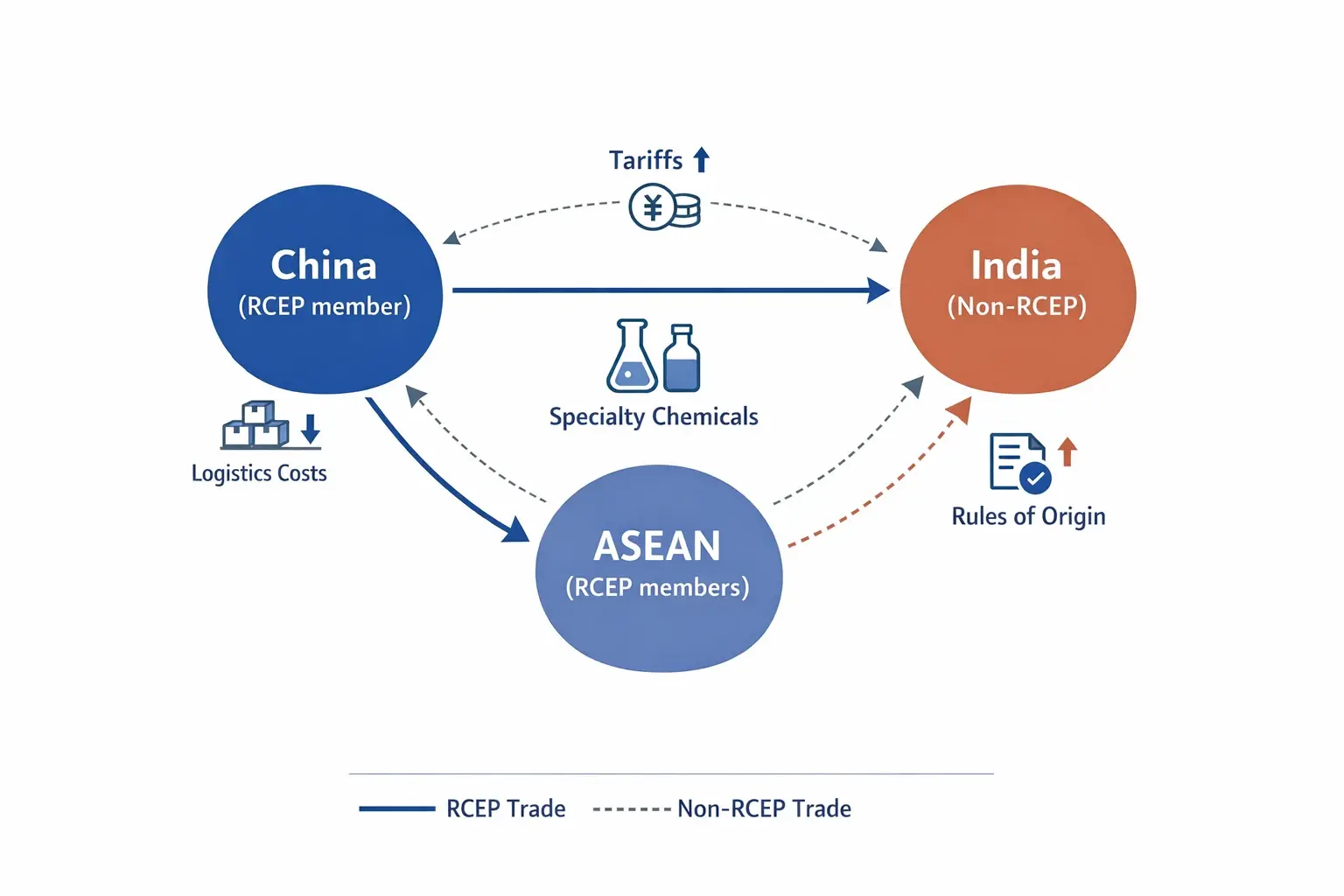
So, the key fact is this: India actively trades with ASEAN nations through AITIGA but chose not to join the larger RCEP bloc that includes China. The reasons why reveal a strategic advantage for chemical buyers.
The RCEP Dilemma: Why India Stepped Away from the World’s Biggest Trade Club
On the surface, opting out of a massive free trade deal seems counterintuitive. Why turn down the invitation to the party? India’s decision was based on critical lessons learned from past agreements and a clear-eyed view of the risks involved, especially concerning China.
Here are the core reasons, which directly impact the stability of your supply chain:
1. The Threat of a Chemical Flood from China
India’s primary concern was a potential surge of low-cost Chinese goods, which could decimate domestic manufacturers. The Indian chemical industry, while robust, has historically struggled to compete with state-subsidized Chinese imports. Joining RCEP would have meant slashing tariffs, effectively opening the floodgates.
An analysis by India’s commerce ministry projected a significant trade deficit with RCEP nations, highlighting that sectors like chemicals, steel, and textiles were particularly vulnerable. By staying out, India preserved its ability to use tariffs and anti-dumping duties as a shield, ensuring a more stable and predictable domestic market for key chemicals.
2. The Problem of “Leaky” Rules of Origin (ROO)
This is a crucial but often overlooked concept. Rules of Origin determine a product’s “economic nationality” to ensure only member countries get tariff benefits. Weak ROO create loopholes.
India’s experience with AITIGA was a cautionary tale. The agreement’s weak ROO allowed Chinese products to be minimally processed in an ASEAN country and then re-exported to India at a lower tariff, a practice known as trade deflection. Imagine a chemical manufactured almost entirely in China, shipped to Malaysia for final packaging, and then labeled “Made in Malaysia” to enter India cheaply. This practice undermined Indian producers.
RCEP’s proposed ROO weren’t strong enough to prevent a similar, or even worse, scenario. India’s withdrawal was a direct move to close these backdoors and ensure that when you source from India, you are getting Indian-made quality, not a rerouted product from somewhere else.
3. A Focus on “Atmanirbhar Bharat” (Self-Reliant India)
India’s decision aligns with its national policy of Atmanirbhar Bharat, or building a self-reliant nation. This isn’t about economic isolation; it’s about strengthening domestic manufacturing capabilities to become a more resilient and valuable global partner. For the chemical sector, this means investing in specialty chemical production, Active Pharmaceutical Ingredients (APIs), and other high-value areas, creating a deeper, more innovative supply base for international buyers.
What India’s Strategy Means for Your Chemical Sourcing
So, how does this high-level trade policy translate into tangible benefits for a procurement manager trying to build a resilient supply chain?
✓ Price Stability and Protection from Dumping
By staying out of RCEP, India can maintain crucial anti-dumping duties on certain Chinese chemicals. This is a massive advantage. It prevents artificially cheap products from flooding the market, which, while seeming good for short-term costs, creates extreme price volatility and can drive reliable suppliers out of business. Sourcing from India offers a more stable pricing environment, insulated from these disruptive practices.
✓ Higher Certainty of Origin and Quality
India’s stance reinforces the integrity of its supply chain. Without the RCEP loophole, there’s a much lower risk of receiving transshipped Chinese goods of questionable quality. When you engage in supplier qualification in India, you can be more confident that the Certificate of Analysis (COA) and the product itself originate from the audited facility, ensuring consistency and compliance.
✓ A Focus on Strategic Bilateral Partnerships
Instead of a one-size-fits-all agreement like RCEP, India is pursuing more focused Free Trade Agreements (FTAs) with partners like the UK, EU, and Australia. This approach allows for more thoughtful, tailored agreements that foster deeper integration in strategic sectors like specialty chemicals. It signals that India is focused on building long-term, high-value partnerships, not just chasing low-cost volume. This targeted approach is ideal for companies needing a reliable partner for their custom procurement needs.
Making the ‘India +1’ Move with Confidence
Understanding India’s trade posture reveals a clear picture: the country is playing a different game—one focused on stability, quality, and strategic growth. For procurement leaders, this means India is not just another low-cost alternative, but a robust hub for building a truly resilient chemical supply chain.
As you evaluate your options, consider these practical steps:
- Look Beyond Tariffs to Total Landed Cost: A slightly lower tariff from an RCEP country might be wiped out by price volatility or quality issues. Analyze your risk-adjusted landed cost for a clearer picture.
- Prioritize Deep Supplier Vetting: An on-the-ground partner is essential to verify capabilities, compliance, and production integrity. This is non-negotiable for ensuring batch consistency and regulatory adherence.
- Seek Transparency: Work with partners who provide full visibility into the supply chain, from supplier audit to final delivery. This is the cornerstone of trust, especially when sourcing from a new region.
India’s strategic decision to chart its own course outside of RCEP has created a unique and compelling opportunity for global chemical companies to find a reliable, quality-conscious, and long-term sourcing partner.
Your Questions on India’s Trade Policy, Answered
### What is RCEP in simple terms?
RCEP is a free trade agreement between 15 Asia-Pacific nations, including China and the ASEAN bloc. Its goal is to reduce tariffs and simplify customs procedures to boost trade among its members.
### Why didn’t India join RCEP?
India opted out primarily to protect its domestic industries, including chemicals, from a potential flood of cheap Chinese imports. Other key concerns included large projected trade deficits, weak “Rules of Origin” that could allow non-member goods to slip through, and a desire to build a more self-reliant manufacturing base.
### Is India isolated from Asian trade now?
Not at all. This is a common misconception. India maintains its active trade agreement with the 10 ASEAN countries (AITIGA) and is actively pursuing stronger bilateral trade deals with key global economies. Its strategy is one of focused engagement rather than broad, multilateral risk.
### How does this affect sourcing costs for chemicals from India?
While you may not get the specific tariff reductions offered within the RCEP bloc, sourcing from India can lead to lower overall costs in the long run. This is because India’s market is more protected from the price volatility caused by dumped goods. You gain predictability, quality assurance, and supply chain stability, which are often more valuable than a small tariff discount.
The Strategic Advantage of Sourcing Chemicals from India
In the complex world of global procurement, headlines about trade agreements can be misleading. India’s decision to forgo RCEP membership was not a sign of isolation but a declaration of intent: to build a resilient, quality-driven industrial base capable of serving as a true strategic partner in the ‘China +1’ era.
For procurement leaders tasked with the critical job of de-risking their supply chains, this makes India an even more compelling proposition. It’s a market focused on sustainable growth and partnership, ready to meet the exacting standards of global industry.
Ready to explore how to make India your strategic sourcing hub? Learn more about Sourcing Pros’ end-to-end procurement solutions that bridge Western expectations with India’s expansive supplier ecosystem.