It’s an event few experience but many warn of, the samples from your new supplier were perfect—exactly to spec, delivered on time. You signed off on the bulk order with confidence. But when the container arrives, it’s a different story. Inconsistent quality, minor deviations, and a frustrating lack of clear documentation.
What went wrong? It’s rarely a lack of skill or intent. More often, it’s a systems gap. The paper-based checklists, manual logs, and siloed spreadsheets that work for a small batch can quickly break down under the pressure of full-scale production. This is the quality control gap where many promising supplier relationships falter.
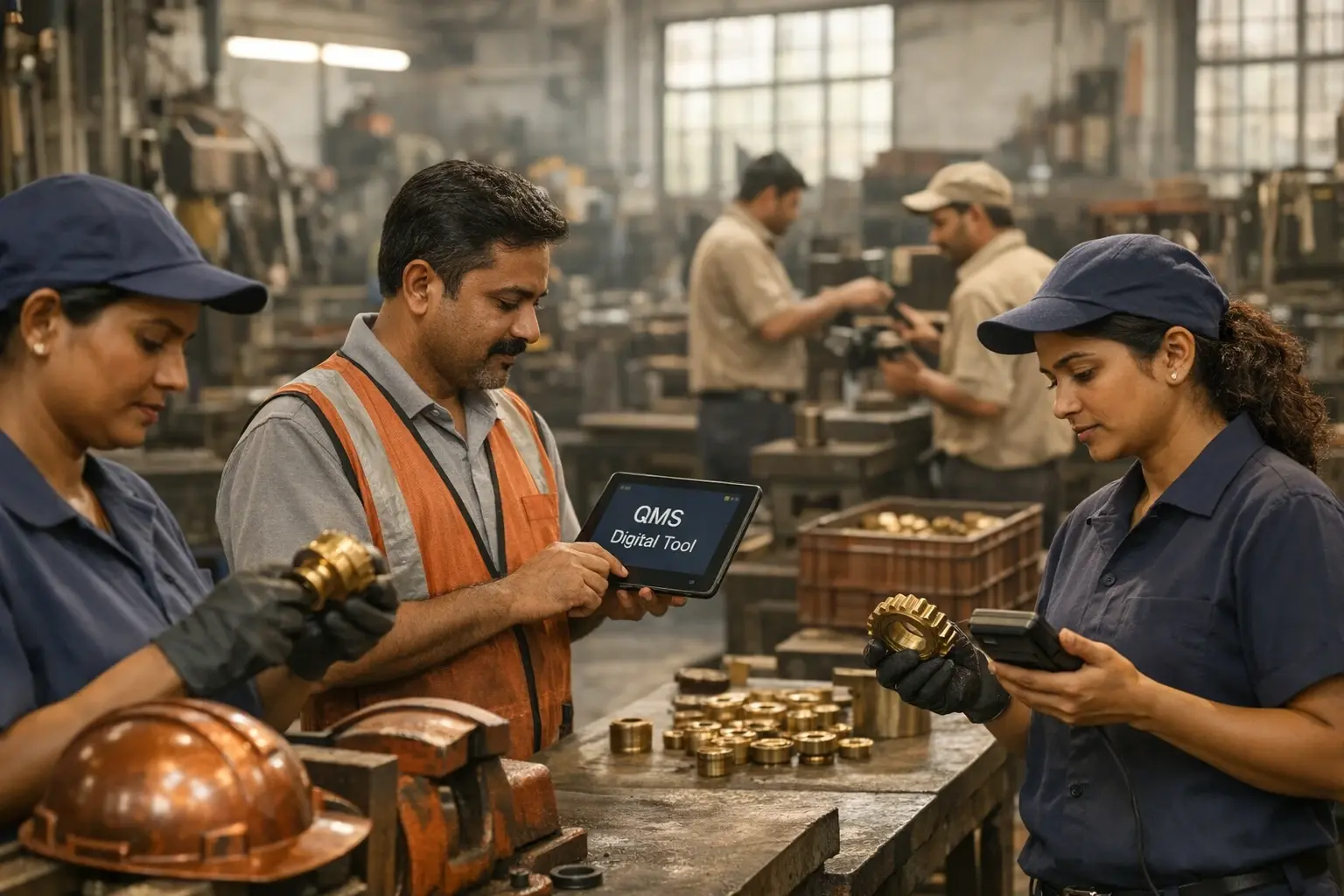
But a fundamental shift is underway in India’s manufacturing hubs. Factories are trading clipboards for tablets and legacy systems for smart software. They are embracing Digital Quality Management Systems (QMS) to build resilience, drive efficiency, and meet the exacting standards of global buyers. This guide is your introduction to this transformation—what it is, why it matters, and how it’s being successfully implemented on the ground in India.
What is a Digital QMS, Really?
Let’s clear up a common misconception. A digital QMS isn’t just about converting your paper forms into PDFs or Excel sheets.
Think of it as the central nervous system for a factory’s quality operations. It connects disparate processes and provides a single source of truth. Key components typically include:
- Document Control: Instead of binders of outdated procedures, a digital system ensures everyone on the shop floor has instant access to the latest approved version of Standard Operating Procedures (SOPs), work instructions, and specifications.
- Corrective and Preventive Actions (CAPA): When a non-conformance occurs, a digital CAPA workflow automates the process of identifying the root cause, assigning corrective tasks for continuous improvement, and tracking them to completion, ensuring issues are resolved permanently.
- Audit Management: Planning, executing, and reporting on internal and external audits becomes seamless. Findings are logged directly into the system, and follow-up actions are automatically tracked.
- Training Management: The system manages employee training records, schedules required certifications, and links personnel to the specific SOPs they are qualified to perform, preventing errors from untrained staff.
- Process & Supplier Control: It provides tools to monitor production processes in real-time and manage the quality of incoming materials from suppliers, catching deviations before they impact the final product.
The magic isn’t in having these modules; it’s in how they communicate between each other. An audit finding can automatically trigger a CAPA, which can then trigger a revision to an SOP, which in turn flags the need for employee retraining—all within one connected system.
The Indian Reality: Why Generic Implementation Fails
If you search online, you’ll find dozens of “9-Step Guides to QMS Implementation.” While well-intentioned, this generic advice often misses the unique ground realities of the Indian manufacturing ecosystem, especially within Small and Medium-sized Enterprises (SMEs).
The assumption that you can simply “plug and play” a complex software solution runs into a wall of practical challenges. These on-the-ground issues are why standard frameworks often fall short, a topic we’ve explored when it comes to the broader challenges of adapting QMS frameworks for Indian SMEs. When it comes to digital adoption, these challenges are amplified:
- Resource Constraints: Many Indian SMEs operate on tight margins. The perception is that digital QMS platforms are prohibitively expensive, designed for multinational corporations, not a 50-person factory.
- The “Human Element”: A new software system is only as good as the people who use it. In a diverse workforce, digital literacy can vary widely. Resistance to change, fear of technology, and cultural attachment to paper-based methods are significant hurdles.
- Fragmented Supply Chains: A factory’s quality is dependent on its suppliers. If your Tier 2 and 3 suppliers are still using manual quality checks, a digital QMS at your primary factory only solves part of the problem.
Ignoring these realities is a recipe for a failed implementation—a costly piece of software that no one uses, while workers revert to the familiar comfort of their clipboards.
A Practical Roadmap for Digital QMS in India
Successful adoption in India isn’t about buying the most expensive software; it’s about a smart, phased approach that respects the local context. It’s about building momentum, proving value, and empowering the workforce.
Phase 1: Start Smart with a “Digital QMS Lite”
Instead of a “big bang” rollout, savvy manufacturers start with a lean, focused approach. They prioritize the modules that solve their most pressing pain points and deliver the fastest return on investment.
- Priority #1: Digital Non-Conformance & CAPA: This is often the biggest win. Replacing paper-based rejection slips with a simple mobile app allows shop-floor workers to instantly log a defect with a photo, triggering an immediate quality alert. It makes problems visible in real-time.
- Priority #2: Centralized Document Control: Getting rid of outdated SOPs is a massive step towards consistency. A simple digital library accessible via tablets on the floor ensures everyone is working from the same playbook.
This “QMS Lite” approach is cost-effective and proves the system’s value quickly, building the internal support needed for future expansion.
Phase 2: The Implementation Journey, Adapted for India
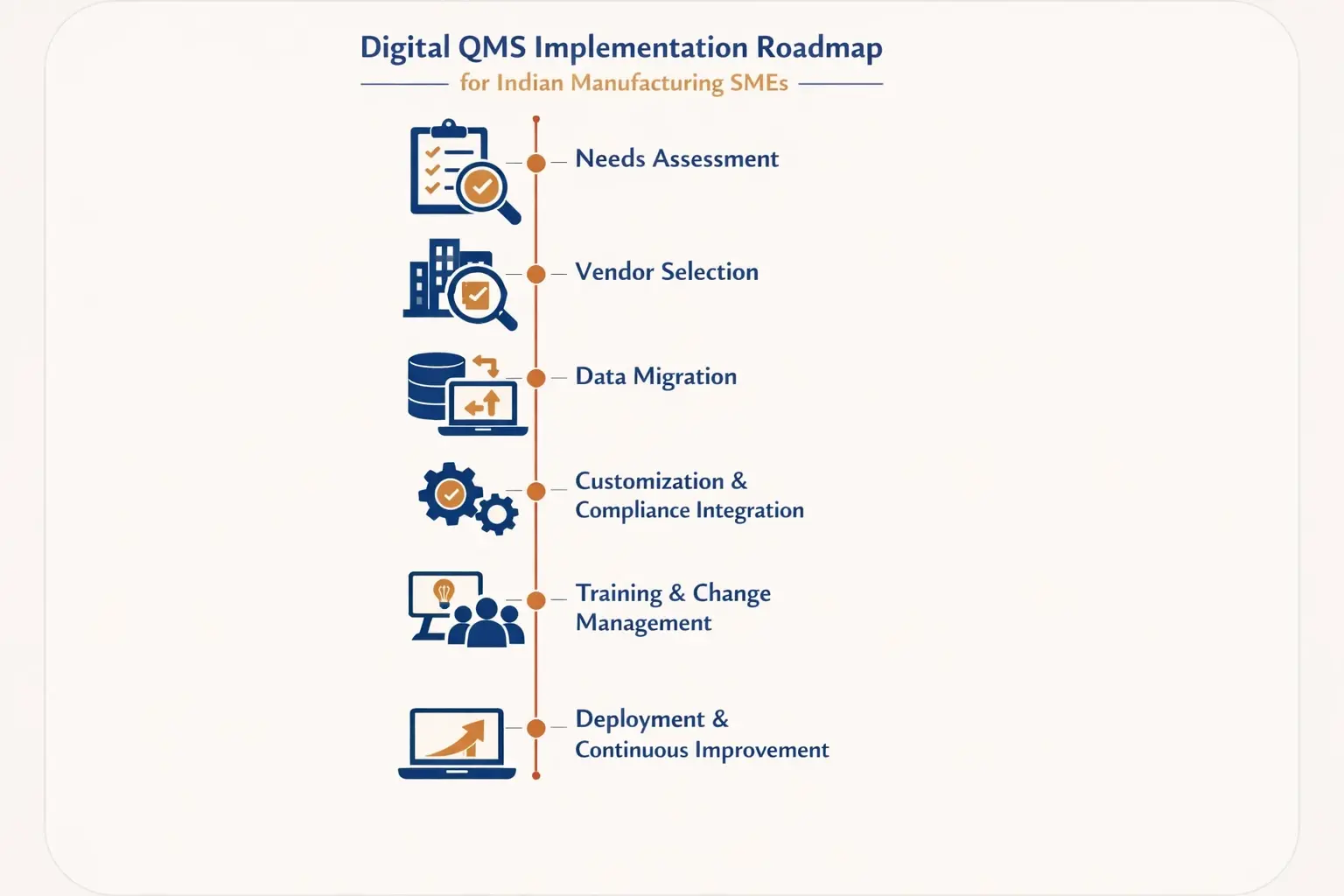
- Needs Assessment: Go beyond a features checklist. Observe the shop floor. Where are the communication breakdowns? Where does paper get lost? Choose a system that solves those problems.
- Vendor Selection: Look for vendors with experience in India. They will understand the need for multi-language support, interfaces that work on low-bandwidth networks, and simple, visual UIs.
- Training & Change Management: This is the most critical step. Training must be hands-on, highly visual, and conducted in local languages. Identify “digital champions” on the shop floor who can help their peers and build a culture of ownership.
- Pilot, Learn, and Scale: Launch the new system in one production line or cell. Gather feedback, fix issues, and showcase the success story to the rest of the factory before scaling up.
The Payoff: Tangible Wins and a Competitive Edge
When implemented thoughtfully, the benefits of a digital QMS go far beyond a clean audit report. We’re seeing real examples of measurable improvements across Indian manufacturing sectors.
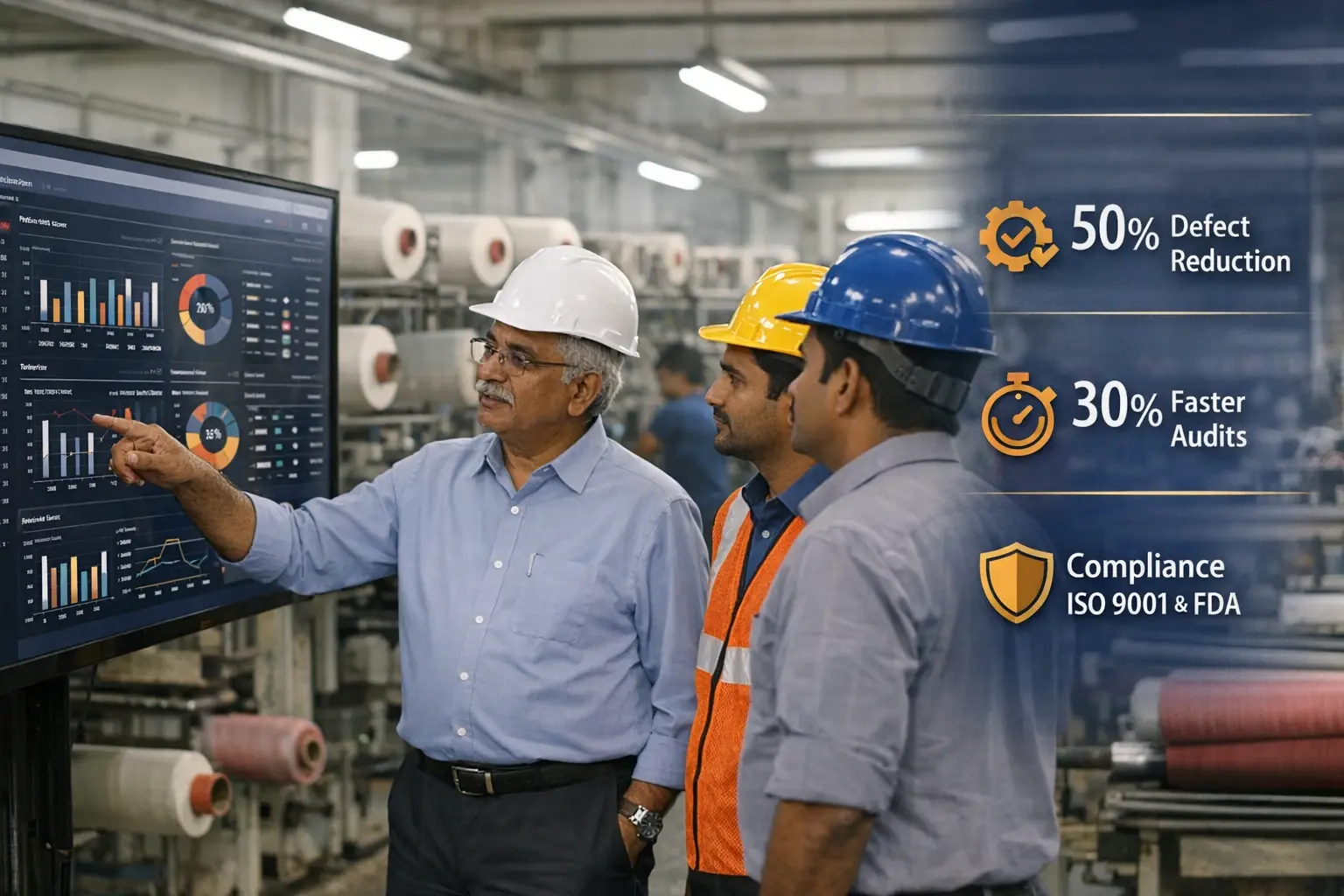
- Drastic Defect Reduction: A textile manufacturer in Tamil Nadu integrated AI-powered visual inspection tools with their QMS. By automatically flagging fabric defects in real-time, they reduced their final product rejection rate by over 40%.
- Improved Overall Equipment Effectiveness (OEE): An automotive components supplier in Pune used their digital QMS to analyze downtime causes logged by operators. The data revealed a recurring issue with a specific machine, allowing them to implement a predictive maintenance schedule that increased uptime by 18%.
- Faster Audit Readiness: A pharmaceutical company in Hyderabad reduced its audit preparation time from weeks to days. With all documents, training records, and CAPAs centralized, they could respond to auditor requests instantly, demonstrating robust compliance with standards like FDA 21 CFR Part 11.
This is the beginning of Quality 4.0 in India—where data from IoT sensors, machine learning, and predictive analytics feeds directly into the QMS, allowing manufacturers to anticipate quality issues before they even happen.
FAQ: Your Digital QMS Questions Answered
How can an SME with a small budget get started?
Start with the “Digital QMS Lite” approach. Many modern, cloud-based QMS solutions offer modular pricing, allowing you to pay only for the features you need, like CAPA and Document Control. The cost savings from reduced defects and rework often pay for the system within the first year.
How do you train workers with low digital literacy?
Focus on user-friendliness. Choose software with a highly visual, icon-based interface that can be used on a tablet or smartphone. Implement training in the local language and use a “train the trainer” model with your shop-floor “digital champions.”
Is a digital QMS only necessary for export-focused companies?
While it is essential for meeting international standards like ISO 9001, the core benefits—efficiency, consistency, and reduced waste—are just as valuable for serving the domestic market. It builds a stronger, more competitive business regardless of who the end customer is.
What about data security in a cloud-based system?
Reputable QMS vendors use robust security protocols, including data encryption, secure servers, and regular backups. This is often more secure than keeping sensitive quality data on a local server or in a filing cabinet, which can be vulnerable to hardware failure, fire, or theft.
The Future of Quality is Digital
The transition from paper to platform is more than an upgrade—it’s a new mindset. It’s about building a culture of quality that is proactive, transparent, and data-driven.
For international buyers, understanding this digital shift is key. Partnering with Indian suppliers who have successfully embraced a digital QMS means partnering with a business that is serious about consistency, continuous improvement, and meeting global expectations. It’s a powerful indicator that they have the systems in place to turn that perfect sample into a perfect bulk order, every single time.