You’ve been given a clear directive: explore options beyond traditional markets as part of a “China +1” strategy. India, with its booming chemical sector—the sixth-largest in the world—is at the top of your list. But from thousands of miles away, the country can look like one massive, complex market. Where do you even begin?
The secret is realizing that India isn’t a single sourcing destination; it’s a collection of highly specialized, powerful ecosystems. Choosing the right region for your specific chemical needs is the difference between a logistical nightmare and a strategic masterstroke. Think of it less like finding a needle in a haystack and more like knowing exactly which shelf in the library holds the book you need. This guide is your map to those shelves.
Beyond the Basics: Why Regional Clusters are Your Sourcing Superpower
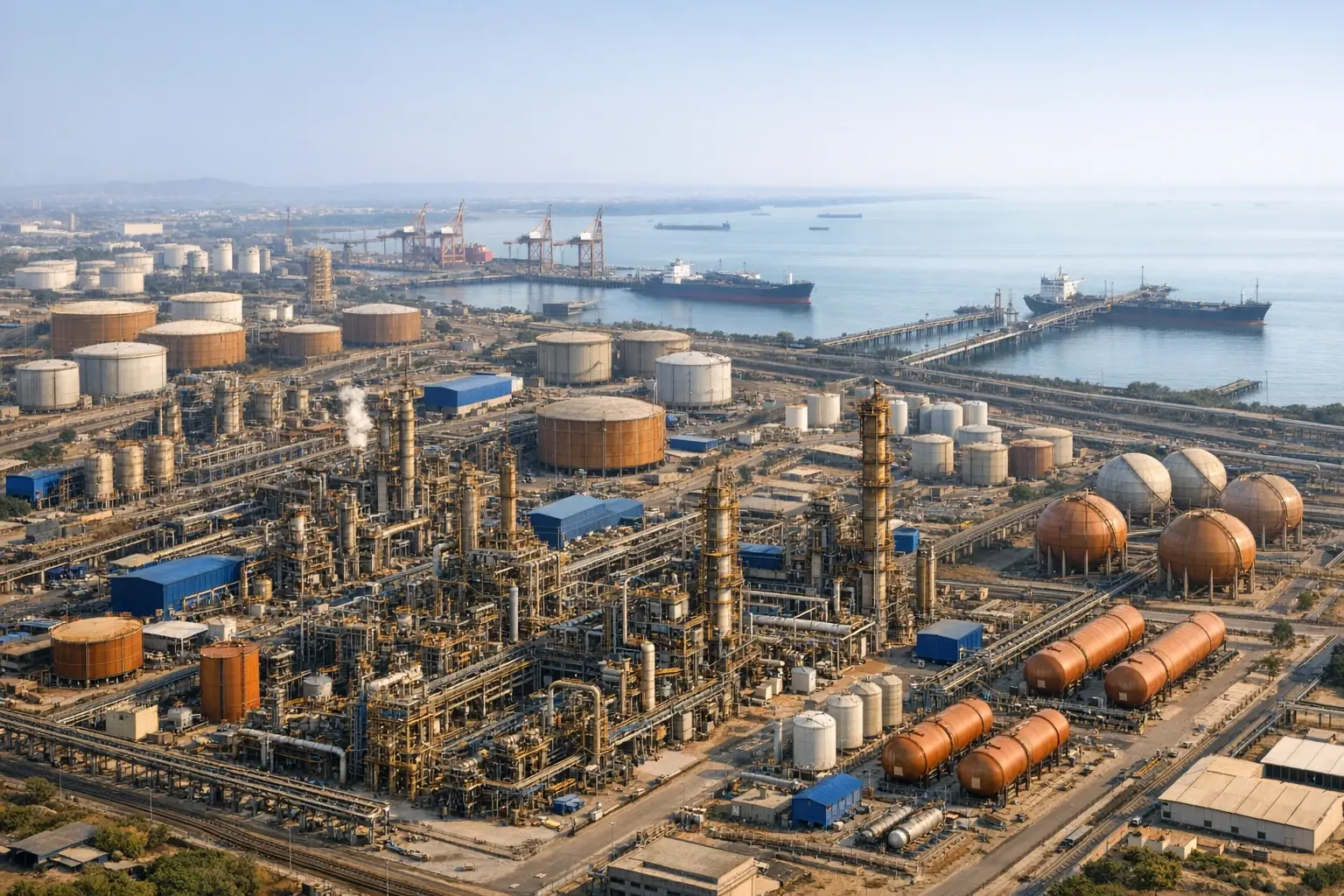
The Indian chemical industry is intentionally concentrated in specific geographic “clusters.” These aren’t just random groupings; they are synergistic hubs where manufacturers, raw material suppliers, and logistics providers operate in close proximity.
For a global procurement manager, this cluster approach offers significant advantages:
- Concentrated Expertise: Each region has developed deep knowledge in specific chemical families over decades.
- Shared Infrastructure: These hubs often feature common effluent treatment plants (CETPs), dedicated port connectivity, and robust transportation networks, which drives efficiency.
- Supplier Density: With hundreds of manufacturers in one area, you have more options and can foster healthy competition.
Understanding the unique DNA of each cluster is the first step toward unlocking India’s true potential as a reliable, high-quality sourcing partner.
The Titans of the West: Gujarat and Maharashtra
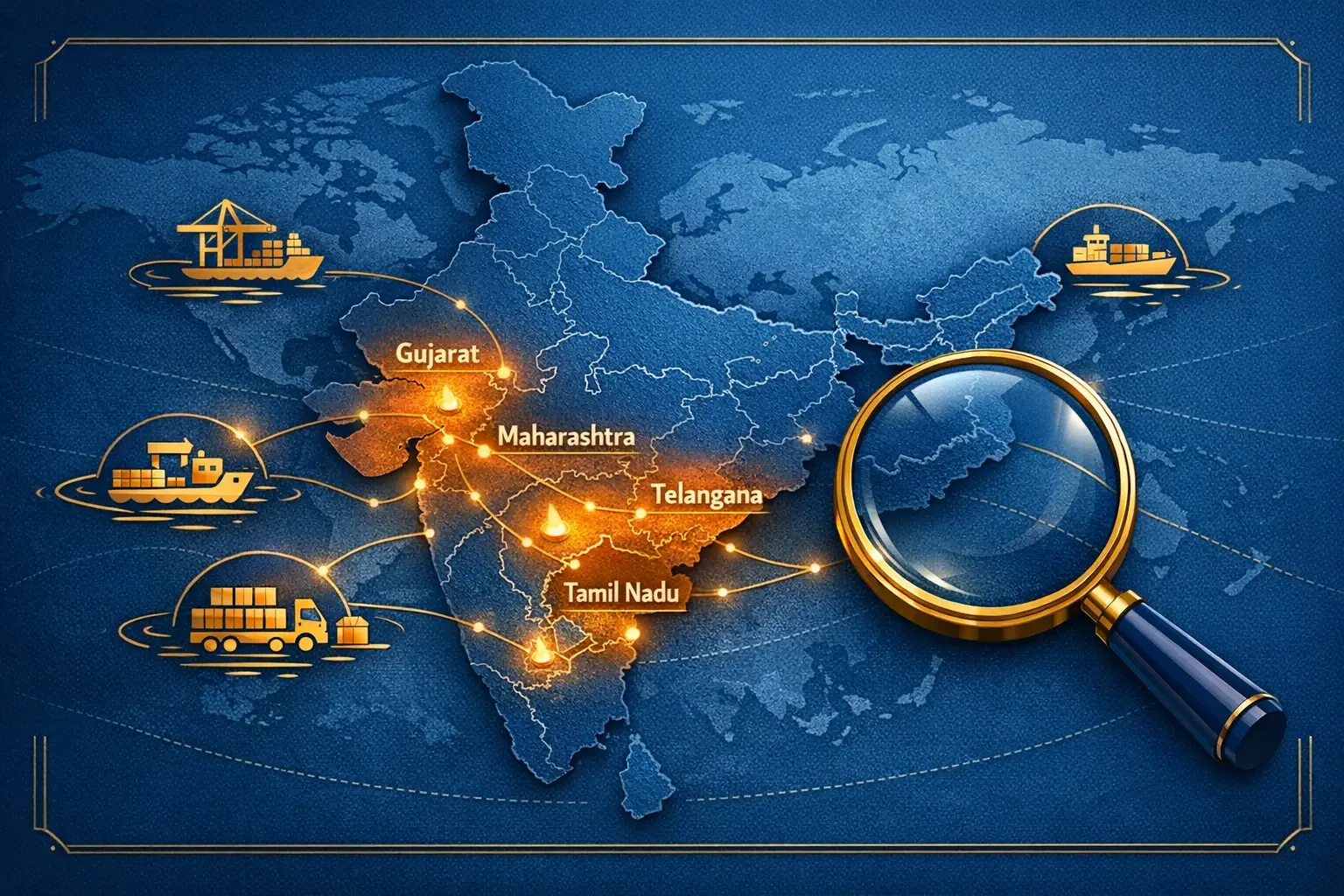
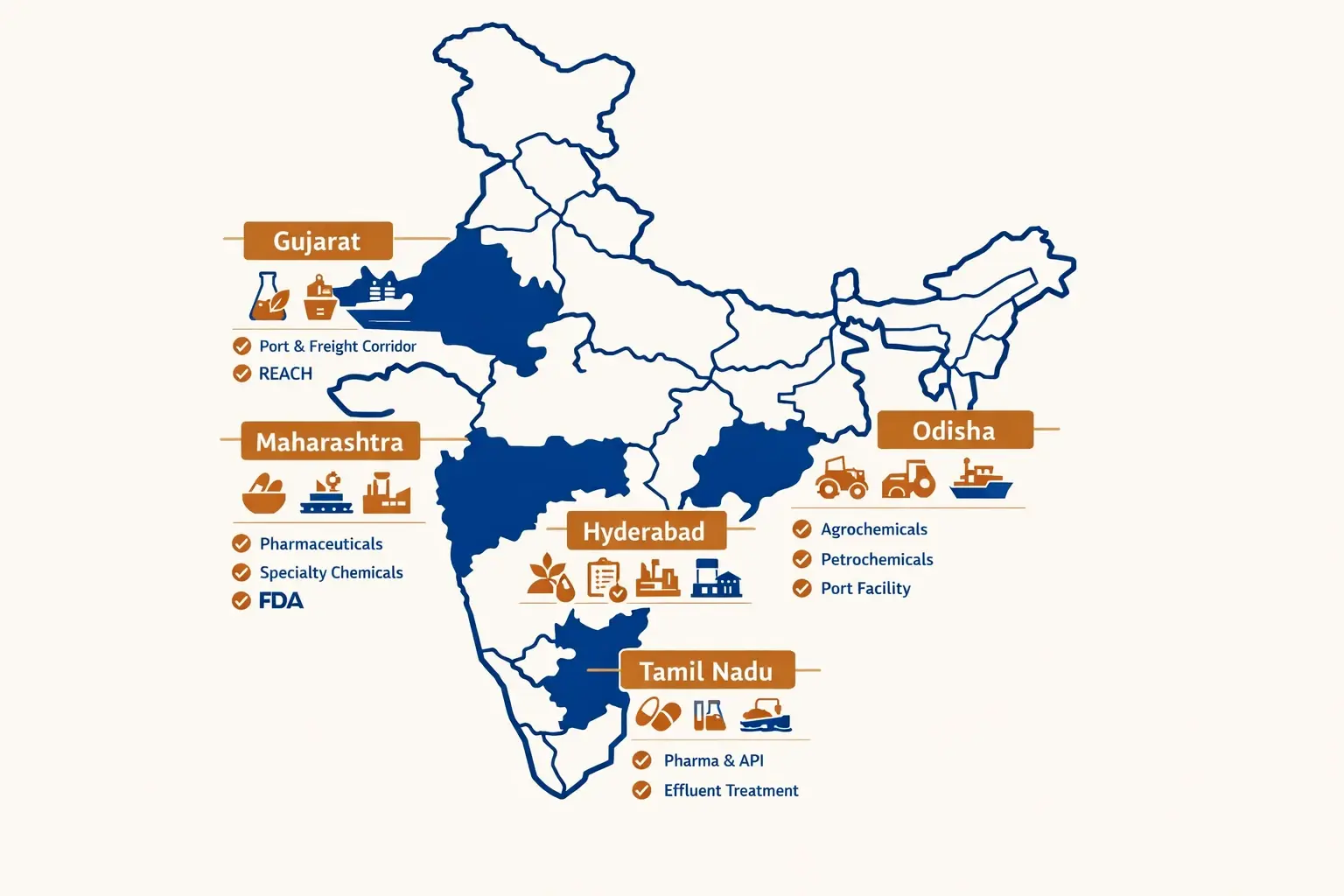
The western states of Gujarat and Maharashtra form the backbone of India’s chemical production, accounting for a majority of the country’s output. While geographically close, they offer distinctly different strengths.
Gujarat: The Chemical Capital of India
Often called the “Petro Capital” of India, Gujarat is an industrial behemoth. Its massive, dedicated industrial estates like Dahej, Ankleshwar, and Vapi are world-renowned centers for chemical manufacturing.
- Key Specializations: Dyestuffs and intermediates, pigments, basic chemicals (caustic soda, chlorine), agrochemicals, petrochemicals, and a rapidly growing specialty chemicals sector.
- Infrastructure & Export Strengths: Gujarat’s primary advantage is its world-class port infrastructure. Proximity to major ports like Mundra and Kandla provides a significant logistical edge for bulk shipments. The state’s Petroleum, Chemicals and Petrochemicals Investment Region (PCPIR) in Dahej is a prime example of integrated, large-scale infrastructure.
- Who Should Source Here? Procurement managers looking for high-volume, cost-competitive basic chemicals, agrochemical formulations, and dyes will find Gujarat to be an ideal fit. Its scale is unmatched for bulk procurement.
- An Important Nuance: The sheer density of suppliers in Gujarat means quality can vary. It’s home to both global-scale, highly compliant manufacturers and hundreds of smaller players. Rigorous, on-the-ground vetting is non-negotiable here.
Maharashtra: The Specialty and Pharma Powerhouse
While also a major producer of basic chemicals, Maharashtra’s strength lies in its focus on value-added products. The state is a hub for innovation, with a strong R&D ecosystem supporting its manufacturing base in areas like the Thane-Belapur and Raigad industrial belts.
- Key Specializations: Specialty chemicals, fine chemicals, pharmaceuticals (APIs and intermediates), personal care ingredients (surfactants), and coatings.
- Infrastructure & Export Strengths: The state is home to Jawaharlal Nehru Port (JNPT), India’s largest container port, making it exceptionally well-suited for exporting finished, packaged goods. Its proximity to Mumbai, India’s financial capital, also facilitates international trade.
- Who Should Source Here? Buyers seeking high-purity, research-intensive specialty chemicals, pharmaceutical ingredients, or custom formulations will find Maharashtra’s ecosystem well-equipped to meet their stringent quality and compliance needs.
The Southern Hubs: Precision, Pharma, and Petrochemicals
South India has carved out a niche in high-tech, knowledge-based chemical manufacturing. The hubs in Telangana and Tamil Nadu are less about bulk volume and more about precision and strict regulatory adherence.
South India (Telangana & Tamil Nadu): The Emerging Giants
- Telangana (Hyderabad): Known as the “Genome Valley” and “Bulk Drug Capital of India,” Hyderabad is the undisputed leader in pharmaceuticals and life sciences. Its ecosystem is built around a culture of stringent quality control and regulatory compliance, with many facilities holding certifications from global bodies like the US FDA.
- Tamil Nadu: This state has a strong base in petrochemicals, polymers, and fertilizers, centered around the industrial corridors of Manali and Cuddalore. It also boasts major ports in Chennai, Ennore, and Tuticorin, facilitating exports to Southeast Asia and the Middle East.
- Who Should Source Here? Companies in the pharmaceutical, life sciences, and personal care sectors requiring APIs, advanced intermediates, and other highly regulated materials will find the expertise they need in Telangana. Those in need of petrochemical derivatives and industrial materials can look to Tamil Nadu.
From Theory to Practice: A Framework for Choosing Your Indian Sourcing Hub
Armed with this regional knowledge, you can move from general exploration to targeted action. Ask yourself these four questions to narrow down the ideal location for your needs:
- What is my chemical category? Match your product to the region’s core competency. Don’t look for bulk agrochemicals in Hyderabad or complex APIs in Vapi.
- What is my primary driver: cost or compliance? For cost-sensitive bulk materials, Gujarat’s scale is a powerful advantage. For high-stakes products where regulatory approval is paramount, Telangana’s pharma-focused ecosystem is a safer bet.
- What are my volume and packaging needs? Gujarat’s deep-water ports are built for bulk liquid and solid shipments. Maharashtra’s containerized logistics are perfect for specialty chemicals sold in drums, totes, or bags.
- What level of supplier engagement do I require? If you need a partner for contract R&D and custom synthesis, the innovation hubs in Maharashtra and Telangana are your best bet.
Once you’ve shortlisted a region, the next critical step is to implement a robust Indian supplier qualification process. This involves more than just a paper audit; it requires boots-on-the-ground verification of licenses, production capacity, and quality management systems.
Navigating the Nuances: Common Questions About Sourcing Chemicals from India
As you begin your journey, a few common questions will likely arise. Let’s address them head-on.
Isn’t quality inconsistent when sourcing from India?
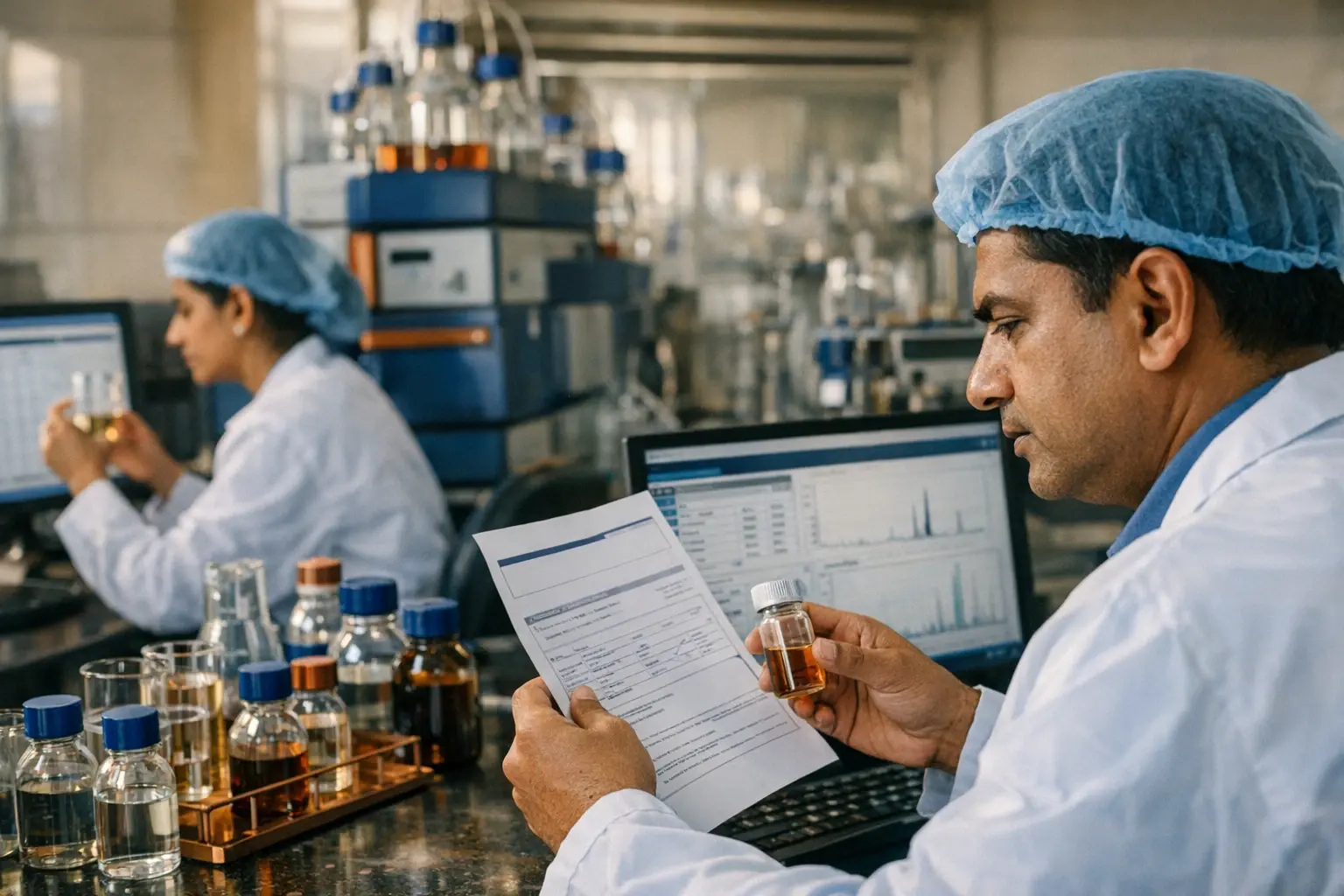
This is a common misconception. The issue isn’t one of national capability but of supplier selection. India is home to world-class manufacturers who supply the biggest names in the global chemical industry. The key is to separate them from the thousands of smaller, less-regulated players. A rigorous due diligence process, including third-party lab testing and on-site audits, is the most effective way to guarantee consistent quality and debunk this myth.
How complex are the logistics and export procedures?
The regulatory landscape can be challenging, involving multiple agencies, hazmat documentation (SDS, COA), and specific customs requirements. However, it’s a well-defined process that experienced partners navigate daily. Navigating this requires a deep understanding of local regulations, which is where end-to-end custom procurement solutions become invaluable. A good sourcing partner handles all the complexities of documentation and logistics, providing you with a single, transparent landed cost.
How do I manage supply chain risks like delays or raw material volatility?
This is a valid concern for any global supply chain. The solution lies in proactive risk management. This includes building strong relationships with multiple vetted suppliers within a chosen region, maintaining buffer stocks for critical materials, and having a local partner on the ground who can provide real-time intelligence on market conditions and potential disruptions before they impact your production schedule.
Your Journey into Indian Chemical Sourcing Starts Here
India’s chemical market is not a monolith; it is a dynamic and diverse landscape of specialized hubs, each with unique strengths. By moving beyond a country-level view and adopting a regional sourcing strategy, you can unlock immense value, build resilience into your supply chain, and forge partnerships that drive your business forward.
Armed with this knowledge, you’re now better equipped to explore the vast potential of the Indian chemical market. The next step is to translate this regional understanding into a targeted sourcing strategy that aligns perfectly with your company’s specific needs.