Procurement leaders are no longer asking if they should diversify their chemical supply chains. The conversation has shifted entirely to how to execute a successful “China + 1” strategy.
When evaluating bulk industrial chemical types sourcing—specifically for high-volume acids, solvents, bases, and intermediates—moving production or procurement to India offers undeniable resilience benefits. However, it also introduces a unique set of logistical, regulatory, and quality control complexities.
For U.S. chemical buyers, the challenge lies in bridging the gap between a promising overseas market and the strict conformance standards required on the factory floor. Balancing the strategic need for supply chain stability against the risks of inconsistent batch quality, unforeseen tariffs, and complex export logistics requires a rigorous evaluation framework.
This guide will help you understand the Indian chemical landscape, compare sourcing approaches, evaluate potential suppliers, and confidently transition your high-volume chemical procurement.
Understanding The Decision
Deciding to source bulk industrial chemicals from India requires evaluating not just individual suppliers, but entire regional ecosystems. Unlike Western markets where chemical production might be distributed, Indian chemical manufacturing is highly centralized into distinct industrial clusters.
Evaluating a supplier requires understanding their geographic context, as “where” you source often dictates logistics efficiency and product specialization:
- Gujarat (Ankleshwar, Vapi, Dahej): The unquestioned powerhouse for solvents, industrial acids, and bulk intermediates. Dahej is specifically known for its Petrochemical and Petroleum Investment Region (PCPIR).
- Maharashtra (Mumbai, Pune, Tarapur): The primary hub for specialty chemicals, fine chemicals, and major trading houses.
- Telangana (Hyderabad): The center for high-end intermediates, particularly those linked to pharmaceutical and advanced agricultural applications.
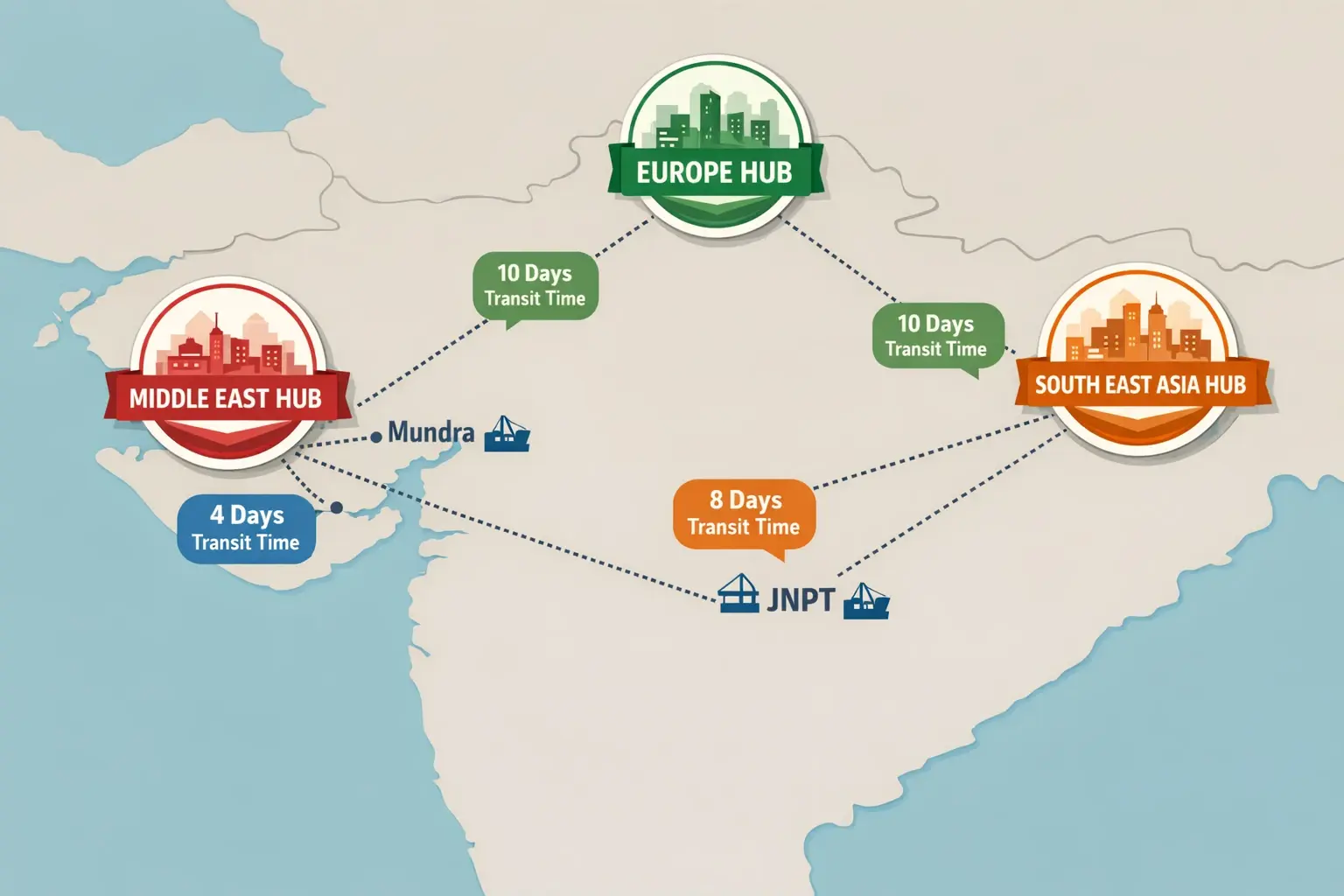
Navigating the india chemical logistics market means aligning your specific chemical needs with the correct regional hub. An supplier based in Gujarat, for example, will have a vastly different routing strategy to the Mundra Port than a facility operating out of Hyderabad routing through Nhava Sheva (JNPT).
Key Evaluation Criteria
To successfully identify reliable partners and avoid substandard materials, procurement teams should evaluate suppliers across “Four Pillars” of operational health.
1. Technical Specifications and Quality Assurance
Batch-to-batch consistency is the most critical hurdle. Evaluate a supplier’s capability to match precise CAS Numbers, purity grades (Technical vs. Reagent vs. USP), and strict impurity profiles. True evaluation requires moving beyond digital Certificates of Analysis (COAs) and implementing third-party, in-country lab testing before shipment.
2. Compliance and Regulatory Alignment
A supplier must provide robust “paperwork trails” to avoid port-side seizures in the U.S. Key verification points include:
- GHS-compliant Safety Data Sheets (SDS).
- ISO 9001/14001 certifications.
- Participation in the Responsible Care® initiative.
- A valid Import Export Code (IEC) via the Indian Directorate General of Foreign Trade (DGFT).
3. Commercial Viability
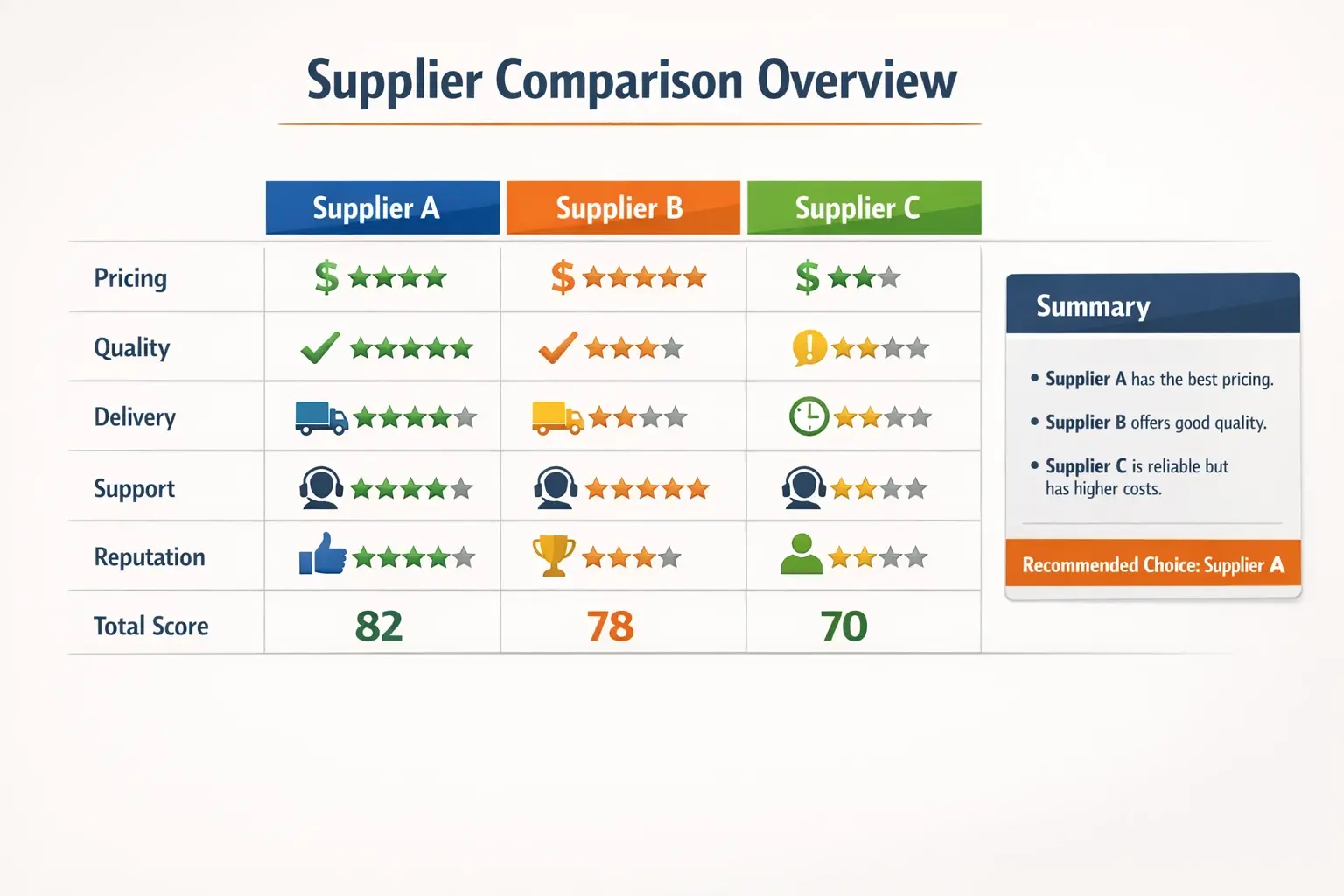
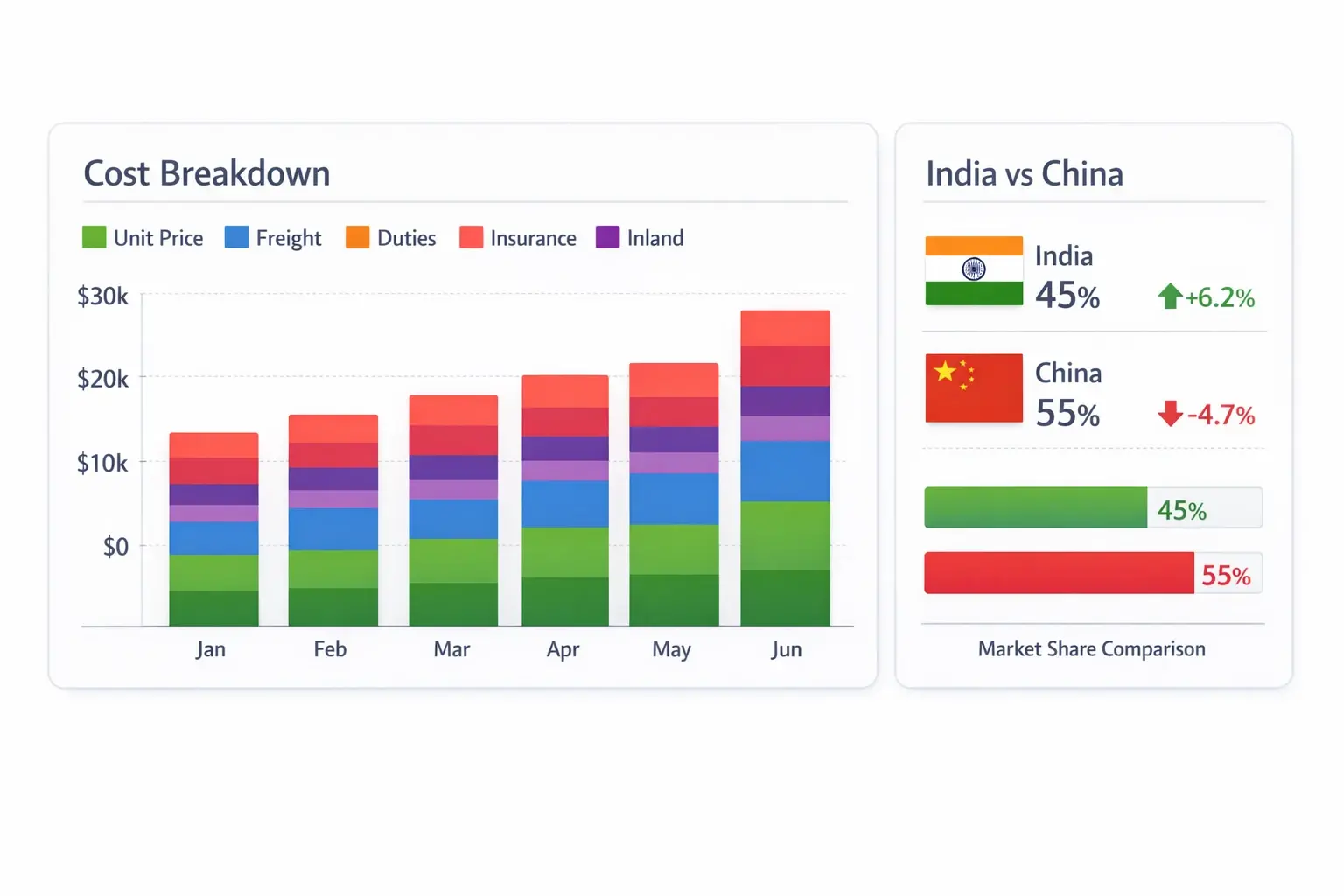
Unit price is only one piece of the puzzle. Commercial evaluation must assess Minimum Order Quantities (MOQs), payment terms (e.g., L/C vs. Net 30/60), and the “Total Landed Cost,” which factors in domestic Indian freight, port handling, ocean freight, insurance, U.S. customs duties, and final inland transport.
4. Operational Capability
Does the supplier have the physical infrastructure to handle bulk volumes? Evaluate their access to ISO tanks or flexitanks, their proximity to major export ports, and their transparency regarding realistic lead times.
Comparing Common Approaches, Methods, or Options
When transitioning sourcing volumes, U.S. buyers typically weigh several strategic approaches.
Direct Sourcing vs. Sourcing Partnerships
Direct Sourcing (Manufacturer Direct)
- Strengths: Maximum theoretical margin savings; direct line of communication to the factory floor.
- Weaknesses: Requires immense internal resources to manage quality control, physical facility audits, and complex export logistics. Finding reliable, authorized equivalents for Western brands is challenging without local context.
- Tradeoffs: You trade margin for risk. Without an on-the-ground presence, you are highly vulnerable to ghost companies, substandard batches, and communication delays.
Sourcing Partner (Boots on the Ground)
- Strengths: Offers a real-world extension of your team in India. Partners conduct on-site physical verification, collect independent samples, oversee third-party testing, and manage end-to-end logistics. They provide U.S.-aligned accountability.
- Weaknesses: Introduces an intermediary into the commercial chain.
- Tradeoffs: You invest in a layer of operational security to guarantee conformance, protect your brand reputation, and free up internal procurement resources.
Logistics Considerations: ISO Tanks vs. Flexitanks
When managing bulk shipping from India to the U.S., the choice of packaging is critical for solvents, acids, and liquid intermediates.
- ISO Tanks: Best for hazardous chemicals (Hazmat) and highly corrosive acids. They offer superior safety and are reusable, though they require return logistics planning.
- Flexitanks: Ideal for non-hazardous bases and industrial liquids. They are highly cost-effective and single-use (fitting inside a standard 20ft container), but are completely unsuitable for dangerous goods.
Common Challenges and Mistakes
Even experienced procurement teams encounter unique pitfalls when entering the Indian chemical market.
Ignoring the “Total Landed Cost”
One of the most frequent mistakes is calculating ROI based solely on the FOB (Free On Board) unit price. Buyers often experience margin erosion due to unforeseen financial surcharges, such as hazardous material handling fees, inland transportation delays from Gujarat to Mundra, and complex U.S. customs tariffs.
Relying Exclusively on Digital Verification
Accepting a supplier’s digital footprint at face value is a critical vulnerability. Beautiful websites and well-formatted PDFs do not guarantee physical manufacturing capacity. Relying solely on supplier-provided samples—rather than independently drawn samples from the actual production line—often leads to significant quality discrepancies upon delivery.
Underestimating Regional Logistics Constraints
Choosing a supplier deep inland without a clear logistics plan can severely impact lead times. Mitigating chemicals supply chain risk requires a proactive assessment of transit times to the U.S. East vs. West Coast, taking into account congestion at major hubs like Nhava Sheva.
Best Practices and Expert Recommendations
To secure your supply chain and confidently evaluate suppliers, implement the following best practices.
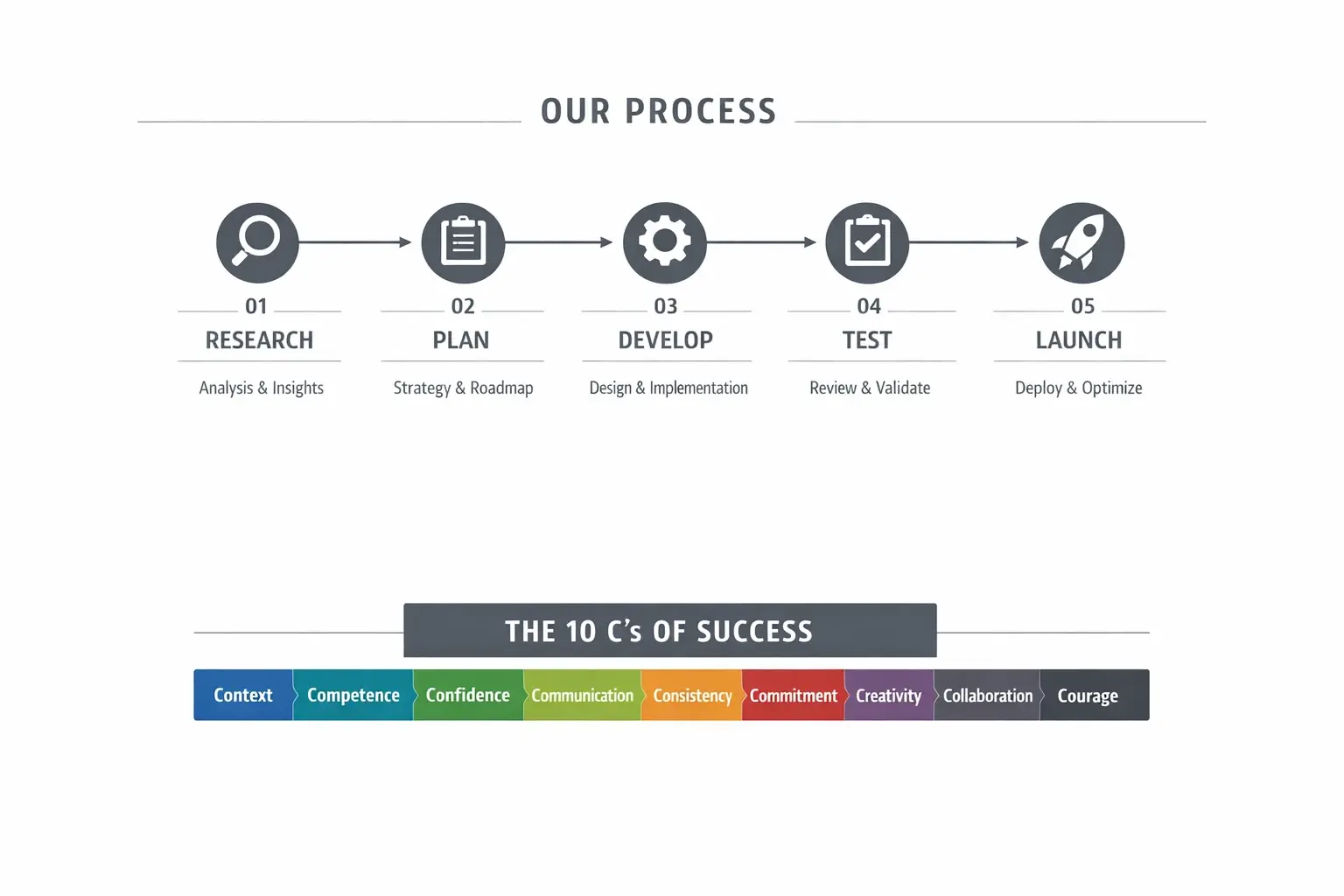
Adopt the 5-Step Vetting Framework
Do not skip steps in the qualification process. A rigorous vetting cycle should look like this:
- Digital/Regulatory Verification: Verify the IEC through the DGFT portal and cross-check ISO/REACH registrations.
- Commercial Qualification: Confirm MOQs, payment terms, and Total Landed Cost modeling.
- Physical Audit: Dispatch an in-country representative to physically visit the facility in the local GIDC (Gujarat Industrial Development Corporation) cluster to confirm operational capacity and equipment.
- Independent Sampling: Have your representative pull samples directly from the production batch. Do not accept pre-packaged supplier samples.
- Third-Party Lab Testing: Send the physical samples to an independent lab (or directly to your U.S. QA team) to verify purity and grade compliance against the COA.
Centralize Export Compliance
Treat Indian export customs and U.S. import clearance as a single, continuous workflow. Ensure that packing lists, commercial invoices, certificates of origin, and buyer-specific labeling requirements are synchronized before the cargo ever leaves the facility.
Real-World Applications and Examples
Consider a U.S.-based chemical distributor looking to transition 20% of their bulk solvent and intermediate volume away from legacy Chinese suppliers to Indian manufacturers.
Initially, the buyer identified several potential manufacturers in Ankleshwar. However, the buyer struggled to determine which factories had true bulk loading capacity (ISO tanks) versus those merely packaging in drums. By utilizing a “boots on the ground” sourcing approach, an in-country team was dispatched to physically audit the facilities.
The physical audit revealed that two of the top digital candidates were actually trading companies with no production equipment. The team identified a true manufacturer, physically collected samples, ran purity checks at a third-party lab, and verified the supplier’s DGFT export licenses. They then orchestrated the Hazmat shipping protocols from the Gujarat facility to the Mundra port, providing the U.S. buyer with a predictable, fully-landed cost and zero port-side surprises.
Frequently Asked Questions
Why should I diversify my chemical sourcing away from China right now?
Geopolitical tensions, shifting tariff structures, and localized supply chain disruptions have made over-reliance on a single region highly risky. Diversifying into India provides a critical safety net, ensuring supply chain continuity for essential manufacturing inputs while building long-term resilience against unexpected trade volatility.
What is the “Total Landed Cost” advantage of India over China?
While the base unit price for certain chemicals in India may sometimes carry a slight premium compared to China, the Total Landed Cost must account for stability. India often offers an advantage through lower geopolitical tariff risks, a stronger culture of IP protection, and highly reliable compliance documentation, which significantly reduces the hidden costs of emergency freight, delayed shipments, and regulatory fines.
How do we handle 2026 EPA PFAS reporting requirements for Indian imports?
Compliance requires proactive alignment with your Indian supplier. You must require fully transparent impurity profiles and comprehensive GHS-compliant Safety Data Sheets (SDS). Working with an in-country partner ensures that the supplier’s technical documentation perfectly matches the rigorous reporting standards expected by the U.S. EPA.
How do I verify Indian chemical supplier certifications (ISO, GMP, REACH)?
Certifications should never be taken at face value. They must be cross-referenced with the issuing bodies (such as SGS or Intertek). Additionally, verifying the supplier’s Import Export Code (IEC) via the Indian government’s DGFT portal is a critical step in establishing the entity’s legitimacy.
How do I verify chemical purity from Indian suppliers?
The most reliable method is independent, on-site sample collection. Do not rely on samples mailed directly by the supplier. Instead, use an in-country representative to visit the facility, pull a sample directly from the intended batch, and submit it for third-party lab testing (or direct shipment to your U.S. QA team) to ensure it matches the provided COA.
How do I handle hazardous chemical (Hazmat) shipping from India?
Hazmat shipping requires specialized handling, specifically the use of UN-certified ISO Tanks or heavy-duty drums, strictly adhering to international maritime dangerous goods (IMDG) codes. It is crucial to work with vetted freight forwarders who understand both the Indian domestic transport regulations for dangerous goods and the U.S. import clearance requirements.
What are the current lead times for chemical imports from India to the US?
Lead times vary heavily based on the manufacturing cluster and the chosen port. Generally, inland transit from Gujarat clusters to Mundra or Nhava Sheva takes a few days, followed by ocean transit times of 25 to 40 days depending on whether the cargo is routed to the U.S. East Coast or West Coast. Tech-enabled tracking and proactive customs document preparation can prevent port-side delays.
How do I ensure supply chain continuity from India?
Continuity is built through rigorous upfront vetting, secondary supplier development (having a backup factory qualified within the same cluster), and utilizing an on-the-ground partner who can intervene in real-time to troubleshoot logistical delays or quality concerns before they impact your manufacturing uptime.
Conclusion
Sourcing bulk industrial chemicals from India presents a powerful opportunity to secure your supply chain, mitigate regional concentration risks, and access a world-class manufacturing ecosystem. However, realizing these benefits requires moving past surface-level evaluations and confronting the complexities of the Indian market head-on.
Successful evaluation comes down to rigorous physical verification, transparent Total Landed Cost calculations, and ensuring absolute alignment between Indian export capabilities and U.S. import compliance. By applying the frameworks outlined in this guide—from hub mapping to independent sampling—you can filter out unreliable entities and partner with manufacturers capable of delivering consistent, high-quality materials.
As you move closer to a decision, prioritize suppliers and sourcing partners who champion transparency, welcome physical facility audits, and act as highly accountable extensions of your own procurement team.