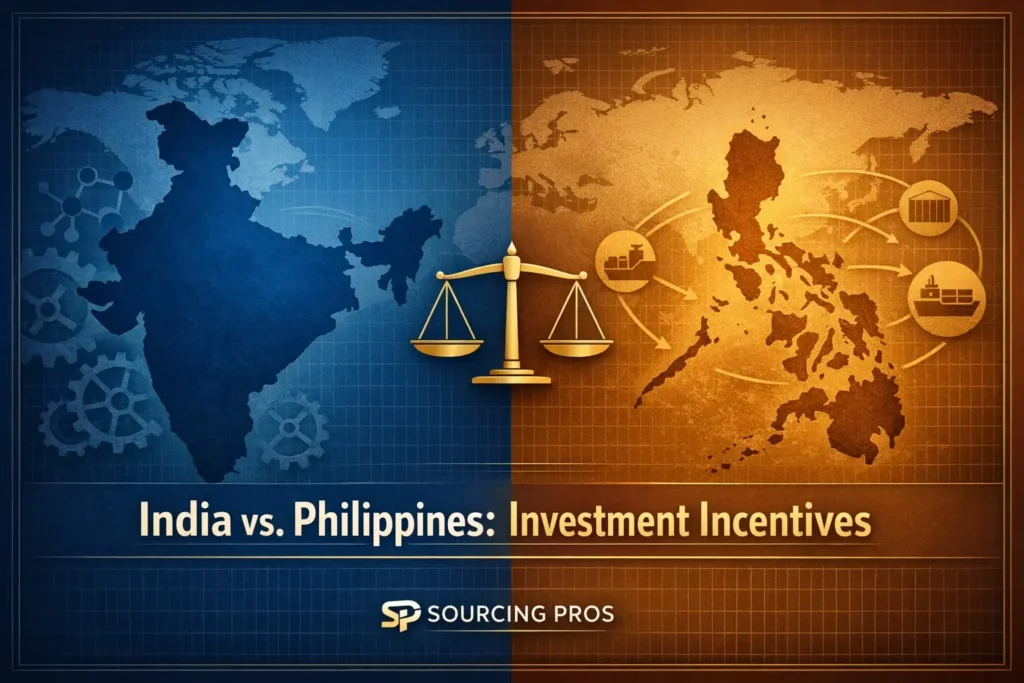
You’re staring at a map, and the pressure is on. The old way of sourcing everything from a single region no longer feels safe. Your supply chain needs resilience, a “China +1” strategy that’s more than just a buzzword. Two names keep coming up for chemical and materials manufacturing: India and the Philippines. Both are rising stars in Asia, offering skilled labor, growing economies, and, most importantly, governments eager for your business.
But they are not the same. Choosing between them is like picking between two different tools for a critical job. One might offer raw power and scale, the other precision and ease of use. The right choice depends entirely on what you’re trying to build.
This is where the real work begins—moving past headlines and into the fine print of government incentives, tax holidays, and investment climates. It’s about understanding not just what each country offers on paper, but how those benefits translate to the factory floor.
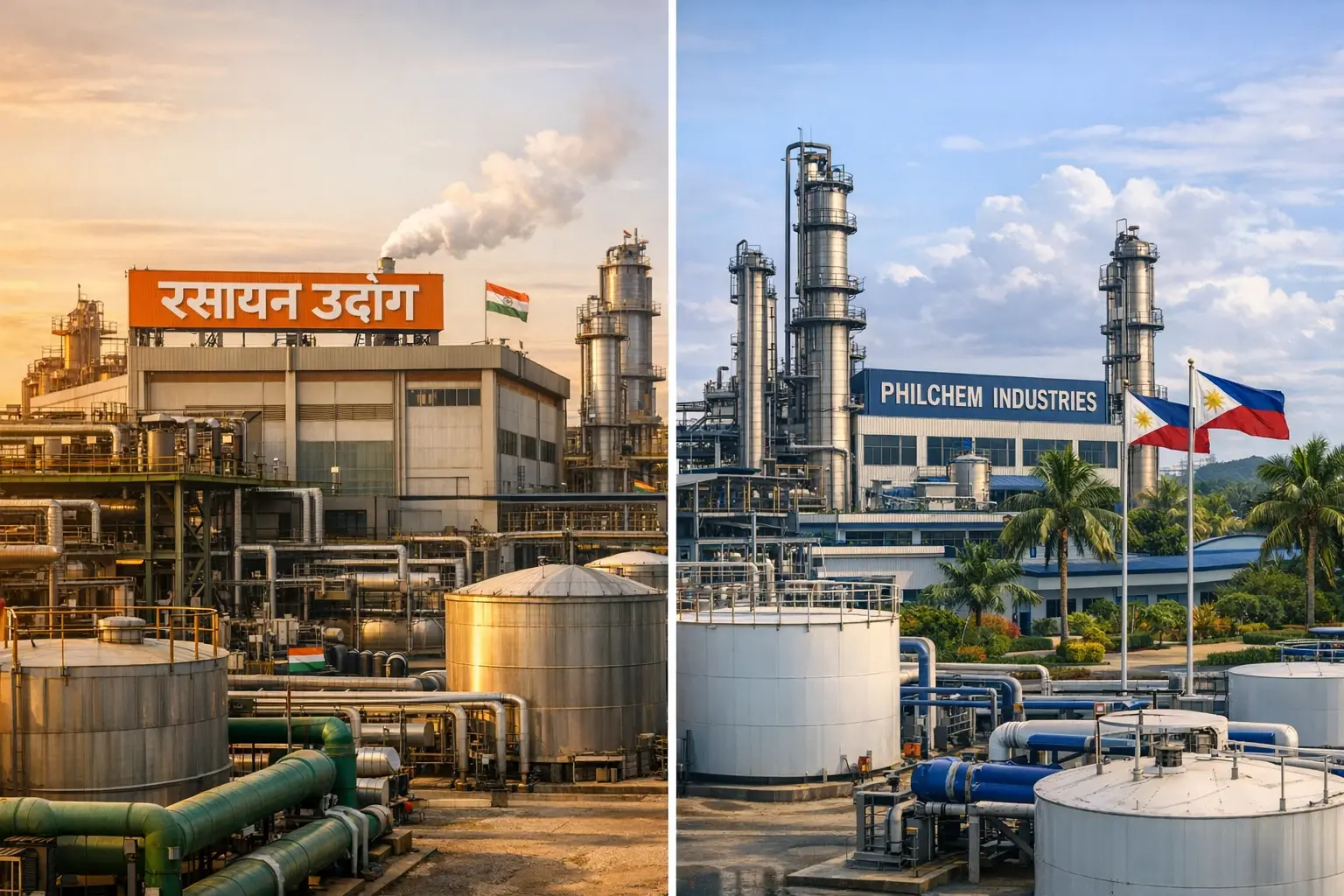
Understanding the Incentive Landscape: What’s on the Table?
Before we dive into a head-to-head comparison, let’s get on the same page. When we talk about “government investment incentives,” what do we really mean?
Think of it as a welcome package a country offers to foreign companies. They want to attract your investment to create jobs, bring in new technology, and grow their economy. In exchange for setting up shop, they give you financial and operational advantages.
These incentives typically fall into a few key categories:
- Tax Holidays: This is the big one. For a set number of years, you might pay zero or a significantly reduced corporate income tax. It’s a direct boost to your profitability in the crucial early years.
- Special Economic Zones (SEZs): These are designated geographic areas with business-friendly rules. Companies operating within an SEZ often enjoy tax breaks, streamlined customs procedures, and duty-free import of raw materials and capital goods, especially if they are export-oriented.
- Subsidies & Grants: These can include direct financial support for capital investment (like building a factory), discounts on land or utilities, or funding for research and development.
- Simplified Regulations: This non-financial incentive can be just as valuable. It includes things like faster environmental clearances, single-window clearance for permits, and easier labor regulations.
The “aha moment” for many procurement leaders is realizing that the most attractive incentive isn’t always the biggest number. It’s the one that best aligns with your business model and mitigates your biggest operational risks.
Deep Dive: India’s Playbook for Chemical & Materials Manufacturers
India’s approach is built on a massive scale. With its “Make in India” initiative, the government is making an aggressive push to become a global manufacturing powerhouse. For the chemical and materials sector, this translates into a powerful, multi-layered incentive structure.
As an official government source, Invest India highlights that the country is already a major global player, ranking 6th in the world for chemical sales. The government is actively building on this strength.
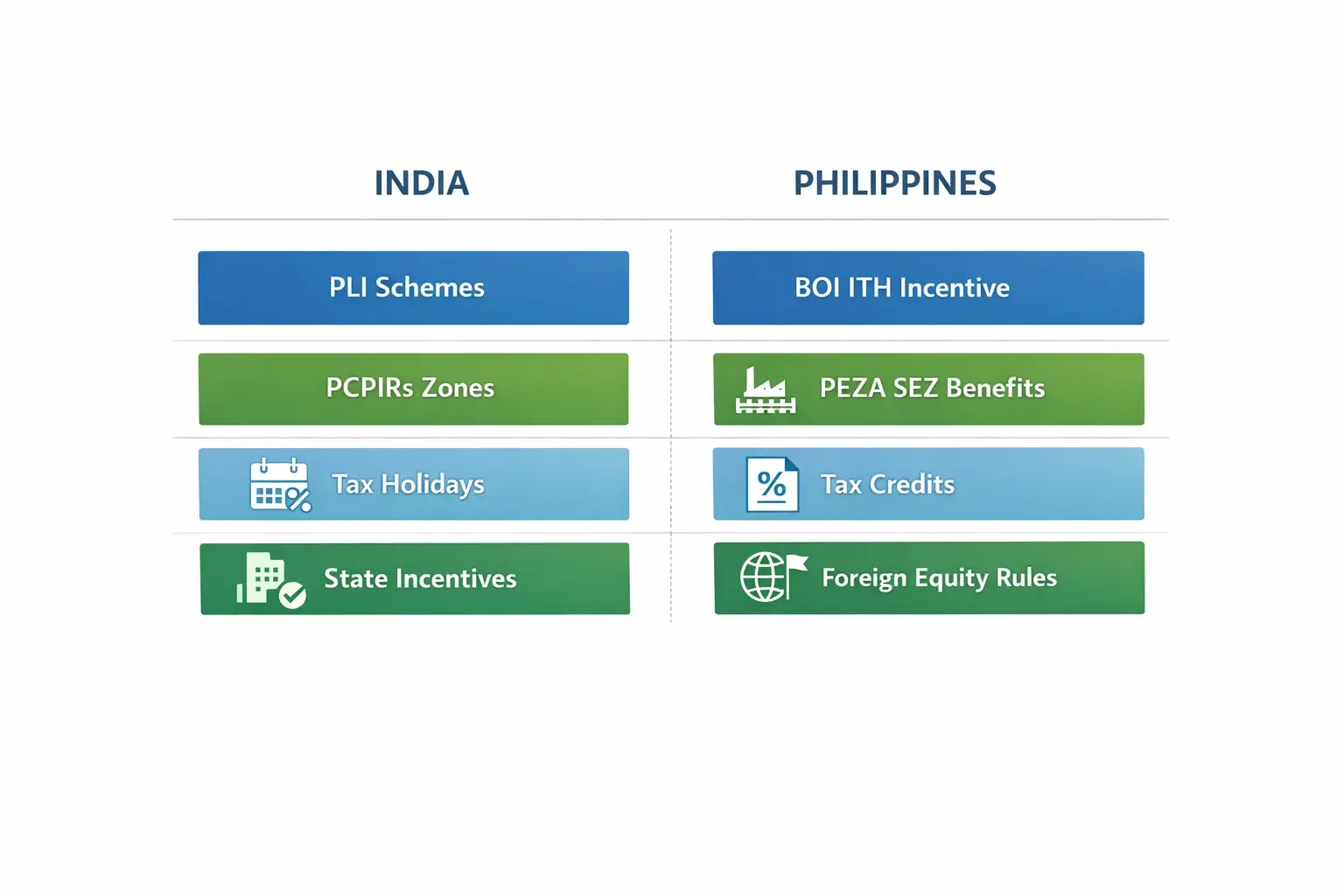
Here are the key programs you need to know about:
Production-Linked Incentive (PLI) Schemes
This is the government’s flagship program. Instead of just rewarding investment, PLI schemes reward results. Companies receive a direct cash subsidy based on the incremental sales of goods manufactured in India. While the most famous PLI is for electronics, there are schemes highly relevant to the chemical sector, including those for pharmaceuticals, specialty steel, and bulk drugs. The goal is to create “champions” who can compete globally.
Tax Benefits for New Manufacturing
This is a straightforward and powerful incentive. According to a UK-based business consultancy, new domestic manufacturing companies established after October 1, 2019, can opt for a flat corporate tax rate of 15% (plus surcharge and cess, effectively around 17.16%), provided they commence production by March 31, 2024. This is one of the most competitive rates in Asia.
Sector-Specific Industrial Zones
India is creating dedicated hubs to foster ecosystems for specific industries. For chemical and materials manufacturers, these are critical:
- Petroleum, Chemicals and Petrochemicals Investment Regions (PCPIRs): These are massive, integrated industrial zones with world-class infrastructure, logistics, and port connectivity, designed to attract global-scale investments.
- Plastic Parks: These are specialized zones with state-of-the-art infrastructure and common facilities for the plastics processing industry, including testing and R&D centers.
The Bottom Line on India: The incentives are geared towards large-scale, long-term investments aimed at serving both the massive domestic market and global exports. The system rewards production and is designed to build deep industrial capabilities.
Deep Dive: The Philippines’ Offer for Foreign Investors
The Philippines has long been a strategic choice for export-oriented manufacturing, particularly for companies targeting Southeast Asian and Pacific markets. Its incentive structure is well-established, transparent, and largely managed by two key agencies.
According to Smart Account Solution, a Philippines-based consultancy, the country’s framework is designed to make it easy for foreign companies to set up export-focused operations within designated economic zones.
The Two Pillars: BOI and PEZA
Understanding these two agencies is key to understanding the Philippines:
- Board of Investments (BOI): The BOI offers incentives to companies that cater to the domestic market or fall under the country’s Strategic Investment Priority Plan (SIPP). These are industries the government has identified as crucial for national development.
- Philippine Economic Zone Authority (PEZA): PEZA is focused almost exclusively on export-oriented businesses. Companies that register with PEZA must operate within a designated PEZA economic zone and typically export 100% of their production (though some domestic sales are allowed).
Core Incentives
The welcome package in the Philippines often includes:
- Income Tax Holiday (ITH): This is the star attraction. BOI and PEZA-registered enterprises can enjoy an ITH of four to six years, meaning no corporate income tax during that period. This can be extended based on factors like project location or technology.
- Special Corporate Income Tax: After the ITH period ends, companies can opt for a special 5% tax on their Gross Income Earned (GIE) in lieu of all other national and local taxes. This simplicity is a major draw.
- Duty-Free Importation: PEZA-registered firms can import capital equipment, raw materials, and spare parts completely tax and duty-free. This is a huge cost advantage for manufacturers who rely on imported inputs.
- Non-Fiscal Incentives: These include simplified import-export procedures and the ability to employ foreign nationals in supervisory or technical positions.
A Key Consideration: The Philippines maintains a Foreign Investment Negative List (FINL), which restricts foreign ownership in certain sectors. However, for most manufacturing operations, particularly those that are 100% export-oriented, 100% foreign ownership is permitted.
The Bottom Line on the Philippines: The incentive structure is highly refined for export manufacturing within SEZs. It offers clarity, simplicity, and significant cost advantages for companies whose primary goal is to produce goods for international markets.
Direct Comparison & Strategic Decision-Making
So, how do they stack up side-by-side? There is no simple “winner.” The better option depends entirely on your company’s strategic priorities.
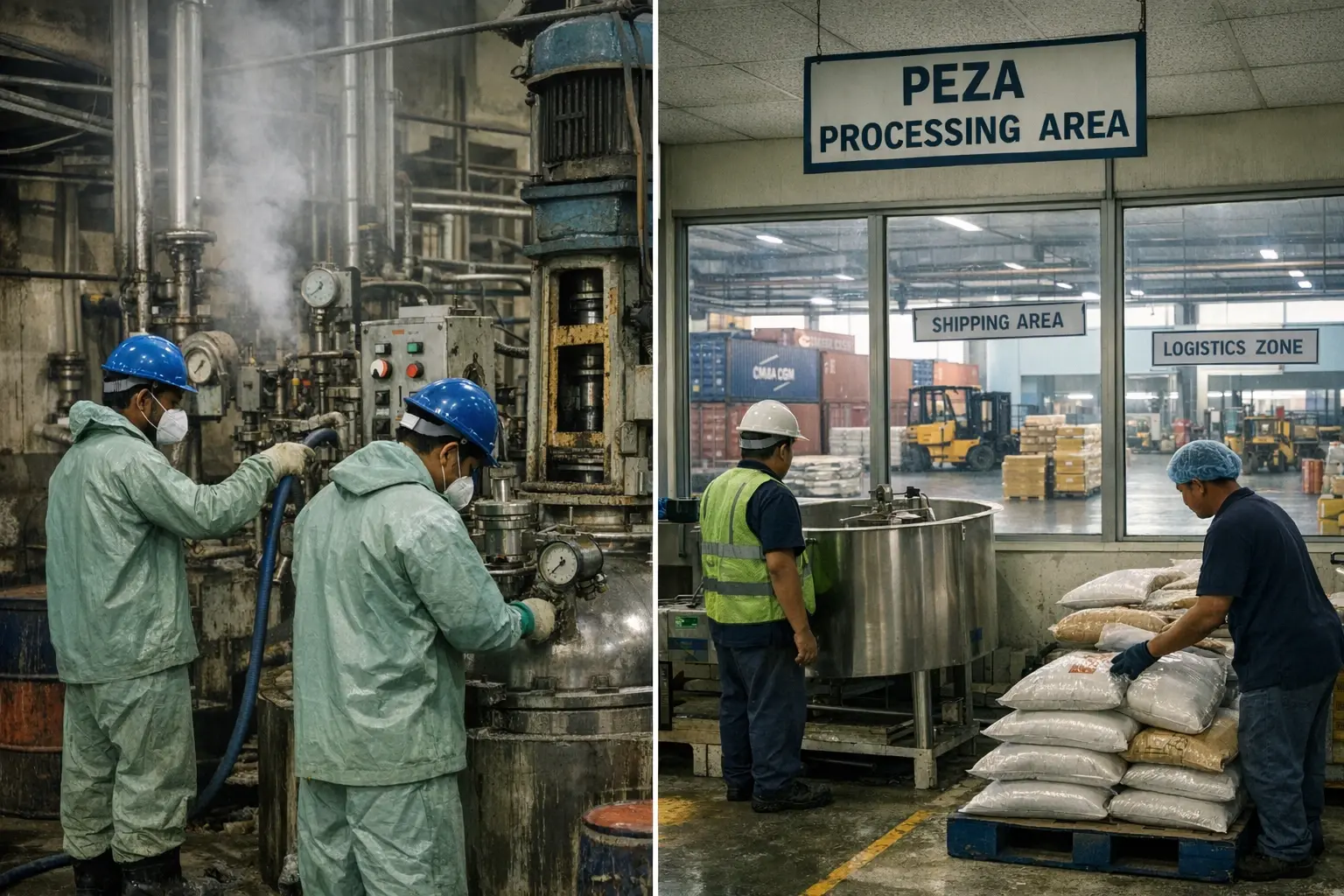
Here’s a high-level comparison table to help you frame your thinking:
| Feature | India | Philippines |
|---|---|---|
| Primary Focus | Domestic Market + Global Exports | Primarily Export-Oriented |
| Key Incentive Model | Production-Linked Cash Subsidies (PLI) | Income Tax Holidays (ITH) + Special Tax Rates |
| Corporate Tax Rate | ~17% for new manufacturing | 0% during ITH, then 5% on Gross Income (PEZA) |
| Key Agencies | Invest India, State-level bodies | Board of Investments (BOI), PEZA |
| Economic Zones | PCPIRs, Plastic Parks, SEZs | PEZA Zones, Freeport Zones (Subic, Clark) |
| Foreign Ownership | 100% allowed in most manufacturing | Generally 100% for export firms; restrictions exist |
| Best For… | Large-scale production, deep vertical integration, accessing a massive domestic market. | Streamlined, cost-effective export hubs with simplified tax and customs procedures. |
Beyond the Numbers: Operational Realities
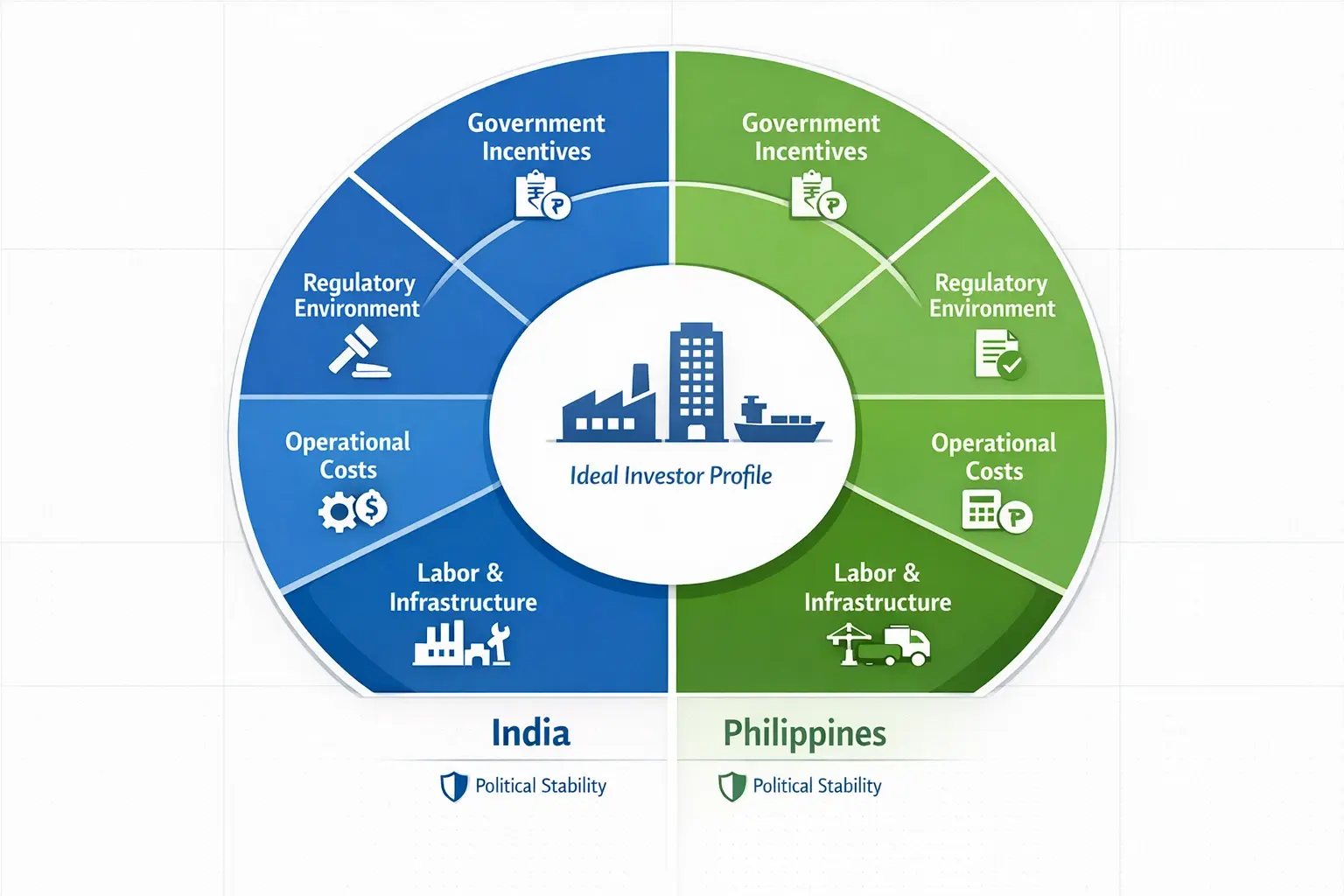
Incentives are just one piece of the puzzle. You also have to consider:
- Regulatory Environment: India’s regulatory landscape can be complex to navigate, with approvals needed at both central and state levels. The Philippines, within its PEZA zones, offers a more contained and simplified “single-window” experience.
- Infrastructure & Logistics: India is undertaking massive infrastructure projects, but logistical efficiency can vary dramatically by region. The Philippines’ SEZs are typically built around major ports, offering smoother export logistics.
- Labor & Talent: Both countries have a large, young, and educated workforce. India offers a deep pool of engineers and chemists, while the Philippines is known for its highly proficient English-speaking workforce, which can simplify management and training.
Choosing Your Destination: A Framework for Decision-Makers
To make the right choice, ask yourself these strategic questions:
1. Who is my primary customer?
- If you’re targeting India’s booming domestic market of 1.4 billion people, then manufacturing in India is almost a necessity. The government’s policies are designed to support this.
- If you’re creating an export hub for ASEAN, North America, or Europe, the Philippines’ PEZA system offers a world-class, cost-effective, and tax-efficient framework designed specifically for you.
2. What is my business model?
- If your model is based on achieving massive scale and high production volume, India’s PLI schemes, which reward incremental sales, could provide a significant cash-flow advantage.
- If your model prioritizes lean operations and predictable costs, the Philippines’ ITH followed by a simple 5% tax on gross income offers incredible clarity and financial predictability.
3. How complex is my supply chain?
- If you need to build a deep, local supply chain for raw materials and intermediates, India’s vast industrial ecosystem and large domestic supplier base offer more opportunities for localization.
- If your operation relies heavily on importing raw materials and exporting finished goods, the duty-free benefits and streamlined customs within a PEZA zone in the Philippines can drastically reduce costs and administrative headaches.
Frequently Asked Questions (FAQ)
What exactly is a PLI scheme in India?
A Production-Linked Incentive (PLI) scheme is a performance-based subsidy. Instead of just giving a tax break for setting up a factory, the Indian government gives companies a direct cash payment calculated as a percentage of their increased sales over a base year. It’s designed to encourage high-volume production and global competitiveness.
What’s the difference between BOI and PEZA in the Philippines?
Think of it as “domestic vs. export.” The Board of Investments (BOI) primarily grants incentives to companies serving the domestic market or operating in priority sectors. The Philippine Economic Zone Authority (PEZA) is almost exclusively for companies that will operate inside a designated economic zone and export most (if not all) of their products. PEZA incentives are often considered more powerful for pure-play exporters.
Can a foreign company own 100% of a manufacturing business in India and the Philippines?
Yes, in most cases. India allows 100% Foreign Direct Investment (FDI) under the “automatic route” for most manufacturing sectors, meaning no prior government approval is needed. Similarly, the Philippines allows 100% foreign ownership for PEZA-registered export enterprises. Restrictions in both countries typically apply to sensitive sectors like media, retail, and defense.
What are the biggest non-financial challenges to consider?
Beyond the incentives, the biggest hurdles are often operational. In India, this can be navigating the bureaucracy, dealing with inconsistent infrastructure outside of major hubs, and complex land acquisition processes. In the Philippines, challenges can include higher power costs and vulnerability to supply chain disruptions due to its archipelago geography. In either country, having a trusted partner on the ground is invaluable.
The First Step is the Hardest: What to Do Next
The choice between India and the Philippines isn’t about which country is “better”—it’s about which country’s strategy aligns with yours. India offers scale, a massive internal market, and production-based rewards. The Philippines offers a streamlined, tax-efficient platform for export-focused manufacturing.
Your next step isn’t to make a final decision. It’s to go deeper.
- Conduct a detailed feasibility study. Model your financials under both incentive structures. What does your P&L look like with a 15% tax rate versus a six-year tax holiday?
- Analyze your supply chain. Map out your key raw material sources and final customer destinations. How would logistics costs and lead times differ?
- Seek on-the-ground expertise. The real value—and the hidden risks—are rarely found in a government brochure. You need insight into the practical realities of land acquisition, environmental clearances, labor relations, and building a reliable local supplier network.
By arming yourself with this deeper knowledge, you can move from a dot on a map to a strategic decision that will define your company’s global footprint for years to come.