Imagine this: It’s Tuesday morning, and you get an alert. A critical shipment of an agricultural commodity—the one your entire production line depends on—is delayed. Again. It’s not just a logistical headache; it’s a direct threat to your output, your deadlines, and your bottom line. This scenario has become all too common, pushing global supply chain managers to look beyond a single source and adopt a “China +1” strategy.
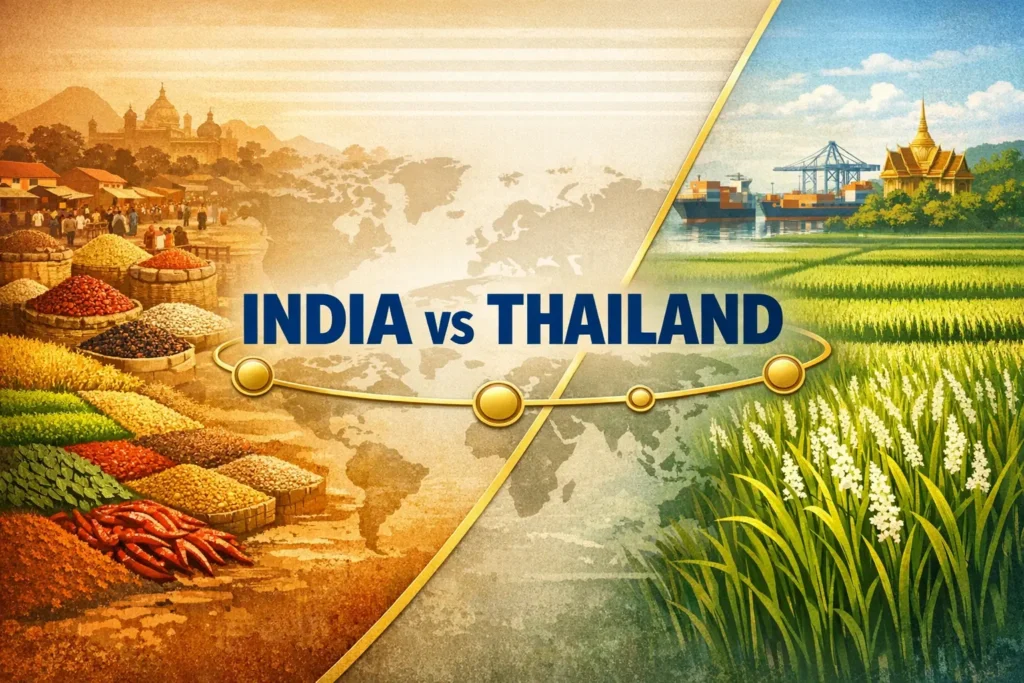
But diversifying isn’t as simple as picking a new country on a map. It’s a strategic decision that requires a deep understanding of the unique strengths and challenges each potential partner offers. Two of the most prominent contenders in Asia are India and Thailand. While both are agricultural powerhouses, they offer fundamentally different advantages for resilience and traceability.
This guide will walk you through a clear-eyed comparison, helping you understand which country might be the right strategic fit for your agro-commodity needs.
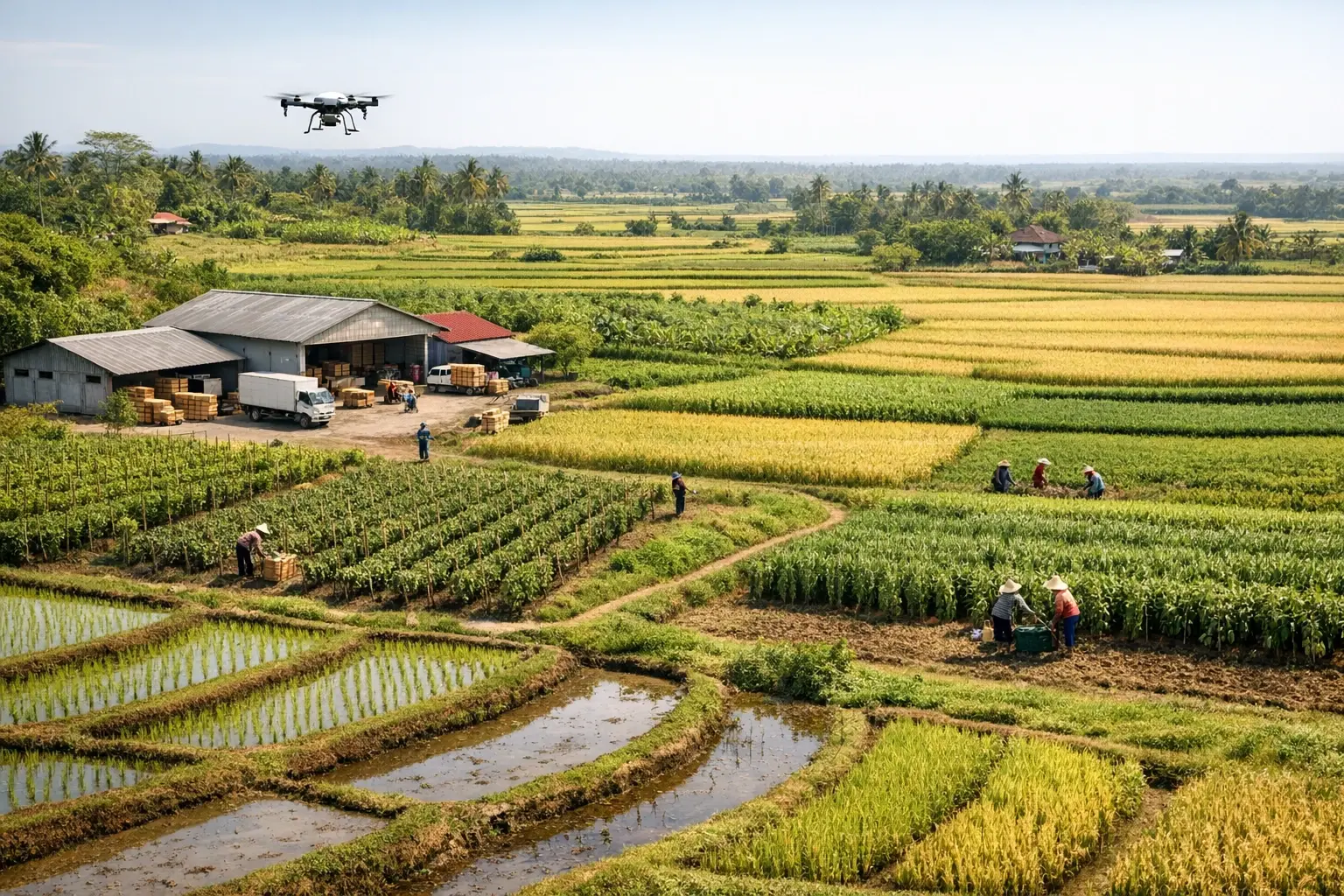
The Core Concepts: Why This Conversation Matters Now
Before we dive into the comparison, let’s quickly align on a few key ideas. Think of this as the foundation for making a smarter sourcing decision.
- Supply Chain Diversification: This isn’t about abandoning your current suppliers. It’s about building a more robust network by adding strategic partners in different geographic locations. This reduces your risk if one region faces political instability, climate events, or logistical bottlenecks.
- Resilience: Think of it as your supply chain’s shock absorber. A resilient chain can withstand unexpected disruptions—like the COVID-19 pandemic—and recover quickly, ensuring business continuity.
- Traceability: This is about knowing the complete story of your product. Where was it grown? How was it processed? What route did it take to reach you? Full traceability is no longer a “nice-to-have”; it’s essential for quality control, regulatory compliance, and consumer trust.
The goal of a “China +1” strategy is to build a supply chain that is not only cost-effective but inherently resilient and transparent.
India and Thailand: A Head-to-Head Comparison
Choosing between India and Thailand depends entirely on what you’re sourcing and what your strategic priorities are. One is a continent-sized nation with unparalleled diversity; the other is a highly specialized export machine.
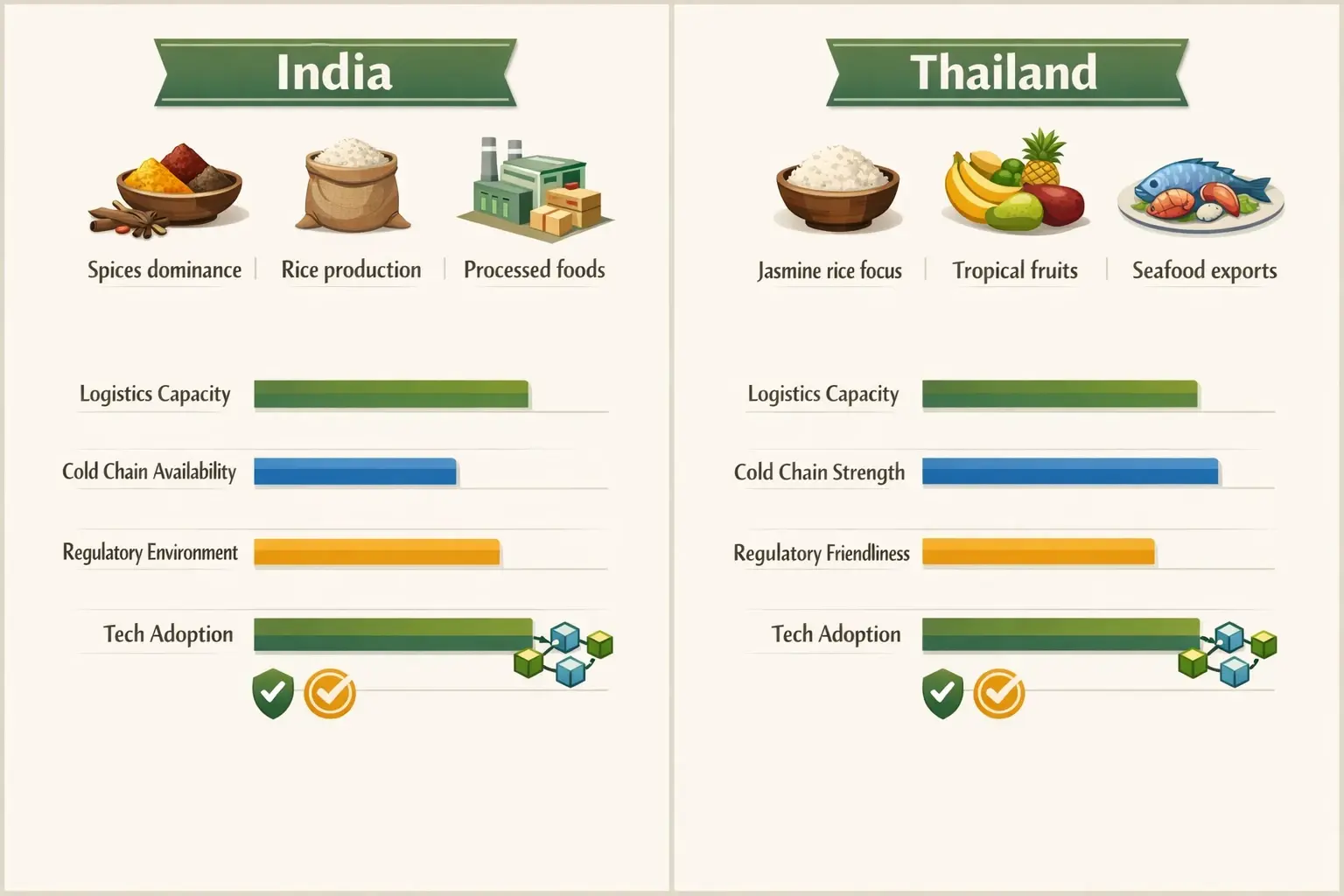
Commodity Strengths: The Specialist vs. The Generalist
Your choice of country may be decided by the specific commodity you need.
- India: The World’s Agricultural Supermarket. India’s strength lies in its staggering diversity. It’s the world’s largest producer of spices (like black pepper, turmeric, and cardamom), pulses, and milk, and the second-largest producer of rice, wheat, and fruits. If you need a wide variety of commodities or are sourcing highly specific items like Basmati rice or single-origin spices, India’s vast and varied agro-ecological zones are a significant advantage.
- Thailand: The Export-Focused Powerhouse. Thailand has strategically optimized its agricultural sector for export. It is world-renowned for its high-quality Hom Mali jasmine rice and is a global leader in rubber, tropical fruits (like durian and longan), and seafood. If your focus is on a specific, high-volume commodity where quality and consistency for export markets are paramount, Thailand’s established infrastructure is hard to beat.
Logistics and Infrastructure: Getting from Farm to Port
A great product is useless if you can’t get it reliably. Here, the two nations present different pictures.
- Thailand benefits from a highly efficient, centralized logistics network focused on its primary ports. Its government’s “Thailand 4.0” initiative is actively promoting agri-tech and modernizing infrastructure, including cold chains, which is crucial for its fruit and seafood exports.
- India is a much larger country, and its infrastructure can be more variable. However, massive government investment in highways, dedicated freight corridors, and port modernization is rapidly closing the gap. The key to success in India is having a partner with deep, on-the-ground knowledge who can navigate regional complexities and ensure seamless end-to-end supply-chain management.
Resilience in Action: Lessons from the COVID-19 Pandemic
A comparative study by the NCBI on the pandemic’s impact offers a fascinating real-world stress test of both countries’ supply chains.
- During lockdowns, India’s decentralized and diverse production base proved to be a source of strength. The crisis accelerated the adoption of digital technologies, with online platforms and advisory apps helping connect farmers directly to markets, bypassing disrupted traditional channels. This demonstrated a remarkable capacity for agile, tech-driven adaptation.
- Thailand’s established, export-oriented value chains faced initial shocks but were able to adapt by leveraging their strong government support and Free Trade Agreements to reroute and manage logistics.
The takeaway? India showed resilience through grassroots technological adaptation, while Thailand relied on its robust, state-supported export systems.
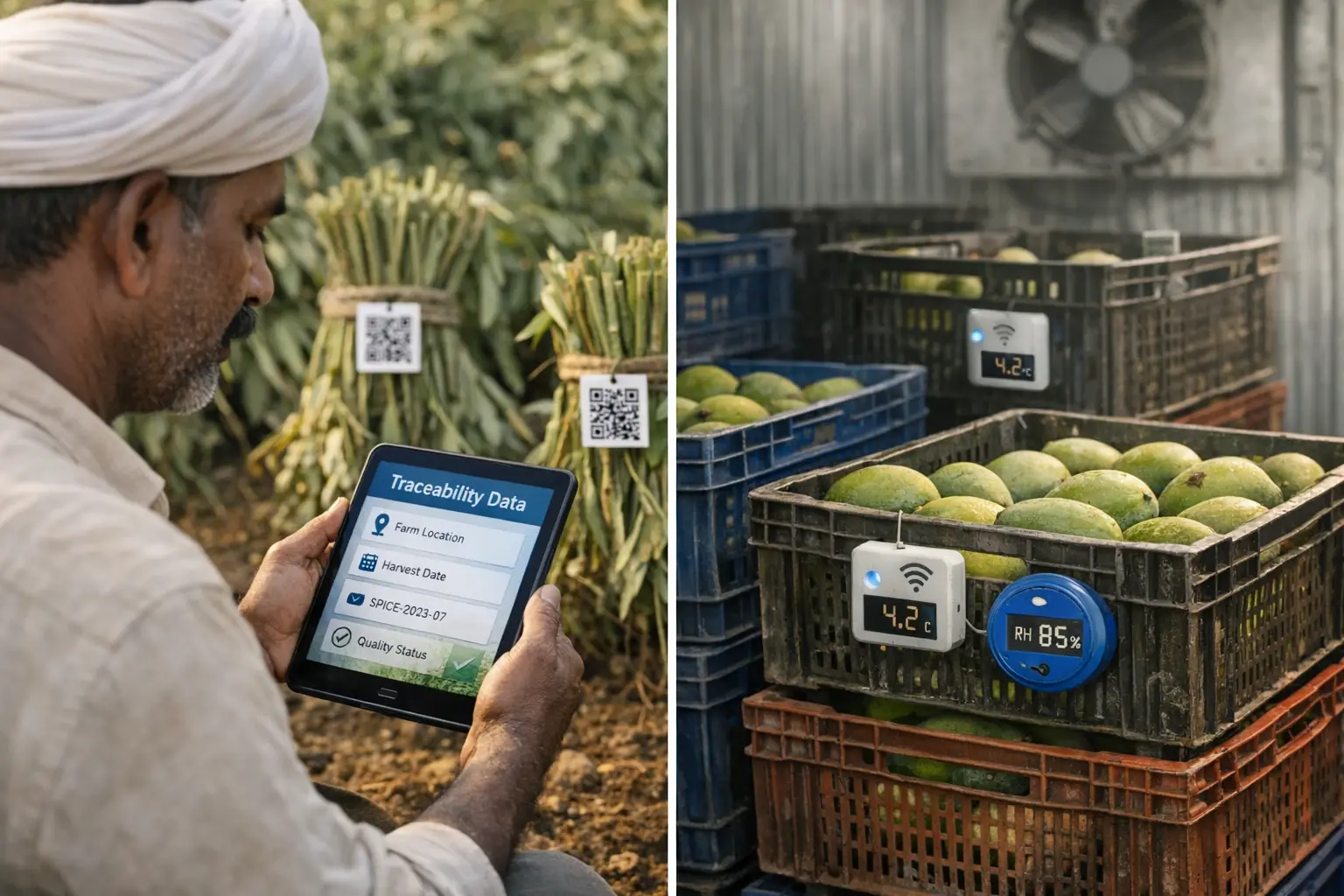
The Trust Factor: Ensuring Quality and Traceability
For any procurement manager, the fear of receiving an off-spec batch is very real. How do these countries stack up in providing assurance?
- Thailand has well-established quality standards like Thai GAP (Good Agricultural Practices) and a strong history of meeting the stringent requirements of international buyers, particularly for its key exports. Its reputation is built on consistency.
- India has government-backed quality marks like Agmark, but the real innovation is happening at the private-sector level. Companies are increasingly using technology to provide farm-to-fork traceability. For complex products like spices, where adulteration can be a risk, having a partner who conducts a rigorous supplier qualification process, including on-site audits and batch testing, is non-negotiable.
The Future is Digital: How Tech is Changing the Game
Looking ahead, technology is the great equalizer and enhancer. Boston Consulting Group predicts that climate change could reduce rice yields in India by as much as 18% by 2050, making data-driven agriculture essential for future-proofing supply chains.
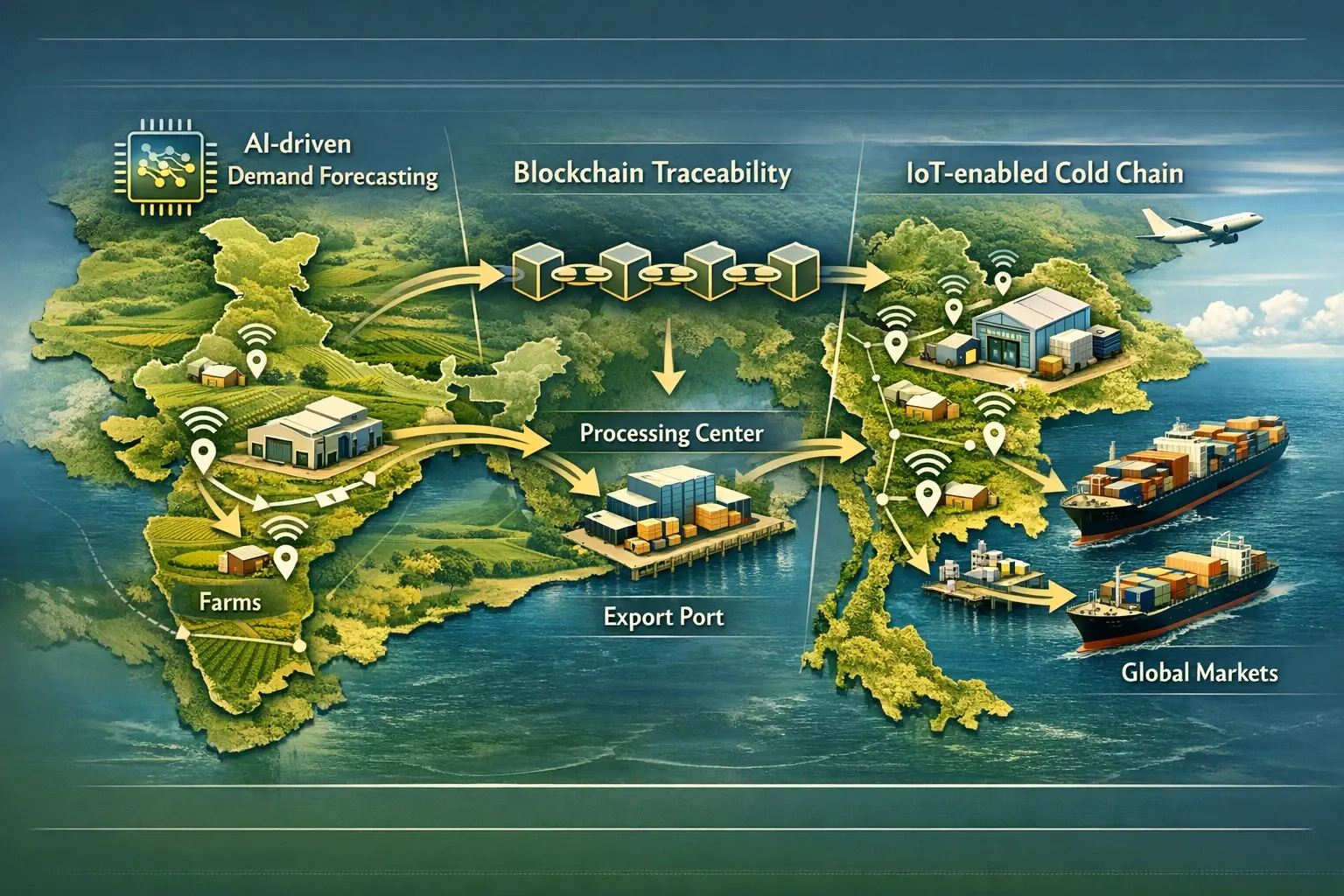
Both countries are leaning into digital transformation:
- In India, blockchain technology is being piloted to provide immutable traceability for high-value exports like spices and coffee, giving buyers unprecedented visibility.
- In Thailand, IoT (Internet of Things) sensors are being used in cold storage and transport to ensure that perishable goods like tropical fruits maintain optimal quality throughout their journey.
This technological layer adds a powerful new dimension of security and transparency for global buyers.
Making Your Choice: A Quick Framework
So, India or Thailand? There’s no single right answer, only the right answer for you. Use this checklist to guide your thinking:
- Commodity Profile: Are you sourcing a single, high-volume product (leaning toward Thailand) or a diverse basket of goods (leaning toward India)?
- Traceability Needs: Do you require deep, farm-level traceability for complex supply chains (where a hands-on partner in India excels) or is a standardized export-grade certification sufficient (a strength of Thailand)?
- Scalability vs. Specialization: Do you need the ability to scale across a massive and diverse production base (India) or tap into a highly specialized and efficient export ecosystem (Thailand)?
- Risk Mitigation: What are your primary concerns? Geopolitical concentration? Climate events? A blended strategy that leverages both countries for different commodities might offer the ultimate resilience.
Frequently Asked Questions (FAQ)
What exactly is supply chain diversification in agriculture?It’s the practice of sourcing your agricultural products from multiple countries or regions instead of relying on a single one. This spreads your risk and makes your supply chain less vulnerable to localized disruptions, whether they’re caused by weather, politics, or pandemics.
What are the main benefits of a ‘China +1’ strategy?The core benefits are risk reduction, supply chain stability, and often, cost optimization. By having an alternative sourcing hub, you protect your business from potential tariffs, lockdowns, or logistical breakdowns in your primary market and build a more resilient, agile operation.
Aren’t there risks in sourcing from a new country like India?Every country has its own set of operational and cultural nuances. Concerns about quality consistency, communication, and logistics are valid. However, these risks are almost entirely mitigated by working with a reputable, on-the-ground sourcing partner who understands both Western business expectations and the local landscape. An American-led team based in India, for example, can bridge that gap effectively.
How do I even start finding a reliable supplier in a new country?This is often the biggest hurdle. The process typically involves extensive market research, supplier identification, and a rigorous vetting process. This is where custom procurement services become invaluable, as they leverage established networks and local expertise to find, qualify, and manage the right suppliers for your specific needs.
Your Journey to a Stronger Supply Chain Starts Here
Diversifying your agro-commodity supply chain is one of the most strategic moves you can make to protect your business and ensure future growth. The choice between India and Thailand isn’t about which country is “better,” but which one is the better strategic partner for your specific needs.
By understanding their unique strengths—India’s unmatched diversity and agile tech adoption versus Thailand’s export-focused efficiency—you can move beyond simply reacting to the next crisis and start building a truly resilient, transparent, and competitive global supply chain.
Ready to explore how India’s unique advantages can strengthen your business? The first step is understanding the landscape. Learn more about successfully navigating the Indian sourcing ecosystem and unlock its full potential.