You get an alert on a Tuesday morning. The price of a critical agrochemical intermediate you source from your usual supplier has spiked 40% overnight. Even worse, the lead time has doubled. Your production schedule is now in jeopardy, and the frantic search for an alternative begins. For any buyer in the chemical industry, this isn’t a hypothetical scenario—it’s a recurring nightmare fueled by volatile global supply chains.
While market reports talk about India’s rising role in the agrochemical space, they rarely give you what you actually need: a practical way to look around the corner. How can you anticipate these shifts instead of just reacting to them?
The answer lies in moving beyond basic supplier management and mastering the art of forecasting demand and supply specifically for the Indian market. It’s about understanding that in India, the price of a chemical precursor can be influenced as much by monsoon patterns in Maharashtra as by policy changes in Beijing. This guide will provide you with a strategic framework to do just that, transforming your sourcing function from a reactive cost center into a resilient, competitive advantage.
Decoding the Essentials: Agrochemical Intermediates and the Indian Landscape
Before building a forecast, it’s crucial to understand the building blocks themselves and the unique environment they come from.
What Exactly Are Agrochemical Intermediates? (And Why They Matter)
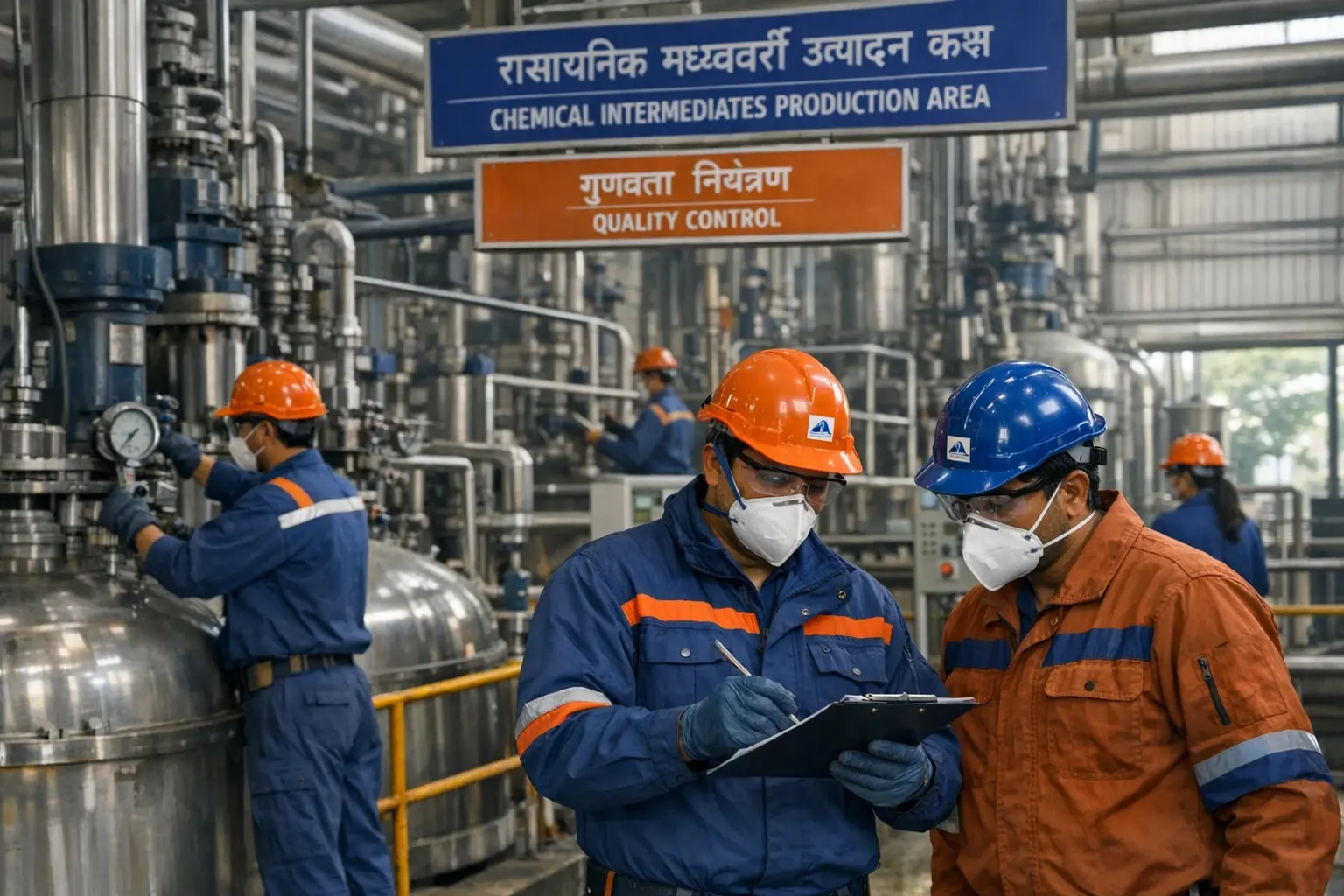
Think of agrochemical intermediates as the high-purity, essential ingredients in a complex recipe. They aren’t the final pesticides, herbicides, or fungicides you see on the market, but they are the foundational chemical ingredients from which those active ingredients are synthesised.
For example:
- 2-Chloro-5-chloromethylpyridine (CCMP) is a critical intermediate for producing blockbuster insecticides like Imidacloprid.
- Diethyl Phosphorochloridothionate (DEPCT) is a key building block for widely used organophosphate insecticides.
Forecasting for these specific molecules is far more challenging—and valuable—than tracking the finished product. Their supply chains are more concentrated, and a bottleneck here can disrupt the production of multiple downstream products.
India’s Pivotal Role in the Global Supply Chain
For years, procurement managers have been implementing a “China +1” strategy to diversify risk. India has emerged as the most viable “+1” in the chemical sector, backed by a strong chemical manufacturing base and supportive government policies. According to the India Brand Equity Foundation (IBEF), the nation is already the 4th largest producer of agrochemicals globally.
However, a common misconception is that India is a completely self-sufficient ecosystem. While its formulation and final production capabilities are massive, the country still relies heavily on imports for certain upstream raw materials and basic chemical building blocks, particularly from Middle East. For instance, the availability of yellow phosphorus, a key raw material for many organophosphates, is heavily tied to Arab and Chinese export policies.
This dependency is not a deal-killer; it’s a critical variable in your forecasting model. A resilient sourcing strategy isn’t about avoiding this reality but about understanding and predicting its impact.
The Sourcing Pro’s Framework: How to Forecast in the Indian Context
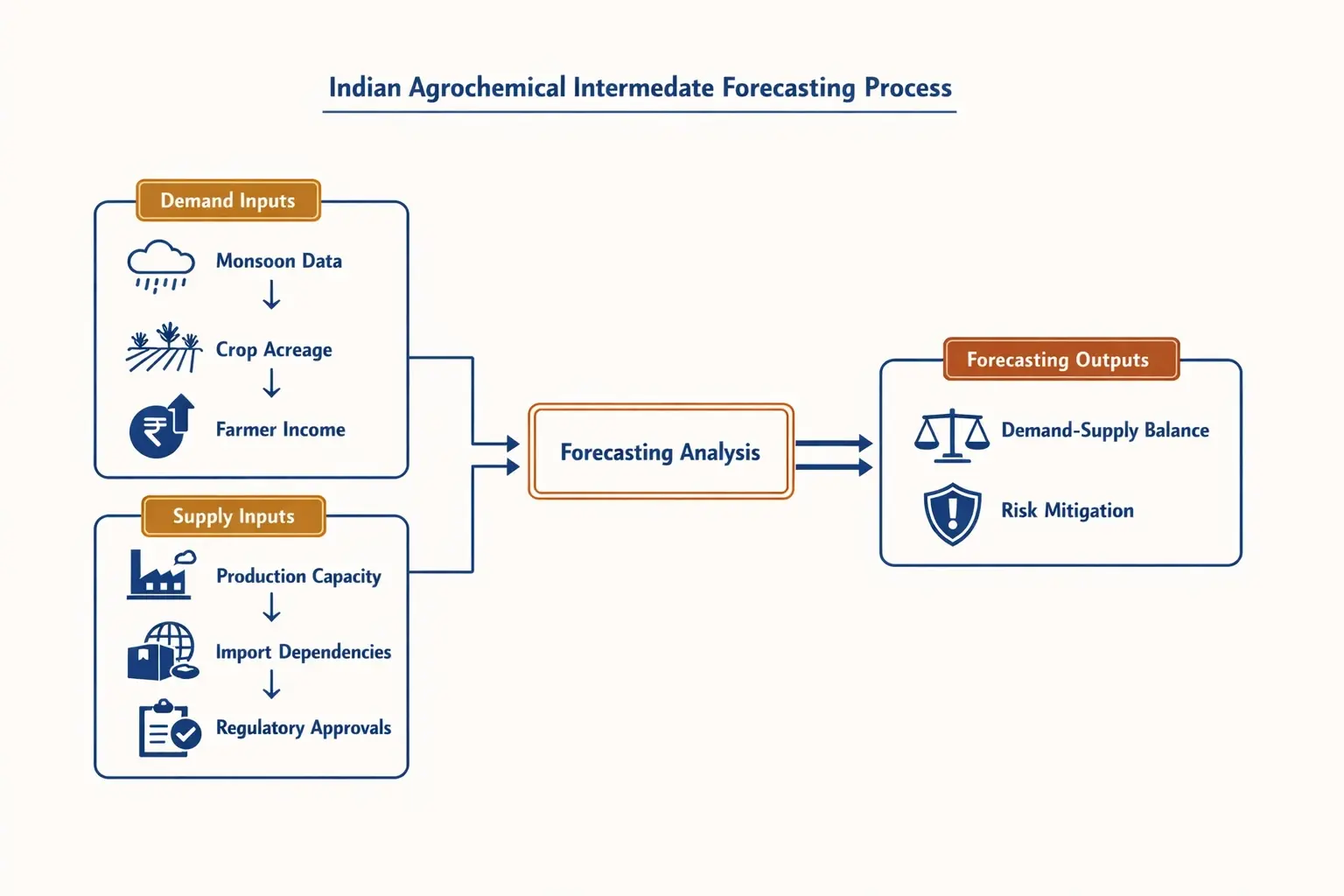
Effective forecasting in India requires a multi-layered approach that blends agricultural, economic, and geopolitical data. Generic time-series models that just look at past orders won’t cut it. You need an India-specific framework.
Forecasting Demand: Looking Beyond Crop Acreage
Demand for intermediates is derived from the demand for final agrochemicals. To predict it, you need to think like an Indian farmer.
Agricultural Drivers: This is the most crucial layer.
- Monsoon Performance: Don’t just track if it’s “normal.” Look at the regional distribution and timing. A delayed monsoon in a key cotton-growing state will delay demand for specific pesticides used on that crop. Sources like the India Meteorological Department (IMD) provide these forecasts.
- Crop Sowing Data: Track the acreage of key crops during the Kharif (summer) and Rabi (winter) seasons. A surge in paddy cultivation directly translates to future demand for rice herbicides and their intermediates. Government agriculture portals are a key source for this data.
- Pest & Disease Outbreaks: Monitor regional news and agricultural bulletins for reports of pest infestations, like locust swarms or bollworm attacks, which can create sudden, un-forecasted spikes in demand for specific insecticides.
Economic Drivers:
- Farmer Income & Subsidies: Government policies like Minimum Support Prices (MSP) and fertilizer subsidies directly impact a farmer’s disposable income and, consequently, their spending on crop protection products.
- Rural Credit Availability: The accessibility of loans for farmers can influence their ability to purchase inputs at the beginning of a sowing season.
Regulatory Drivers:
- CIBRC Decisions: Keep a close eye on the Central Insecticides Board & Registration Committee (CIBRC). The approval of a new generic pesticide can open up demand for its intermediates, while a sudden ban can wipe it out entirely.
Forecasting Supply: It’s More Than Just Factory Capacity
Understanding the supply side means looking at both domestic production realities and global import dependencies.
- Domestic Production Factors:
- Raw Material Availability: As mentioned, tracking the price and availability of key imported raw materials (e.g., yellow phosphorus, benzene derivatives) is a powerful leading indicator of potential supply constraints and price hikes for intermediates.
- Capacity Utilization & Turnarounds: Build relationships with suppliers to gain intelligence on their production capacity, planned maintenance shutdowns, and any new investments in capacity expansion under schemes like the Production Linked Incentive (PLI). Proper supplier qualification and vetting goes beyond a simple audit; it builds a channel for this kind of market intelligence.
- Import & Logistics Dynamics:
- Global Geopolitics: Trade tensions, environmental crackdowns in China, or new energy policies can all disrupt the flow of essential raw materials into India.
- Logistics Bottlenecks: Monitor turnaround times and congestion at key Indian ports like Nhava Sheva (Mumbai) and Mundra. A delay at the port can have a domino effect on the entire supply chain. Managing these details is often part of a robust end-to-end procurement service.
From Reactive to Resilient: Advanced Strategies and Risk Mitigation
With a solid forecasting framework, you can move from crisis management to strategic planning.
Scenario Planning: Asking “What If?” Before It Happens
Use your forecasting model to run “what-if” scenarios. This practice transforms forecasting from an academic exercise into a powerful risk mitigation tool.
- Scenario A: Weak Monsoon. What happens to demand for water-intensive crop pesticides? Which drought-resistant crop chemicals will see a spike?
- Scenario B: China Restricts Exports. Which of your key intermediates have upstream materials from China? What are your alternative Indian suppliers, and what is their current capacity?
- Scenario C: New Indian Regulation. A popular fungicide is banned. How quickly can you pivot sourcing to the intermediates needed for its designated replacement?

Building a “China +1” Strategy That Actually Works
An effective “China +1” strategy isn’t just about finding a supplier in India. It’s about building a resilient Indian supply chain. Your forecasting efforts are central to this. By understanding the unique demand drivers and supply vulnerabilities within India, you ensure that your diversification genuinely reduces risk rather than simply swapping one set of problems for another. You can validate supplier capacity, anticipate local disruptions, and build a sourcing plan that is truly resilient.
Frequently Asked Questions (FAQ)
What are the most common agrochemical intermediates sourced from India?
India is a major producer of intermediates for a wide range of products, including pyrethroids, organophosphates, and various herbicides and fungicides. Examples include Cypermethrin intermediates, Metaphenoxy Benzaldehyde (MPBD), and various chlorinated pyridines.
How reliable is public data from India for forecasting?
Official sources like the Ministry of Agriculture, IBEF, and the IMD provide a reliable starting point. However, this data often comes with a time lag and may lack granularity. The most effective forecasting complements this public data with on-the-ground market intelligence and supplier relationship insights.
Isn’t it easier to just rely on a large distributor?
Working with a distributor offers convenience but often comes at the cost of transparency, higher prices, and less control over your supply chain. Direct sourcing, when managed correctly, provides greater cost control and visibility. The key is having a partner who can manage the complexities of direct engagement, from initial boots-on-the-ground supplier audits to final logistics.
What’s the biggest mistake companies make when sourcing intermediates from India?
One of the biggest mistakes is underestimating the importance of on-the-ground presence. Companies often try to manage sourcing remotely, failing to account for cultural nuances, opaque supply chains, and the hands-on verification needed to ensure quality and reliability. Without a trusted partner in India, you’re forecasting with one hand tied behind your back.
Your Next Step: Building a Smarter Sourcing Forecast
Switching from a reactive to a predictive sourcing model is a journey, but it starts with a single step. The volatility in global supply chains isn’t going away, but with the right framework, you can navigate it with confidence.
Here’s a simple checklist to get started:
- Identify Your Top 5: List your most critical agrochemical intermediates sourced from or potentially sourced from India.
- Map the Dependencies: For each one, identify its key upstream raw materials and their primary country of origin.
- Start Tracking Indicators: Begin monitoring the Indian monsoon forecasts, crop sowing data, and CIBRC announcements.
- Talk to an Expert: Engage with partners who possess deep, on-the-ground knowledge of the Indian chemical market.
Ready to move from reacting to market shocks to anticipating them? Building this level of supply chain intelligence is the first step. If you’re looking for a partner to provide that on-the-ground insight and manage your end-to-end procurement, Sourcing Pros can help you navigate the complexities with confidence.