If you’re a procurement leader, your world has been dominated by one theme for the past few years: supply chain resilience. The old models are failing under current market pressure, and the phrase “China +1” has moved from a strategic concept to an urgent 2026 operational mandate. As you scan the globe for viable, stable, and competitive sourcing hubs, India is emerging not just as an alternative, but as a strategic destination—especially for chemicals.
But this isn’t happening by accident. It’s being driven by a powerful Indian policy: the ‘Make in India’ initiative.
You may have heard the name, but what does it actually mean for your bottom line, your production schedule, and your peace of mind? It’s far more than a slogan. It’s a fundamental rewiring of India’s industrial landscape, creating tangible advantages for international buyers like you. Let’s break down how this initiative is transforming India into a global chemical and manufacturing powerhouse.
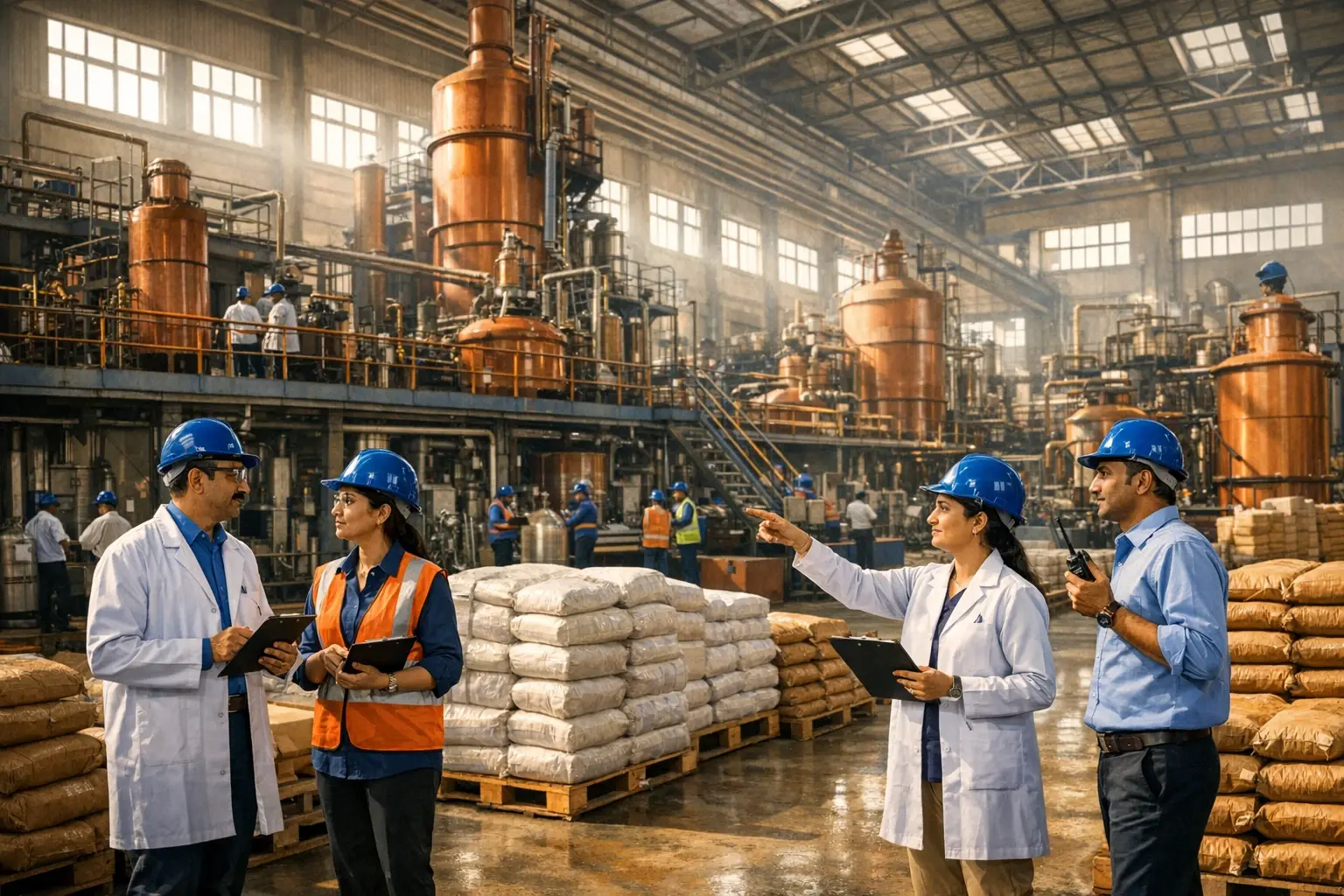
What is ‘Make in India’ (and Why Does It Matter for Chemicals)?
Launched in 2014, ‘Make in India’ is a comprehensive Indian government framework designed to transform the country into a global design and manufacturing hub. Instead of just being a policy, think of it as a top-to-bottom operational upgrade for all Indian products.
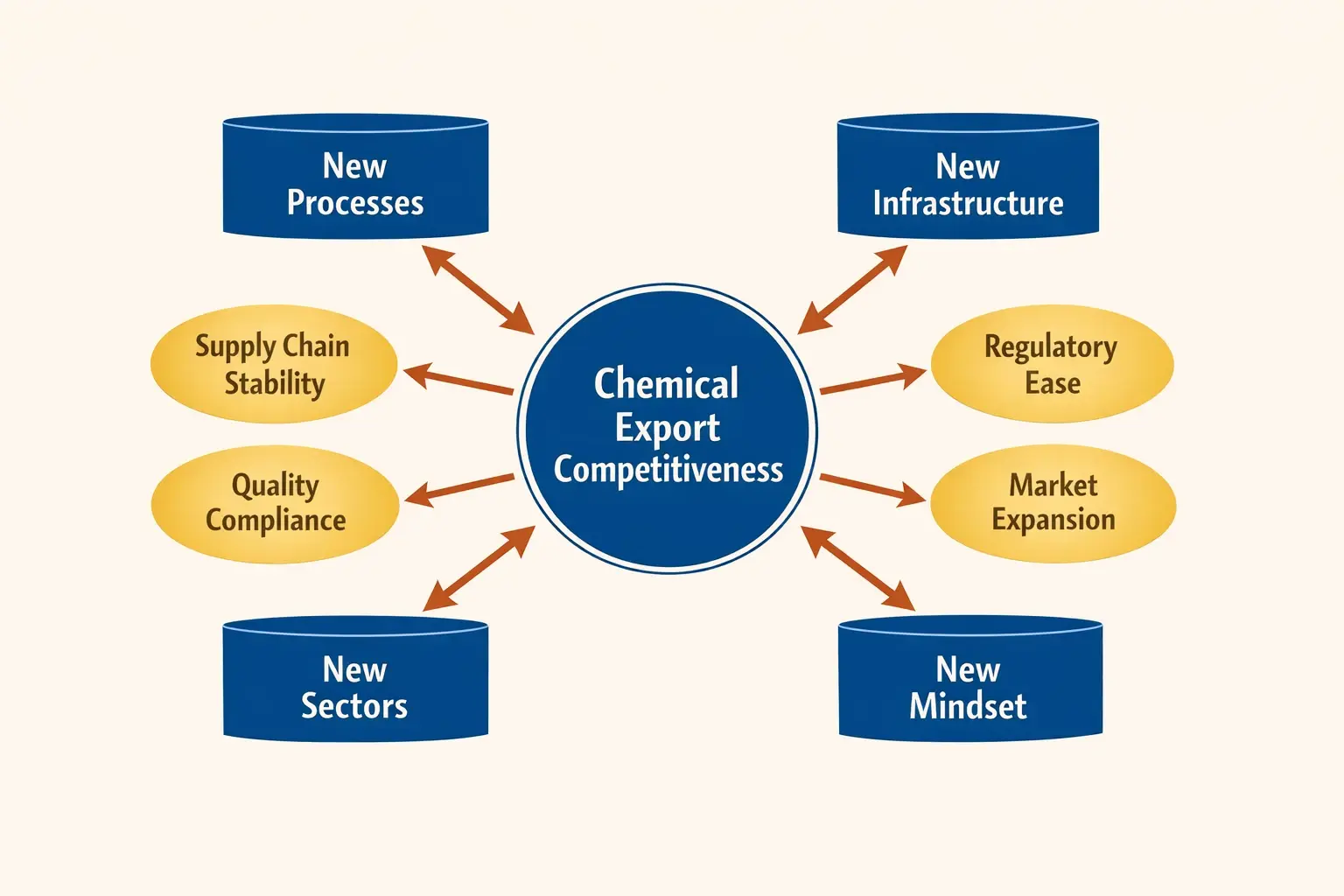
It’s built on four strategic pillars that directly address historical challenges and create new opportunities:
- New Processes: This is about simplifying the experience of doing business. It involves streamlining regulations, digitizing approvals, and cutting red tape to make it easier for companies to set up, operate, and export. For a chemical buyer, this means your potential suppliers are operating in a more efficient, predictable environment.
- New Infrastructure: The Indian government is pouring billions into upgrading ports, highways, and rail networks. This isn’t just about construction; it’s about reducing transit times, lowering logistics costs, and ensuring your shipment of specialty chemicals doesn’t get stuck in a bottleneck.
- New Sectors: The initiative identified 25 priority sectors to develop, and chemicals are high on that list. This focus channels investment, R&D, and policy support directly into the chemical industry, helping it scale and innovate faster.
- New Mindset: This pillar fosters a pro-business partnership between the government and industry. The goal is to move from a relationship of regulation to one of collaboration, making the government a facilitator of growth.
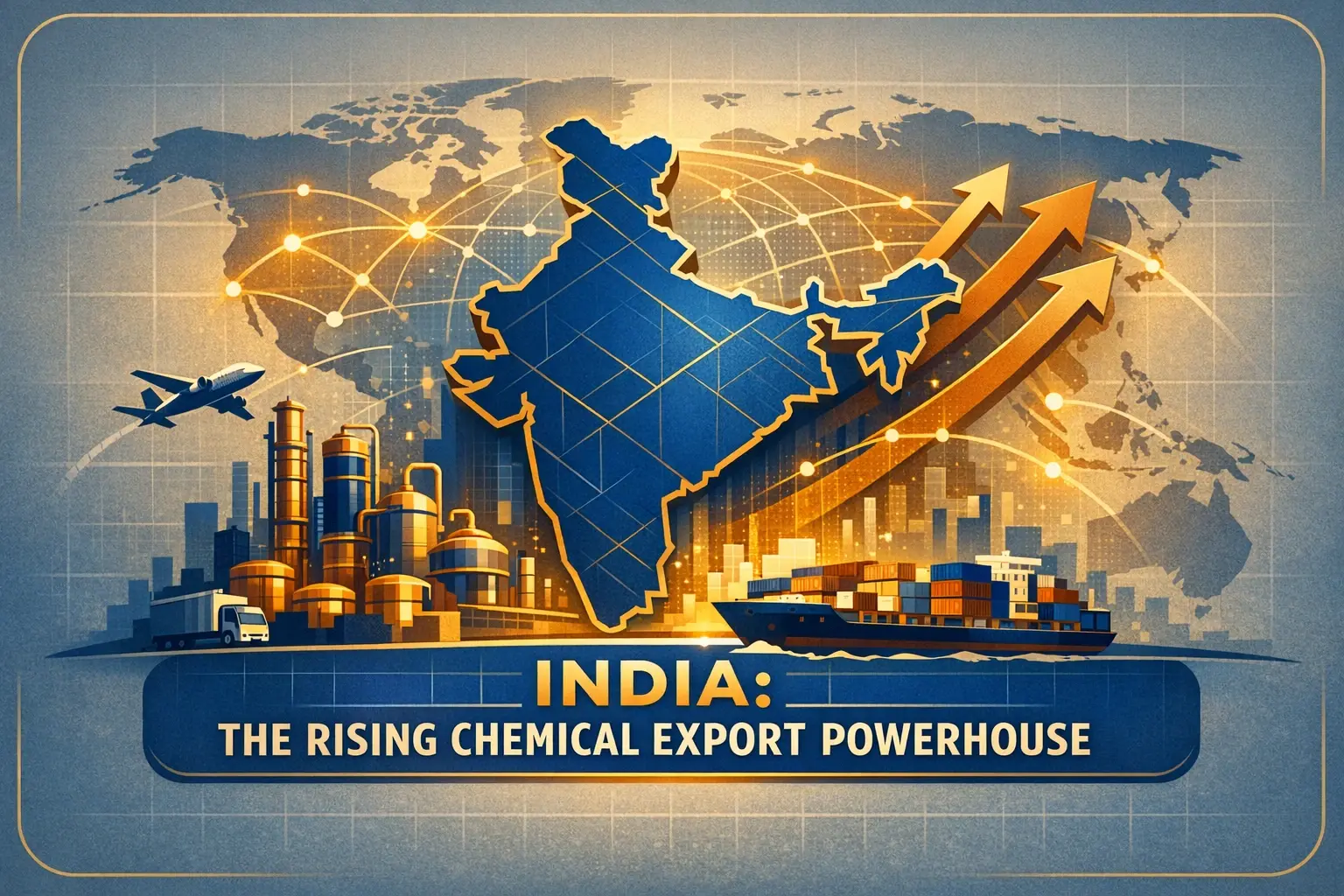
The chemical sector is a natural fit for this initiative. As the world’s sixth-largest producer, India already has a strong foundation. ‘Make in India’ acts as a catalyst, amplifying these inherent strengths to meet the rigorous demands of global buyers.
The Tangible Benefits for Your Supply Chain
So, how do these high-level policies translate into practical advantages for a procurement manager in the United States or Europe? Here’s where the theory meets the reality of your day-to-day challenges.
Stronger Production, Competitive Prices
A primary goal of ‘Make in India’ is to boost domestic manufacturing capacity. Two key policies make this happen:
- 100% Foreign Direct Investment (FDI): Under the automatic route, global companies can invest 100% in Indian chemical manufacturing (except for a few hazardous items). This influx of capital and technology has modernized facilities and integrated Indian producers into global value chains.
- Production Linked Incentive (PLI) Schemes: Think of PLI as a performance bonus for manufacturers. The government provides financial incentives to companies that increase their domestic production and sales. This encourages scaling, which often leads to greater efficiency and more competitive pricing for you, the buyer.
This policy-driven support means you’re not just sourcing from a single factory; you’re tapping into an entire ecosystem designed for growth and cost-effectiveness.
Reliable Logistics from Port to Plant
One of the biggest fears in international sourcing is the dreaded delivery delay. A shipment held up at port can halt your entire production line. ‘Make in India’ addresses this head-on by tackling infrastructure.
India has significantly improved its logistics performance, jumping up in the World Bank’s Logistics Performance Index. This isn’t just a number on a report. It means:
- Faster turnaround times at modernized ports like Mundra and Nhava Sheva.
- Improved road and rail connectivity, reducing inland transit times.
- A more integrated and predictable supply chain from the factory floor to the vessel.
This investment in infrastructure directly translates to reduced lead times and greater supply chain reliability—two of the most critical factors in any sourcing decision.
Busting the Myth: A New Standard for Quality and Compliance
Let’s address the elephant in the room: historical concerns about the quality and consistency of products from emerging markets. ‘Make in India’ tackles this with a core philosophy of “Zero Defect Zero Effect,” promoting manufacturing that is both high-quality and environmentally responsible.
Indian chemical manufacturers who are part of this ecosystem are increasingly aligned with global standards like REACH and GHS. They understand that to compete globally, providing a flawless Certificate of Analysis (COA) and a compliant Safety Data Sheet (SDS) is non-negotiable. The result is a growing number of Indian suppliers who can meet—and exceed—the stringent quality and documentation requirements of Western markets. When sourcing from India, a robust supplier qualification process is still essential, but the pool of high-quality, compliant partners is deeper than ever.
Making a Strategic Sourcing Decision
Viewing India through the lens of ‘Make in India’ shifts the conversation from a simple cost-comparison to a long-term strategic evaluation.
India’s Competitive Edge: Where to Look
Thanks to a strong domestic talent pool and decades of experience, India has developed a significant competitive advantage in several key chemical categories. The country is a global leader in the export of:
- Agrochemicals
- Dyes and Pigments
- Specialty and Performance Chemicals
- Organic Chemicals
The ‘Make in India’ initiative is further fueling innovation in high-growth areas like green chemicals and sustainable chemistry, positioning India not just as a producer of commodities but as a source for next-generation materials.
Diversification Beyond China+1
For procurement leaders, ‘Make in India’ offers a compelling answer to the supply chain diversification puzzle. The initiative’s focus on creating a stable, pro-business policy environment provides the long-term predictability needed to build resilient sourcing partnerships.
By engaging with suppliers who are benefiting from this framework, you are doing more than just finding a new vendor. You are building a supply chain that is less susceptible to the geopolitical and logistical shocks that have defined recent years. Sourcing from India is becoming a proactive strategy for de-risking your operations and ensuring business continuity.

Frequently Asked Questions (FAQ)
What is CHEMEXCIL and what does it do?
CHEMEXCIL (Basic Chemicals, Cosmetics & Dyes Export Promotion Council) is a key government body that supports chemical exporters. Think of them as a resource hub and facilitator. They help manufacturers navigate regulations, connect with international buyers, and promote Indian exports on the global stage. Partnering with a supplier who is a registered member of CHEMEXCIL is often a good indicator of their commitment to exports.
What basic regulations are involved in exporting chemicals from India?
To export, a company generally needs an Importer-Exporter Code (IEC) and a Registration-cum-Membership Certificate (RCMC) from an export promotion council like CHEMEXCIL. While your sourcing partner should handle the specifics, understanding these basics helps you vet potential suppliers for their export readiness.
Are Indian chemical quality standards compatible with US/EU regulations?
Yes, increasingly so. Leading Indian manufacturers are well-versed in the requirements of REACH (for Europe) and other international standards. The “Zero Defect Zero Effect” goal of ‘Make in India’ actively encourages this alignment. However, it’s crucial to work with a partner who prioritizes compliance and documentation support to ensure every batch meets your specific regional requirements.
Which chemicals are most commonly exported from India?
India is a major exporter of organic chemicals, agrochemicals (pesticides, herbicides), dyes and intermediates, and specialty chemicals used in industries like coatings, personal care, and water treatment. The country’s chemical exports are projected to grow significantly, reaching an estimated $56.8-97.4 billion by 2030.
The Path Forward: Navigating India’s Chemical Market
The ‘Make in India’ initiative is more than just a policy—it’s a clear signal to the world that India is open for business and ready to compete on quality, reliability, and innovation. For chemical procurement leaders, it represents a powerful opportunity to build a more resilient and diversified supply chain.
The journey from identifying this opportunity to successfully receiving your first shipment requires deep market knowledge and on-the-ground expertise. The key is to find a partner who understands both the complexities of the Indian market and the exacting standards of your business.
Ready to explore further? Learn more about the intricacies of international chemical logistics to see how you can turn this strategic opportunity into a seamless operational reality.