You’re a procurement leader, and the term “China +1” has moved from a strategic buzzword to an operational imperative. You know diversifying your chemical supply chain is critical for resilience. But as you look at the globe, you realize the decision isn’t just about labor costs and logistics anymore. A powerful, often invisible, factor is reshaping the landscape: environmental regulation.
What if the biggest risk to your supply chain isn’t a trade tariff or a shipping delay, but a factory shut down overnight for non-compliance?
This is the new reality. Both China and India, the two giants of chemical manufacturing, are undergoing profound environmental transformations. Understanding these shifts isn’t just about being “green”—it’s about predicting costs, ensuring supply continuity, and making smarter sourcing decisions. Let’s break down what’s happening on the ground.
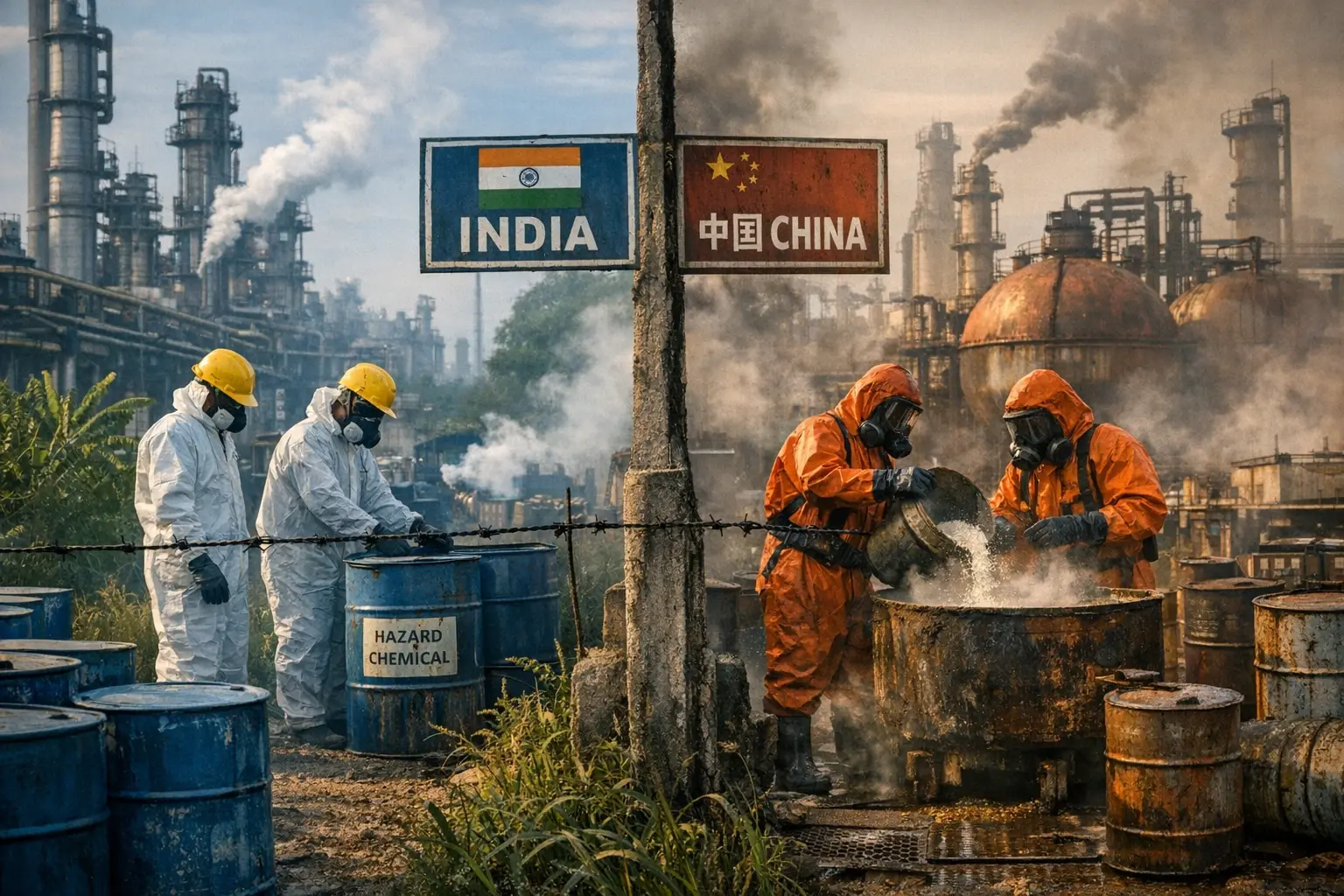
The Shifting Tides: Why Environmental Rules Suddenly Matter
For decades, the story of global manufacturing was simple: find the lowest production cost. Today, the equation is far more complex. The “true cost” of a product now includes the hidden risks and expenses of its environmental footprint.
Compliance Costs: More Than Just Fines
When we talk about “compliance costs,” it’s easy to think of penalties for breaking a rule. But the real impact on your budget is much broader:
- Direct Costs: The money spent on pollution control technology (like wastewater treatment plants), regulatory permits, environmental audits, and waste disposal.
- Indirect Costs: These are the silent killers of profitability. Think production stoppages due to inspections, project delays waiting for environmental clearances, higher prices from suppliers who have invested in upgrades, and the reputational damage from being linked to a non-compliant partner.
This new cost reality is at the heart of the “China +1” conversation. It’s forcing leaders to ask a more sophisticated question: not just “where is it cheapest?” but “where is my supply most secure and predictable?”
China’s Green Revolution: The Great Factory Reset
Around 2015, China made a dramatic pivot. The government launched what many call an “environmental storm,” moving aggressively to clean up its heavy industries. This wasn’t a suggestion; it was a national strategy to shift from a low-cost, high-volume economy to one focused on higher-value, sustainable manufacturing.
The impact on the chemical industry has been seismic.
- Aggressive Enforcement: Thousands of smaller, polluting factories were shut down, often with little warning.
- Forced Relocation: Many remaining manufacturers were forced to move into designated chemical industry parks where pollution could be centrally monitored and managed. This incurred massive relocation and upgrade costs.
- Stricter Standards: China implemented stricter-than-ever rules on air emissions, wastewater discharge, and hazardous waste. The research is clear: this crackdown led to capacity reductions and significant price increases for key chemicals, such as dyestuffs.
For a sourcing manager, this means the Chinese supplier you’ve worked with for years might face sudden production halts or pass on sharply rising operational costs. The era of predictable, rock-bottom prices is over. The new focus is on compliance, and that comes at a price.
India’s Evolving Framework: An Opportunity with Nuance
As China tightened its grip, many companies turned their eyes to India. But it’s a mistake to assume India is a regulatory free-for-all. The country has a robust, albeit complex, environmental framework that has been in place for decades, governed by cornerstone legislation like the Environment (Protection) Act of 1986.
However, the key difference lies in the implementation.
- A Layered System: Environmental governance in India is managed by a central body (Ministry of Environment, Forest and Climate Change – MoEFCC) and enforced by State Pollution Control Boards (SPCBs). This means regulations can be applied with different levels of rigor from one state to another.
- Compliance Challenges: While large, export-focused Indian manufacturers often meet global standards, many small-to-medium enterprises (SMEs) struggle with the high cost of pollution control technologies, such as Zero Liquid Discharge (ZLD) systems for water treatment.
- The Path Forward: India is actively working to strengthen its regulatory landscape, with initiatives like the upcoming “Indian REACH” (CMSR) aiming to align with global chemical management standards.
The opportunity in India lies in finding the right partner. It requires a deep understanding of the local landscape and the ability to distinguish between suppliers who merely “talk” compliance and those who have genuinely invested in it. This is where a thorough supplier qualification process becomes non-negotiable.
The Head-to-Head Comparison: Costs, Compliance, and Real-World Impact
So, how do the two giants stack up when you’re making a sourcing decision? It’s not a simple scorecard. Each country presents a different set of risks and opportunities.
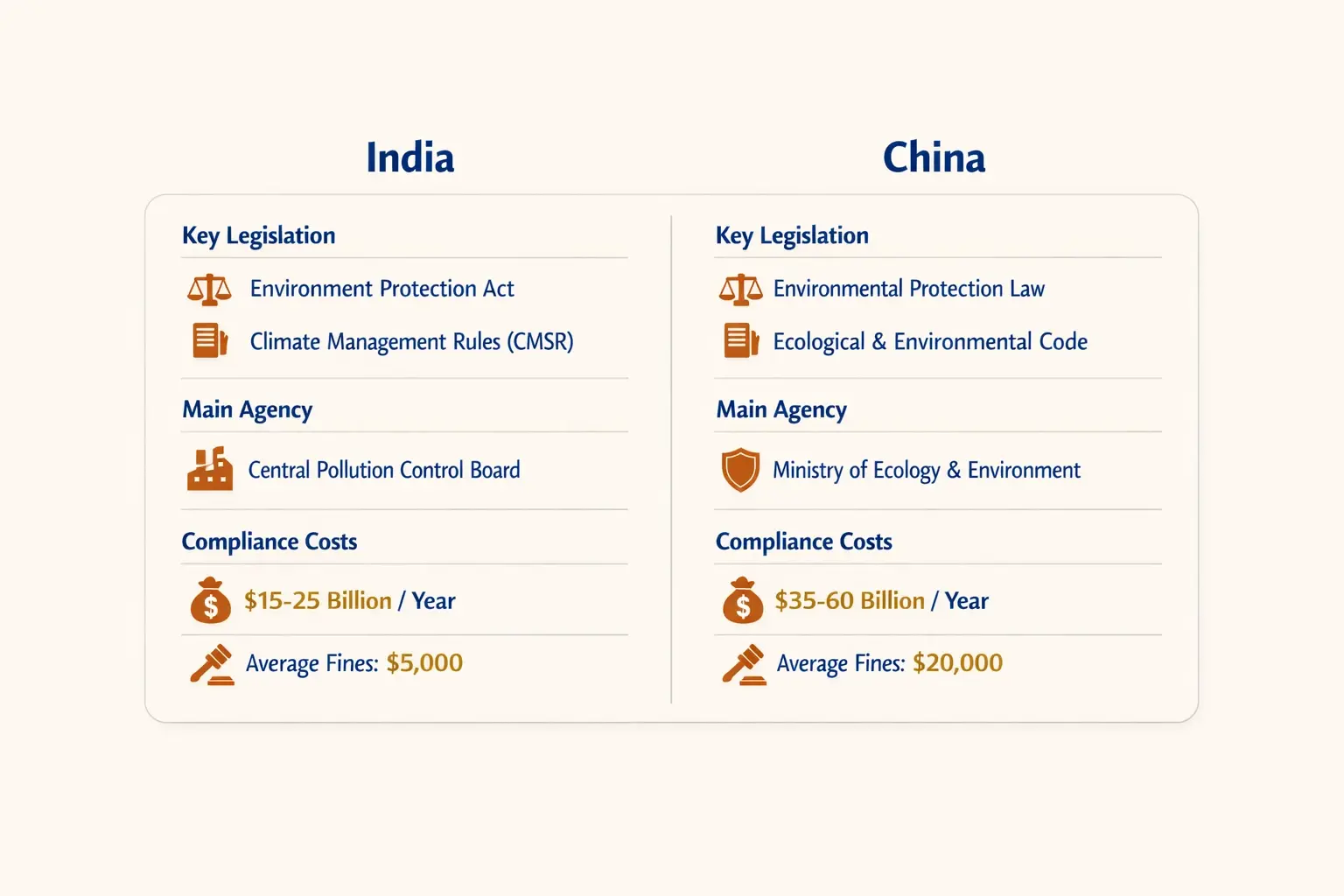
Regulatory Stringency & Enforcement
- China: Top-down, swift, and severe. When a new policy is announced, enforcement is rapid and widespread. This can lead to market shocks but creates a more uniformly regulated environment over time.
- India: More decentralized and procedural. Enforcement can vary by state and industry. While this can sometimes mean a slower pace of change, it also provides more time for businesses to adapt to new regulations.
Compliance Cost Profile
- China: Operational costs are demonstrably higher due to mandatory technology upgrades, environmental taxes, and the high cost of operating within designated chemical parks. Non-compliance results in soaring fines and immediate shutdowns.
- India: The major costs often come from capital expenditures—the initial investment in pollution control infrastructure. While penalties for non-compliance exist, the biggest financial risk often comes from bureaucratic delays in obtaining environmental clearances, which can stall projects for months.
Predictability & Transparency
- China: The risk here is sudden, top-down policy change. A new five-year plan can upend your sourcing strategy overnight. The rules are clear, but their implementation can be abrupt.
- India: The risk is procedural delay. The regulatory process is more transparent and established, but navigating it can be slow and requires local expertise. The system is more predictable in its process, if not always in its timeline.
A Practical Checklist for Your “China +1” Strategy
As you evaluate potential partners in India for your chemical sourcing needs, you must integrate environmental due diligence into your core strategy. This isn’t just about asking for a certificate; it’s about understanding their operational reality.
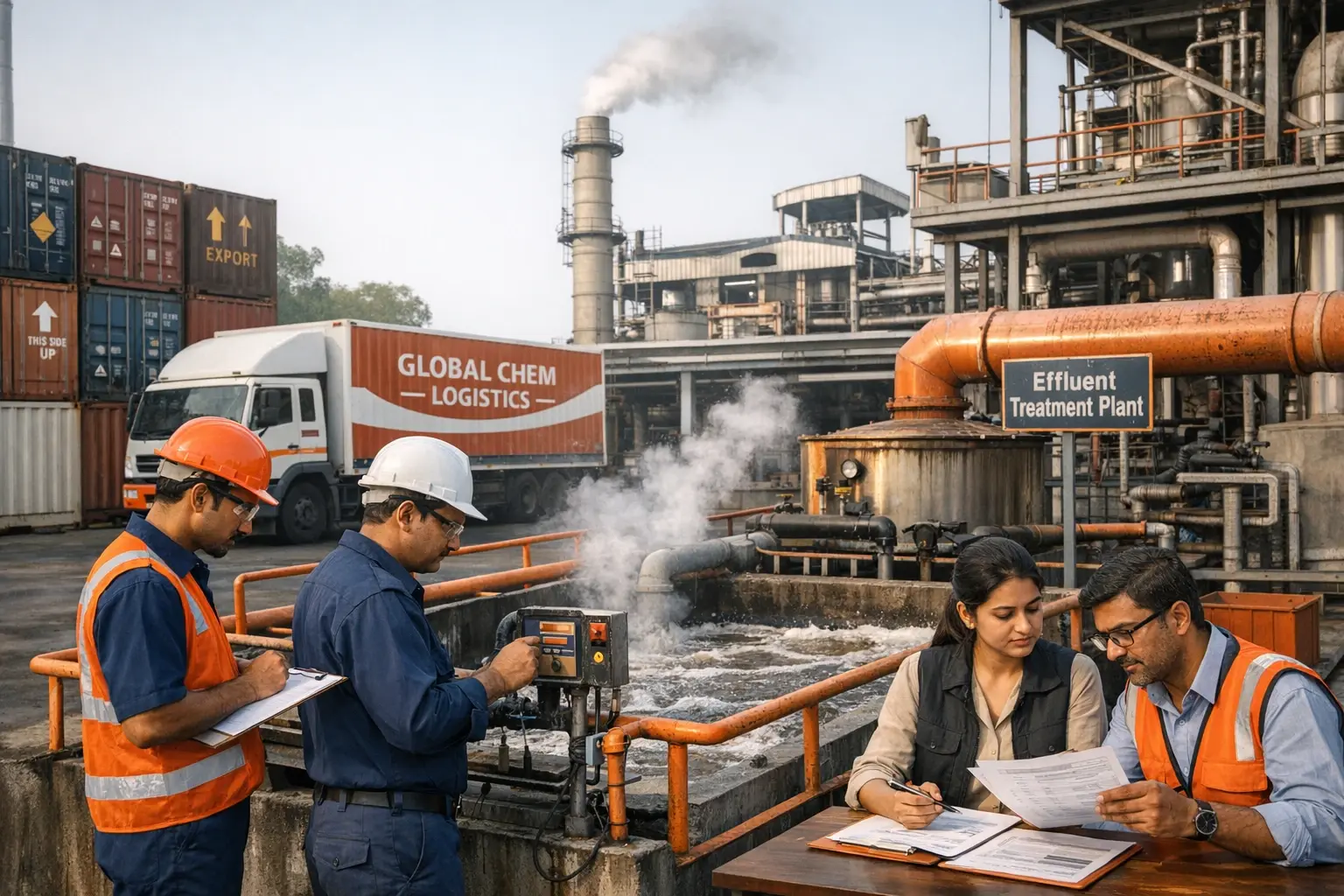
Here are the questions you should be asking:
- Regulatory Standing: Can the supplier provide current “Consent to Operate” (CTO) and “Consent to Establish” (CTE) documents from their State Pollution Control Board? This is the baseline for legal operation.
- Waste Management: What are their documented processes for handling hazardous waste? Ask for manifests and records from their designated waste management facility.
- Water Treatment: Do they operate an Effluent Treatment Plant (ETP)? If they claim Zero Liquid Discharge (ZLD), ask to see the facility and its operational records.
- Air Emissions: What continuous monitoring systems do they have in place for air emissions, and can they share that data?
- Environmental Impact Assessments (EIA): Have they completed an EIA for any recent plant expansions? This report provides a wealth of information on their environmental management plan.
Asking these questions demonstrates that you are a serious, discerning buyer and helps you filter for partners who are truly prepared for the demands of the global market.
Frequently Asked Questions (FAQ)
What are the main environmental laws for chemical production in India?
The foundational law is the Environment (Protection) Act, 1986. This act empowers the central government to set standards. Other key regulations include the Water (Prevention and Control of Pollution) Act, 1974, the Air (Prevention and Control of Pollution) Act, 1981, and the Hazardous Waste Management Rules.
Is it cheaper to source chemicals from India because of environmental rules?
Not necessarily. It’s a “total cost of ownership” calculation. While a supplier’s direct operational compliance costs might be lower than in China, you must factor in the risks of production delays due to non-compliance, potential quality issues from subpar manufacturers, and the investment needed for thorough on-the-ground auditing. The goal is the best value, not the lowest price.
Which country is “better” for chemical sourcing?
There is no single “better” country. The right choice depends on your specific chemical, required volume, quality standards, and risk tolerance. China maintains a massive, advanced, and increasingly compliant chemical sector. India offers a vast, growing, and cost-effective alternative with a strong focus on specialty chemicals. A resilient strategy often involves a diversified approach, using partners in both regions.
Building a Resilient and Responsible Supply Chain
The global chemical sourcing landscape has changed for good. Environmental compliance is no longer a footnote on an audit report; it is a central pillar of supply chain resilience and a key indicator of a supplier’s long-term viability.
Navigating this complex terrain, especially in a market as diverse as India, requires more than just a list of potential suppliers. It requires on-the-ground intelligence, a deep understanding of the regulatory environment, and the ability to verify that a potential partner’s practices match their paperwork.
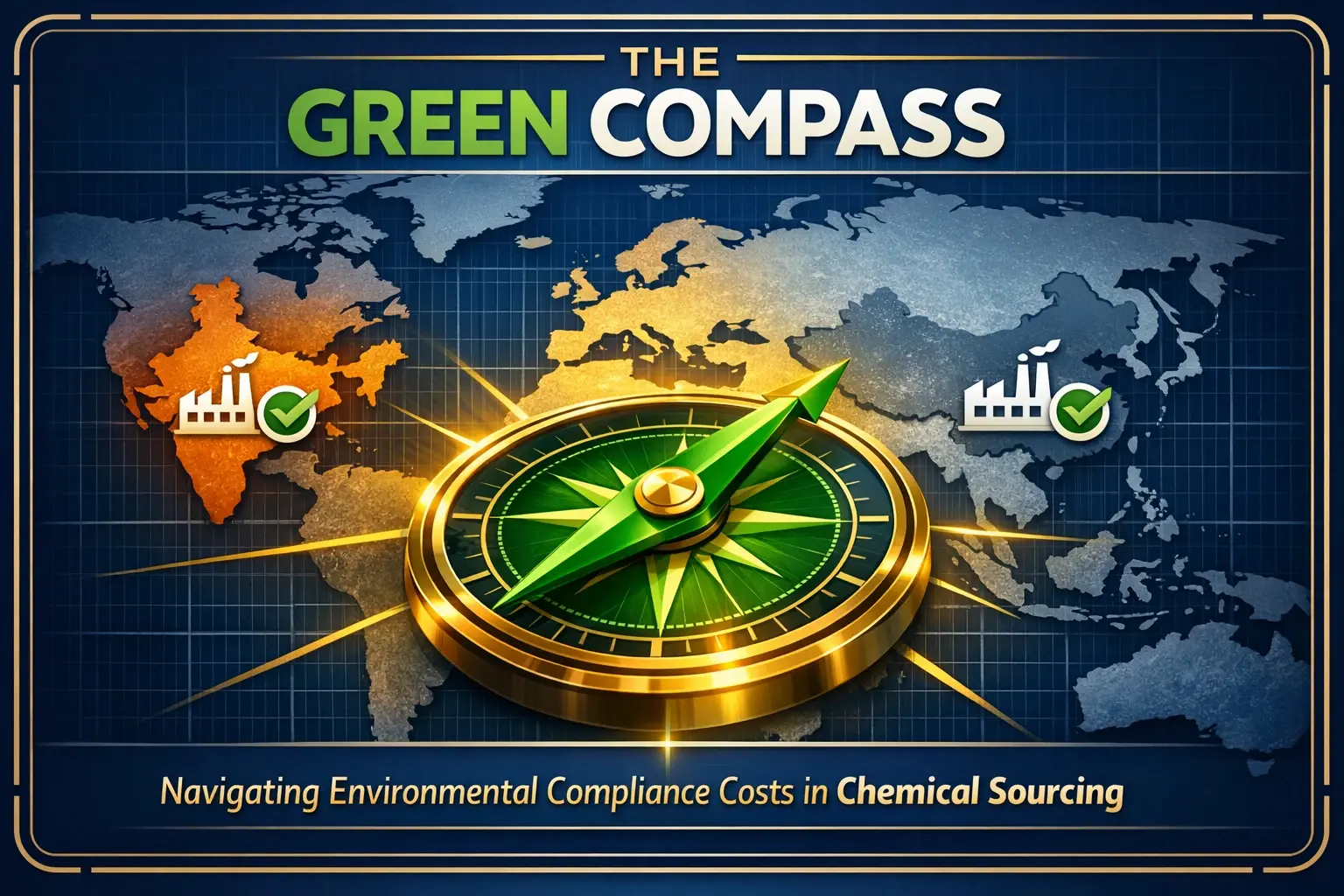
As you build your “China +1” strategy, make the green compass your guide. By prioritizing partners who demonstrate a real commitment to environmental responsibility, you are not just mitigating risk—you are building a supply chain that is smarter, more sustainable, and ready for the future.
Ready to dive deeper into the specifics of the Indian market? Contact Us today to understand the full process from sourcing to delivery.