If you are evaluating India as part of a “China Plus One” strategy, you’ve likely already encountered the standard “Top 10 Suppliers” lists. While these lists help identify potential partners, they miss the critical variable that often determines the success or failure of a supply chain: Geography.
In India, a supplier’s location isn’t just an address—it’s a proxy for their ability to scale, their compliance speed, and their logistics latency.
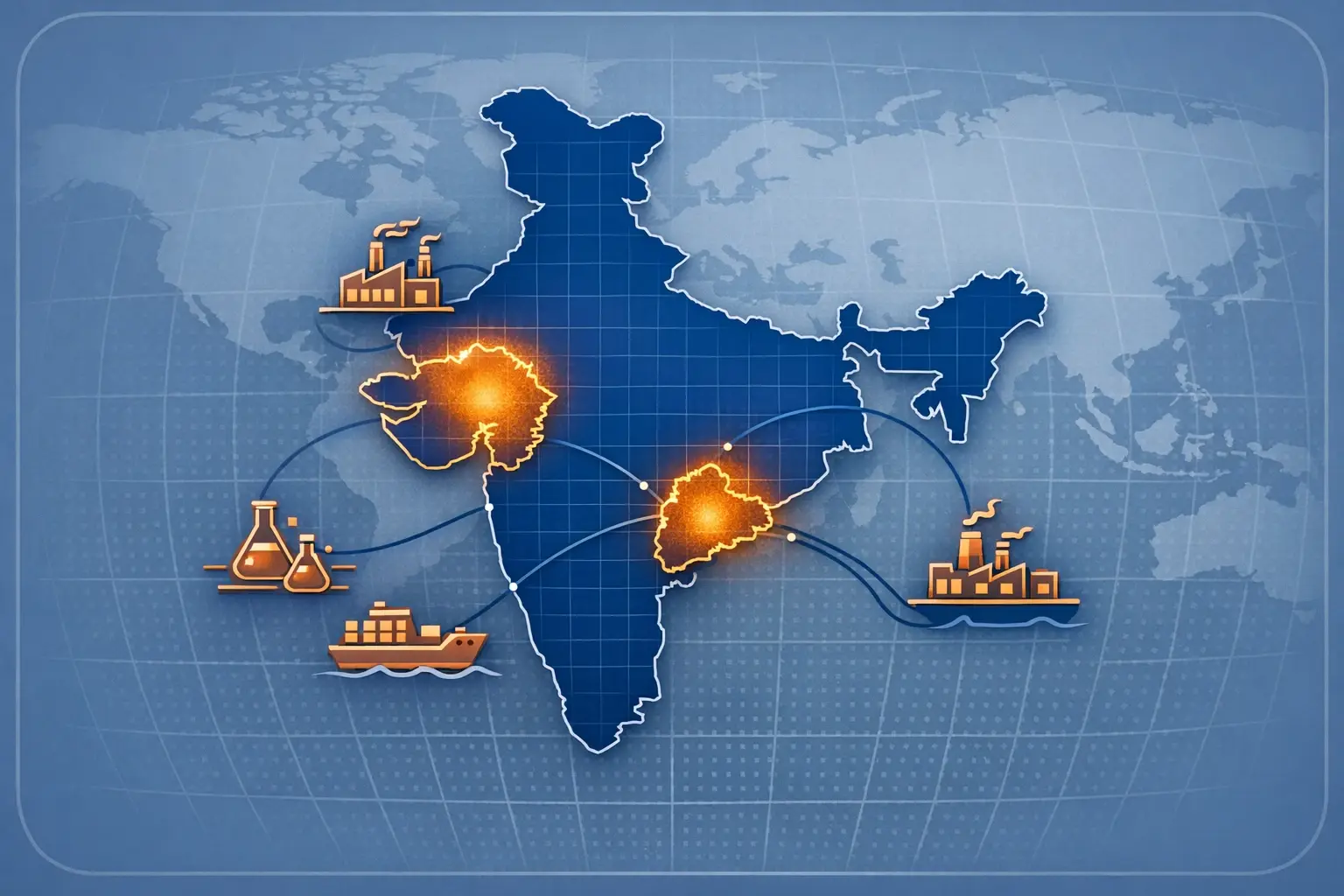
At Sourcing Pros, we advise procurement leaders to look beyond the company profile and analyze the industrial ecosystem surrounding it. Does the supplier sit within a Petroleum, Chemicals, and Petrochemicals Investment Region (PCPIR)? Are they connected to the Delhi-Mumbai Industrial Corridor (DMIC)?
This guide moves beyond surface-level data to help you optimize your sourcing location based on infrastructure maturity, regulatory velocity, and specialized cluster capabilities.
The India Chemical Sourcing Matrix
When we evaluate potential partners for our clients, we don’t just audit the factory; we audit the state’s industrial readiness. India is a federal structure, and the ease of doing business varies drastically from Gujarat to Tamil Nadu.
To build a resilient supply chain, you must balance three variables:
- Infrastructure: Proximity to deep-water ports like Mundra or Nhava Sheva.
- Regulatory Velocity: How fast can the supplier get Consent to Establish (CTE) or Consent to Operate (CTO) expansions?
- Ecosystem Depth: Is there a local network for raw materials and waste treatment?
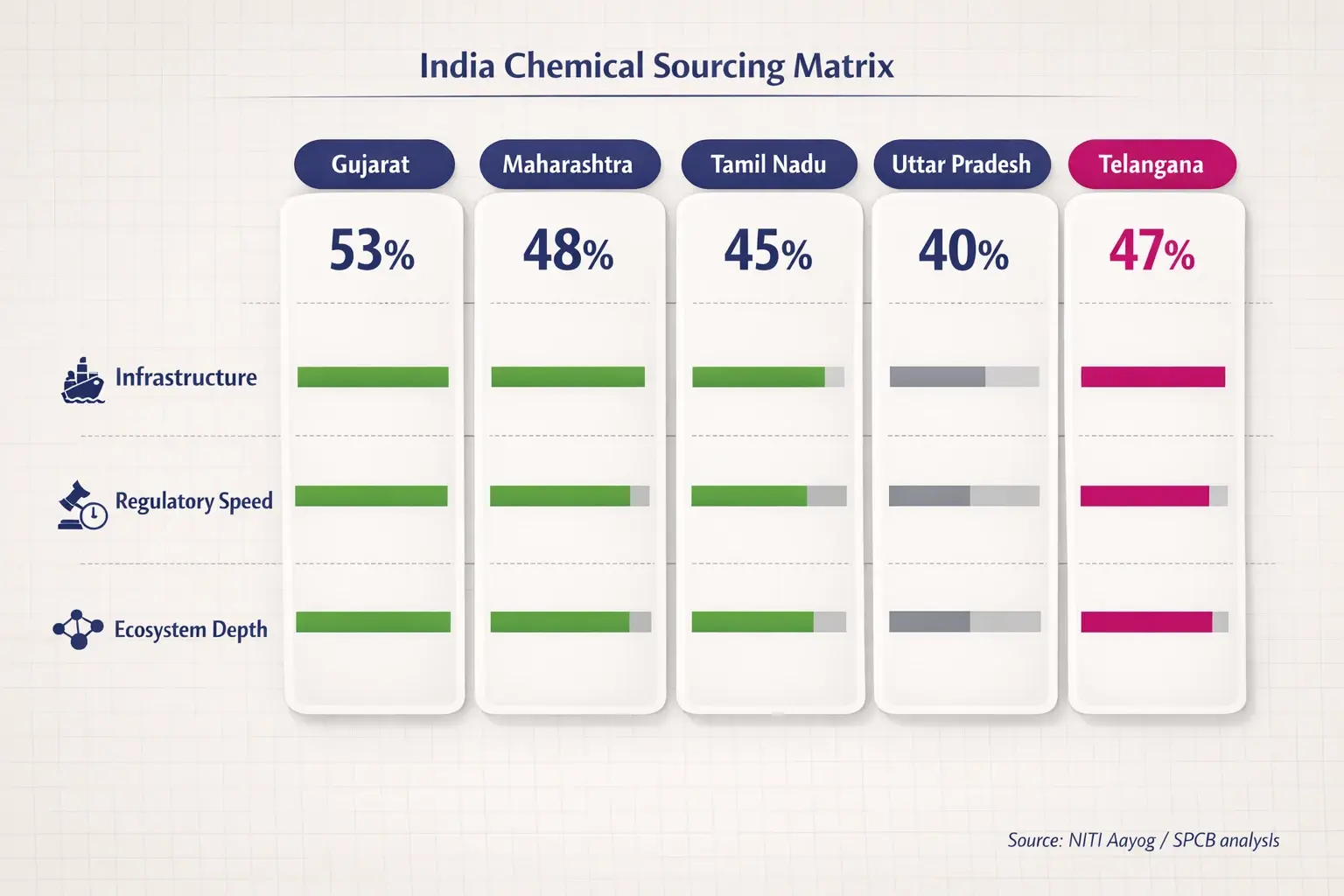
As the matrix above illustrates, Gujarat currently reigns as the “Category King,” accounting for approximately 53% of India’s chemical production units and 46% of exports. However, depending on your specific niche—such as pharmaceuticals or electronics—states like Telangana or Uttar Pradesh may offer higher strategic value.
Mapping Specialized Ecosystems
Evaluating a supplier requires understanding their local “neighborhood.” India’s industrial strategy relies on clustering—grouping related industries to create efficiencies. Here is how the landscape breaks down for key verticals.
The Petro-Chemical Powerhouse: Gujarat
If you are sourcing bulk chemicals, intermediates, or polymers, Gujarat is the default choice. The Dahej PCPIR is one of the few internationally rated “High Progress” clusters.
- The Advantage: Immense scale. The ecosystem is fully mature, meaning feedstock is piped directly between plants, reducing transport costs.
- The Sourcing Pros Insight: Regulatory processing here is streamlined. State Pollution Control Board (SPCB) processing for chemicals is often 2x faster (15–30 days) compared to neighboring Maharashtra.
The Life Sciences Frontier: Telangana
For those in agrochemicals, active pharma ingredients (APIs), or complex formulations, the Hyderabad region (Genome Valley) in Telangana is the hub.
- The Advantage: A high concentration of CDMOs (Contract Development and Manufacturing Organizations) and FDA-approved facilities.
- The Trade-off: While excellent for high-value, low-volume goods, logistics costs for bulk exports can be higher due to the distance from major sea ports.
The Specialty Corridor: Maharashtra & Emerging Hubs
Maharashtra remains a dominant player for specialty chemicals and coatings. However, newer corridors are opening up. The DMIC is creating “Smart Industrial Cities” like Dholera and AURIC, designed specifically for export-oriented units. Sourcing from these newer zones can often yield 20–30% lower logistics costs due to integrated freight corridors.
Logistics Latency: The Hidden Cost of Location
A common friction point for Western buyers is the “Ex-Works to FOB” timeline. A supplier might produce a batch in 3 days, but if they are located in a logistics dead zone, it might sit on a truck for a week.
We map “Logistics Latency”—the actual time it takes for goods to move from the factory gate to the vessel at major ports like Mundra or Nhava Sheva.
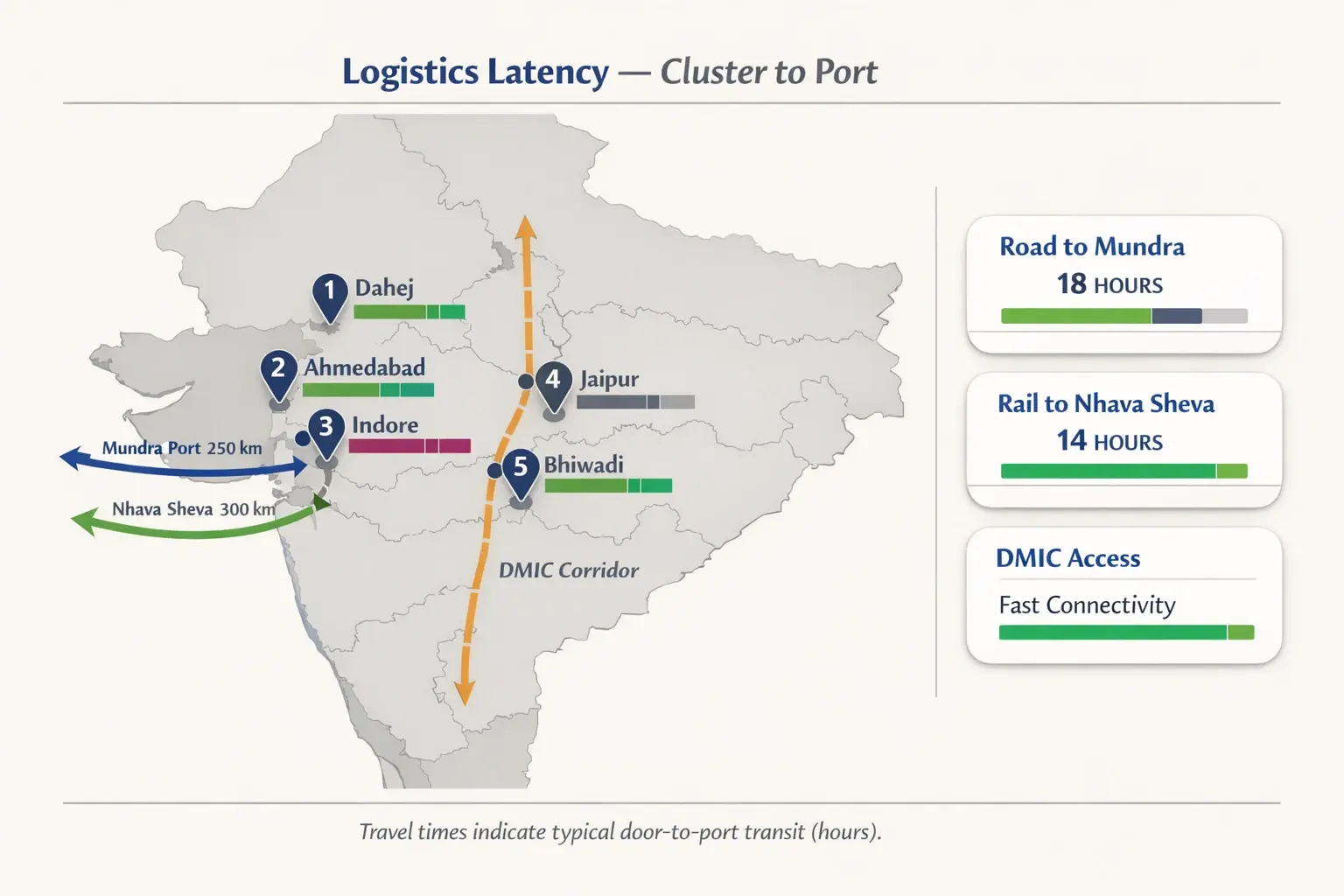
For bulk chemical buyers, sourcing from a facility near a Dedicated Freight Corridor (DFC) rail head is crucial. It minimizes the risk of road delays and ensures hazardous goods are handled via safer, rail-based transport.
Regulatory Velocity and Risk Mitigation
In the chemical industry, environmental compliance is the primary driver of supply disruption. You need a partner who isn’t just compliant today, but located in a region where compliance is predictable.
Our research indicates a massive divergence in “Regulatory Friction” between states. For example, while Gujarat offers a fast-track mechanism for environmental clearance, industries in Tamil Nadu often face stricter interventions from the National Green Tribunal (NGT), which can lead to sudden production stoppages.
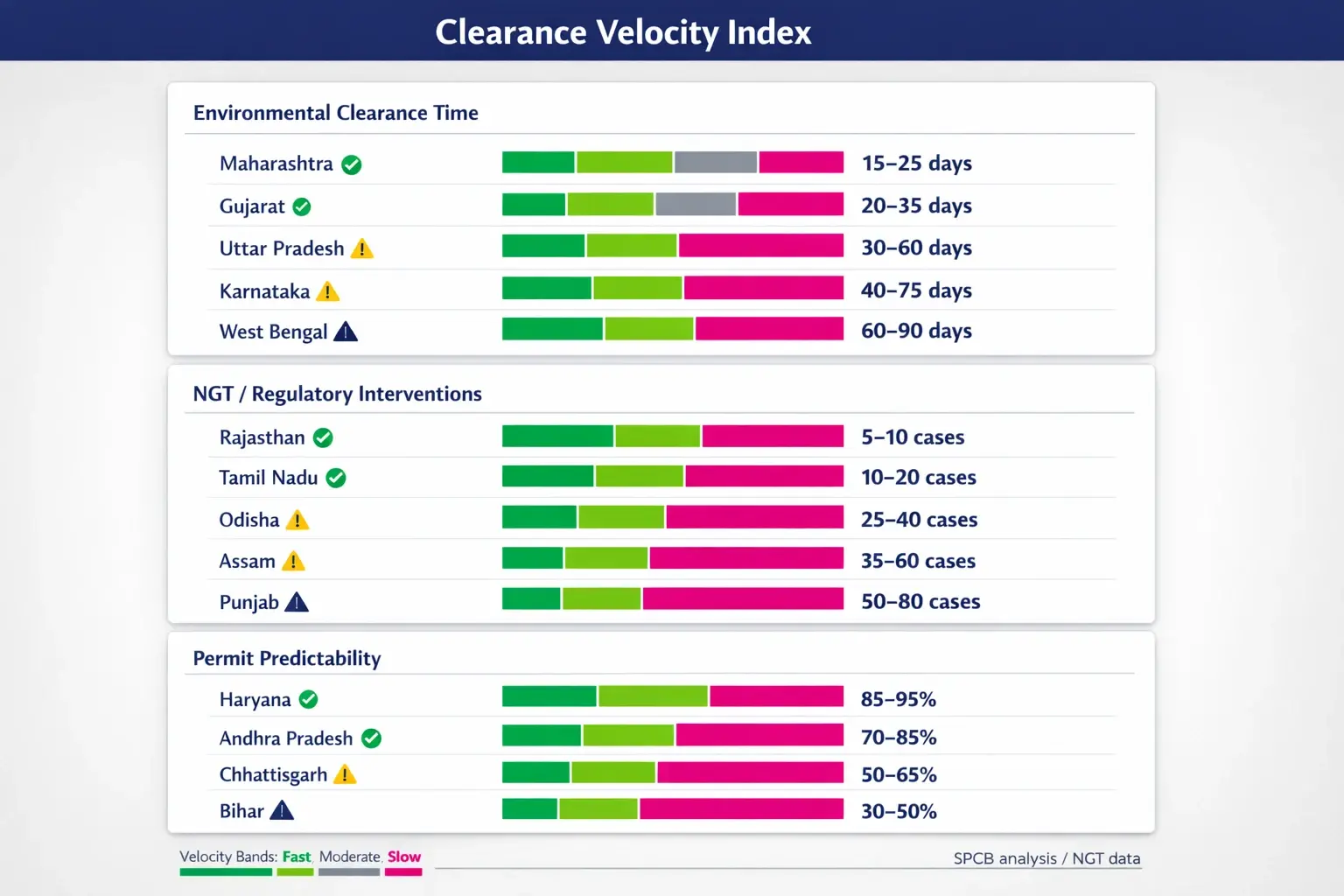
When we vet suppliers, we assess their location’s “Clearance Velocity.” This tells us if a supplier can legally expand their capacity to meet your growing demand without getting stuck in 6 months of bureaucratic limbo.
Making the Decision: Matching Product to Place
Successfully executing a “China Plus One” strategy requires matching your specific product needs to the right industrial ecosystem.
- For High-Volume, Price-Sensitive Commodities: Prioritize Gujarat (Dahej/Kandla). The scale and port proximity offer the lowest landed cost.
- For High-Value, IP-Sensitive Formulations: Look toward Telangana or Special Economic Zones (SEZs) in Maharashtra, where IP protection and technical talent are dense.
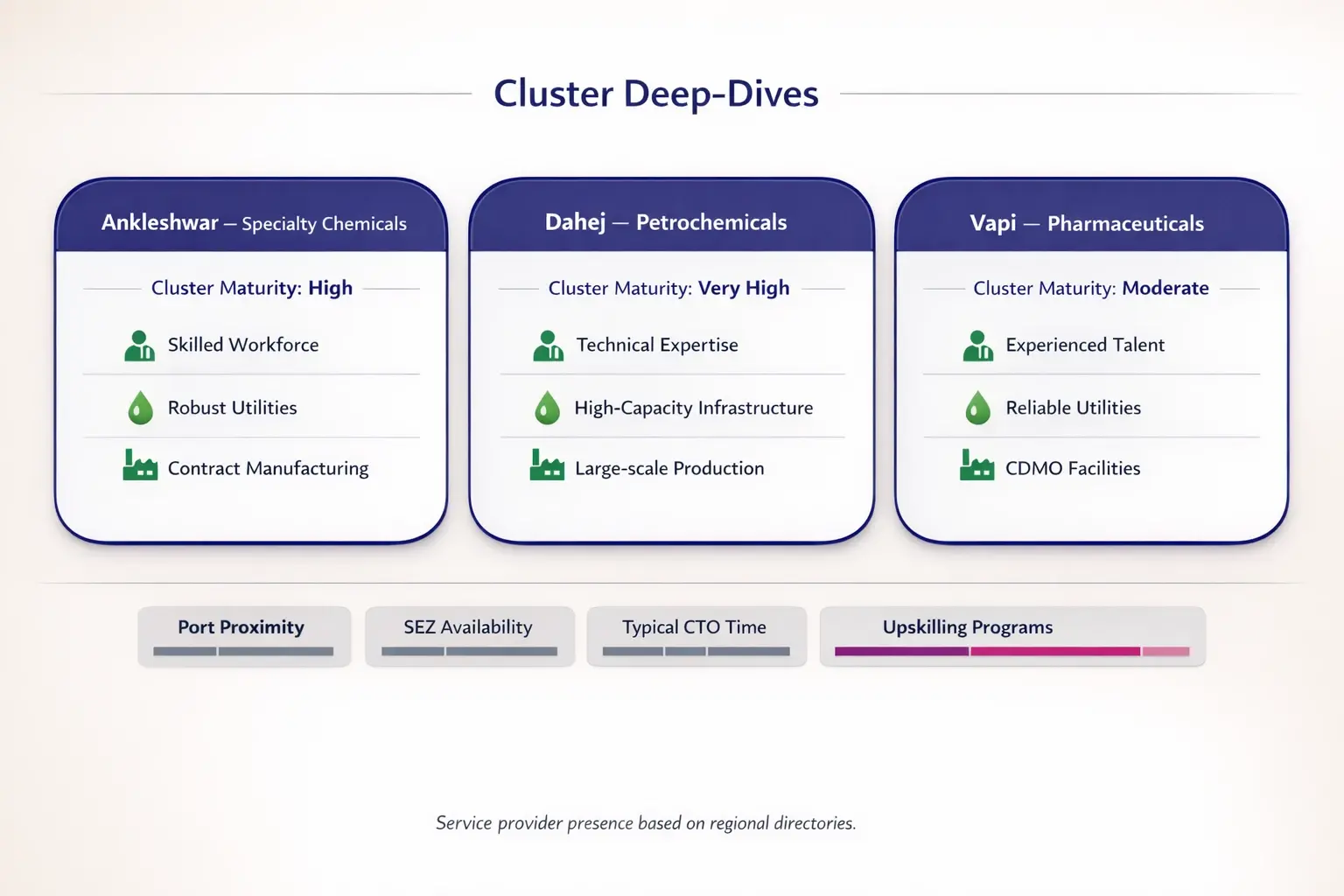
Below is a cluster profile guide we use to help clients match their product category to the most capable region.
Leveraging SEZ Incentives
Don’t overlook the financial implications of location. Sourcing from a unit within a Special Economic Zone (SEZ) can eliminate duties on imported raw materials used for your products. Furthermore, many SEZs offer 100% power subsidies and duty-free import of capital goods, allowing your supplier to invest in better quality control equipment without passing the cost on to you.
Frequently Asked Questions
How does location affect hazardous chemical sourcing?
Location is critical for Hazmat. Sourcing from a landlocked state increases the number of “touchpoints” and regulatory checks during transit. We generally recommend sourcing hazardous chemicals from coastal clusters like Dahej or Vizag to minimize inland transit risk and ensure compliant handling from factory to vessel.
Can Sourcing Pros verify a supplier’s “Regulatory Health”?
Yes. We go beyond the certificate. Our team checks the supplier’s history with local Pollution Control Boards, verifies their waste disposal manifests, and assesses the stability of the industrial zone they operate in. We ensure you aren’t partnering with a factory at risk of closure.
Why is Gujarat dominant in chemicals compared to other states?
It is a combination of legacy and policy. Gujarat hosts the largest ports (Mundra, Kandla), the dedicated Dahej PCPIR, and a political framework that prioritizes industrial growth. This results in faster approvals (15-30 days) and a dense network of raw material suppliers, creating a self-sustaining ecosystem.
The Sourcing Pros Advantage
Navigating India’s diverse industrial landscape requires more than a map; it requires boots on the ground. At Sourcing Pros, we bridge the gap between Western expectations and Indian operational realities.
We don’t just find you a supplier; we find you the right supplier in the optimal location—ensuring your supply chain is resilient, compliant, and cost-effective.
Ready to optimize your India sourcing strategy? Let’s discuss how we can align your product needs with the right industrial ecosystem.