Your production line hums along, but a storm is gathering on the horizon. Your traditional sourcing channels are facing unpredictable costs, geopolitical headwinds, and logistical snags. You’ve heard the buzz about “China +1” strategies and new Free Trade Agreements (FTAs), but they feel like abstract concepts—distant thunder rather than a clear forecast. What if that thunder is actually the sound of a massive opportunity rolling in?
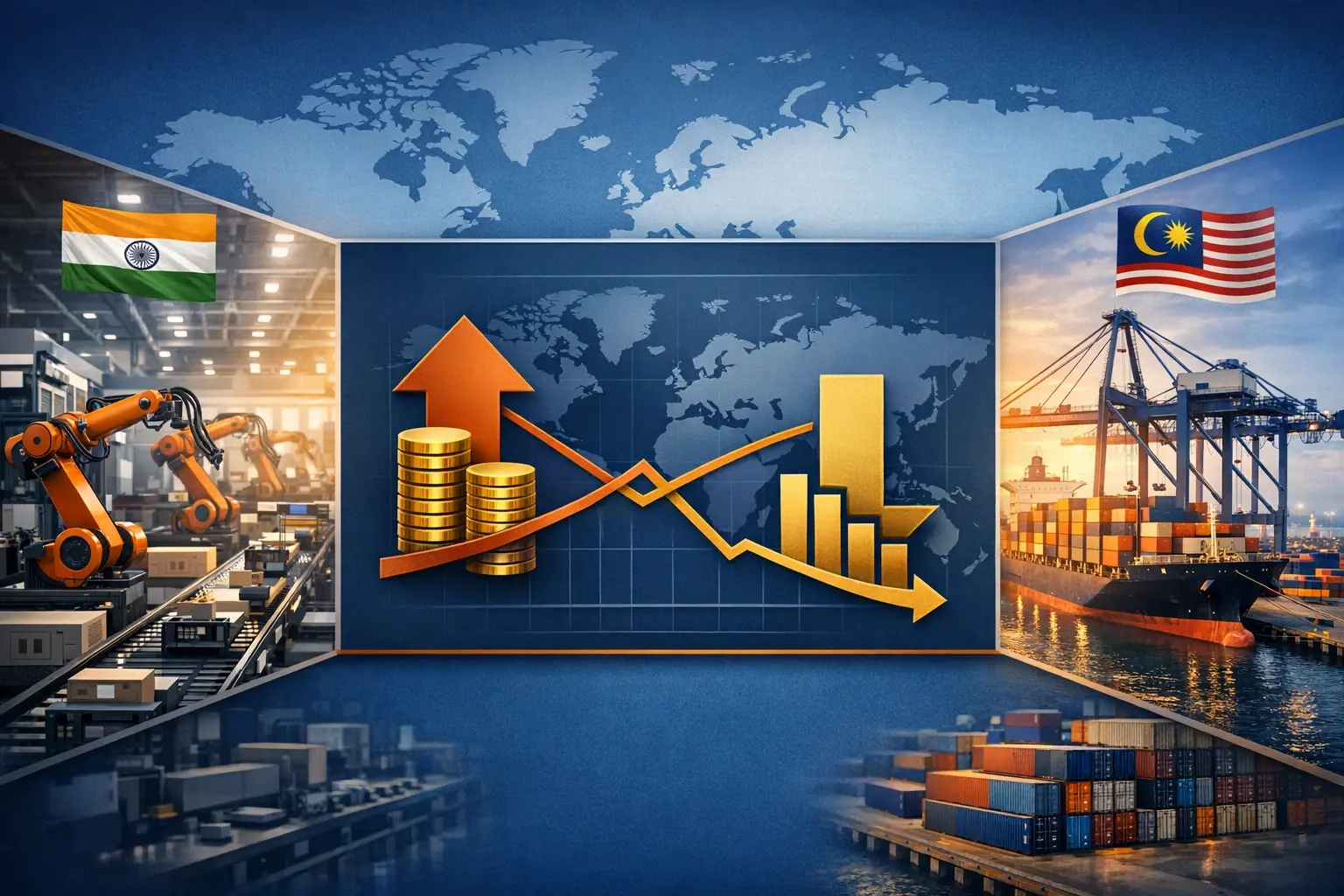
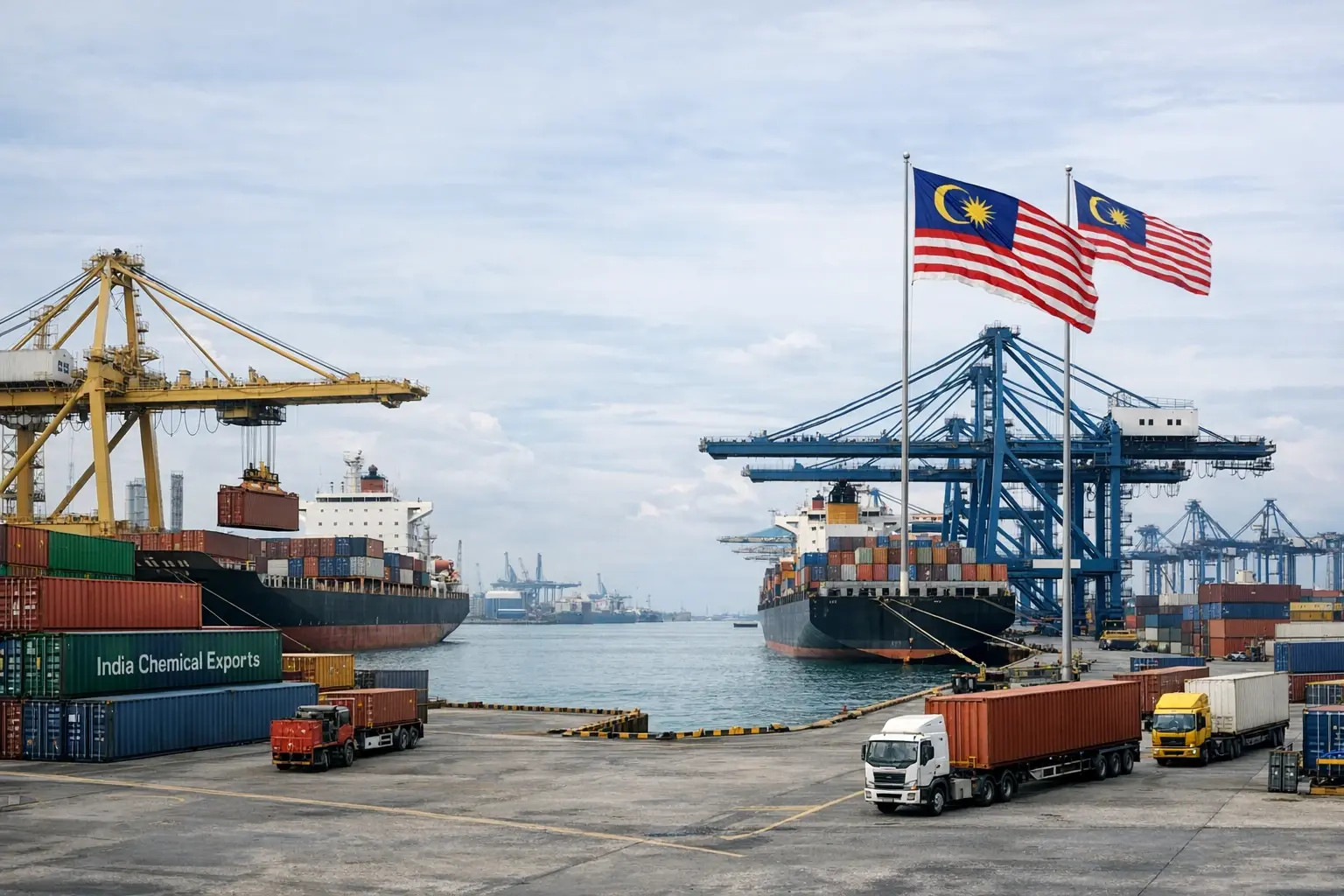
For procurement leaders in the chemical and industrial sectors, the shifting landscape of global trade isn’t just a headline; it’s a critical variable in your cost and risk models. As the European Union deepens its trade ties, two key players are emerging as powerful sourcing hubs: India and Malaysia. Understanding how to leverage their respective Free Trade Agreements with the EU could be the difference between simply surviving and strategically thriving. This guide will help you move beyond the headlines and build a practical framework for analyzing which partner offers the best value for your business.
First, Let’s Demystify the Core Concepts
Before diving into a head-to-head comparison, it’s essential to have a shared language. Many people use terms like “FTA” and “Cost-Benefit Analysis” without a concrete grasp of what they mean for day-to-day operations.
What Exactly is a Free Trade Agreement (FTA)?
Think of an FTA as a VIP pass for international trade between two or more countries. At its core, an FTA is a pact to reduce or eliminate barriers to trade, primarily tariffs (taxes on imports) and quotas (limits on the quantity of goods). The goal is to make it cheaper and easier for businesses in member countries to buy and sell from each other. But a modern FTA goes much further, often covering intellectual property rights, environmental standards, and dispute resolution—creating a more predictable and stable business environment.
What is a Cost-Benefit Analysis (CBA)?
A Cost-Benefit Analysis is a systematic process for weighing your options. As explained by resources like Investopedia, it’s a data-driven way to determine if a decision makes financial sense. You tally up all the potential benefits (like cost savings from zero tariffs) and subtract the total costs (like new compliance expenses or higher shipping fees). If the benefits outweigh the costs, the decision is financially sound. For a procurement leader, a CBA isn’t just an accounting exercise; it’s your strategic compass for navigating complex sourcing decisions.
The Sourcing Showdown: India vs. Malaysia for the EU Market
With the fundamentals in place, let’s analyze the specific opportunities each country presents. This isn’t just about which country is “better,” but which is strategically right for your specific chemical or industrial products.
The India-EU FTA: A New Sourcing Powerhouse
The ongoing negotiations for the India-EU Free Trade Agreement, with a potential conclusion around 2026, represent one of the most significant shifts in global supply chains. According to official EU factsheets, the agreement aims for ambitious and comprehensive tariff elimination.
Key Benefits for EU Importers:
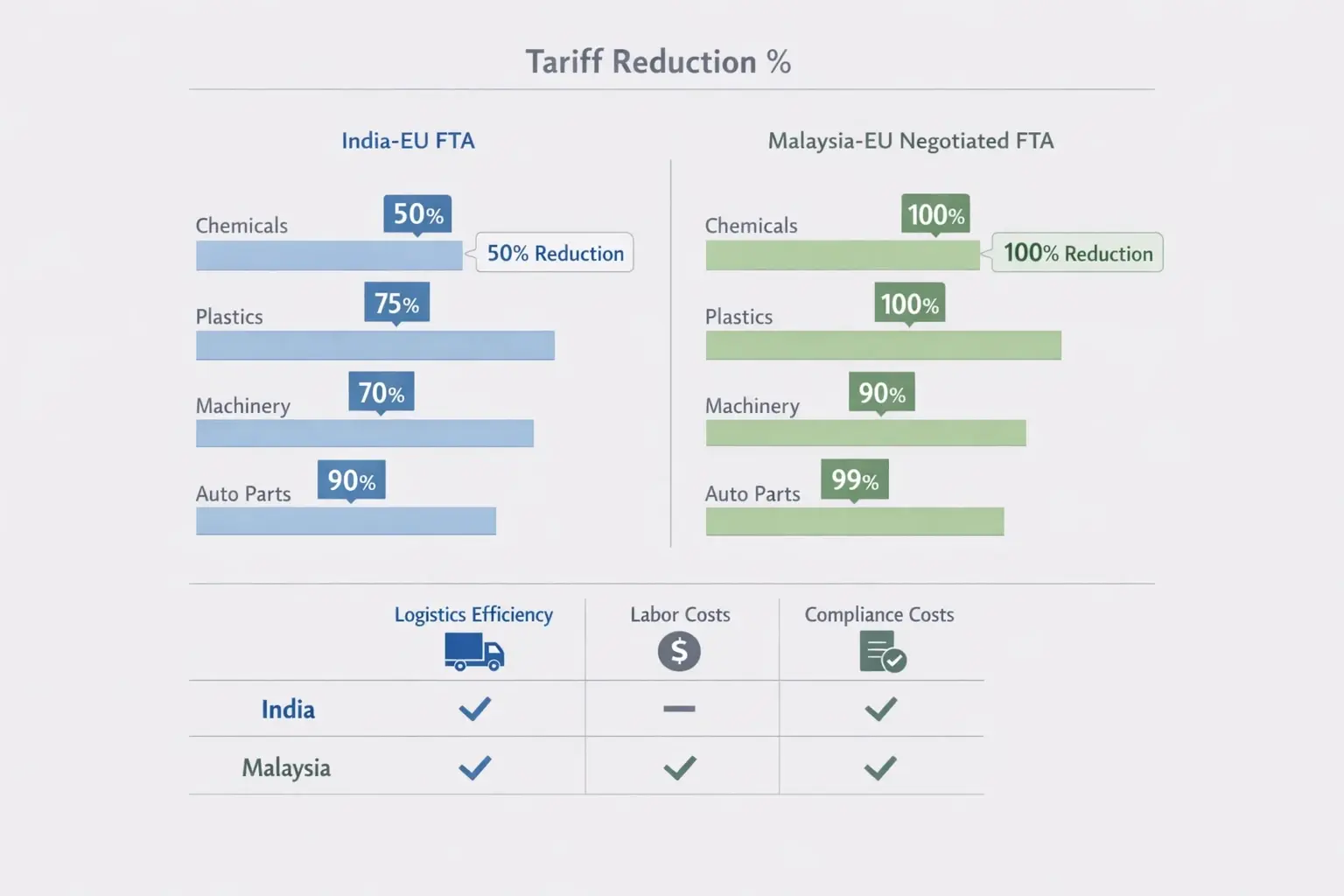
- Significant Tariff Reductions: For the chemical sector, the EU is pushing for the elimination of tariffs on a massive scale. This means products like bulk chemicals, polymers, dyes, and specialty intermediates sourced from India could land in your European warehouse at a substantially lower cost.
- Enhanced Market Access: The agreement is designed to dismantle non-tariff barriers, streamlining customs procedures and improving regulatory transparency. This reduces the risk of shipments getting stuck in red tape.
- Stronger IP Protection: For companies sourcing custom-formulated chemicals or proprietary industrial parts, the FTA’s provisions on intellectual property offer a crucial layer of security.
The Malaysia-EU FTA Context: The Established Player
While a comprehensive FTA between the EU and Malaysia is still under discussion, Malaysia is part of the ASEAN bloc, which has deep trade ties with Europe. Malaysia has long been a reliable hub for manufacturing, particularly in electronics and certain industrial components.
Comparative Strengths:
- Established Infrastructure: Malaysia boasts highly developed logistics infrastructure and a long history as a major exporter, which can translate to reliable lead times.
- Sector-Specific Advantages: While India is a giant in bulk and specialty chemicals, Malaysia has carved out niches in areas like rubber-based products, oleochemicals, and specific electronic components.
- Potential for Future Agreements: A future EU-Malaysia or EU-ASEAN FTA could unlock similar tariff benefits, making it a market to watch closely.
The critical takeaway is that India’s forthcoming FTA is poised to create a direct and significant cost advantage for a wide range of chemicals and industrial goods, potentially reshaping the competitive landscape.
Beyond Tariffs: Navigating the Regulatory Maze
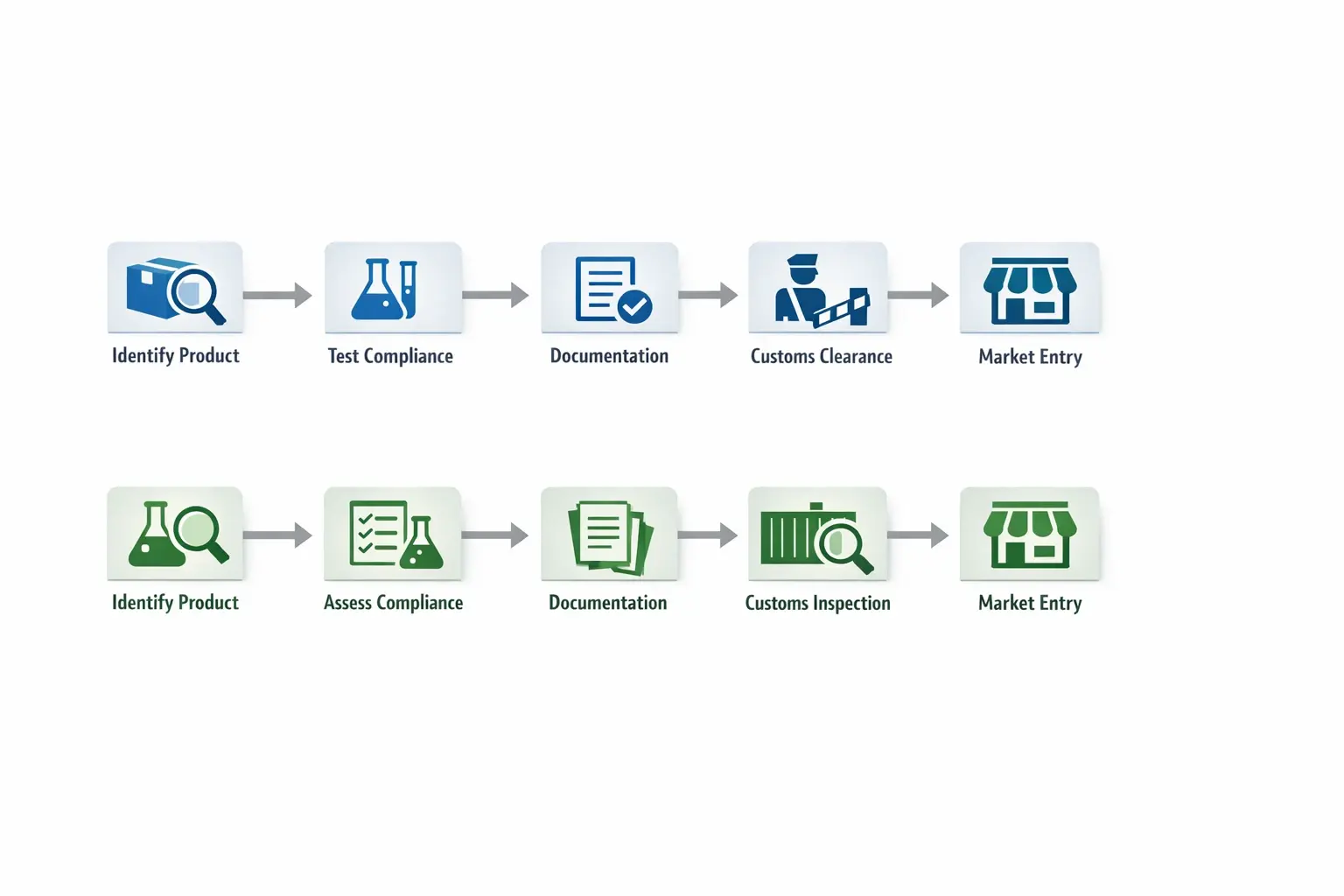
A “zero tariff” sticker means nothing if your products can’t legally enter the market. For chemicals and industrial goods, EU compliance is non-negotiable and represents a major cost factor in any sourcing analysis. Two acronyms strike fear into the hearts of unprepared importers: CE and REACH.
CE Marking: Your Product’s Passport to Europe
The CE mark on a product is the manufacturer’s declaration that the product meets EU standards for health, safety, and environmental protection. It’s mandatory for many industrial goods, from machinery parts to electronics.
What this means for you:
- Supplier Responsibility: Your Indian or Malaysian supplier is responsible for conducting the conformity assessment, preparing the technical file, and affixing the CE mark.
- Your Due Diligence: As the importer, you must verify that the supplier has done this correctly. Failure to do so can result in your shipment being denied entry, hefty fines, and product recalls. The cost of non-compliance far exceeds the cost of due diligence.
REACH: The Gatekeeper for Chemicals
REACH (Registration, Evaluation, Authorization and Restriction of Chemicals) is the EU’s rigorous chemical safety regulation. If you import more than one ton of a chemical substance per year, you are responsible for ensuring it’s registered with the European Chemicals Agency (ECHA).
Your obligations as an importer:
- Registration: You or an “Only Representative” in the EU must register the substances. This can be a complex and costly process.
- Safety Data Sheets (SDS): You must ensure that compliant, up-to-date SDSs are available for all hazardous substances.
- Substance of Very High Concern (SVHC): You must track and communicate the presence of any SVHCs in your products.
Navigating CE and REACH requires expertise. The cost and time involved in ensuring compliance with these regulations must be a line item in your Cost-Benefit Analysis. This is often where a sourcing partner with on-the-ground compliance expertise becomes invaluable.
How to Conduct a Real-World Cost-Benefit Analysis: India vs. Malaysia
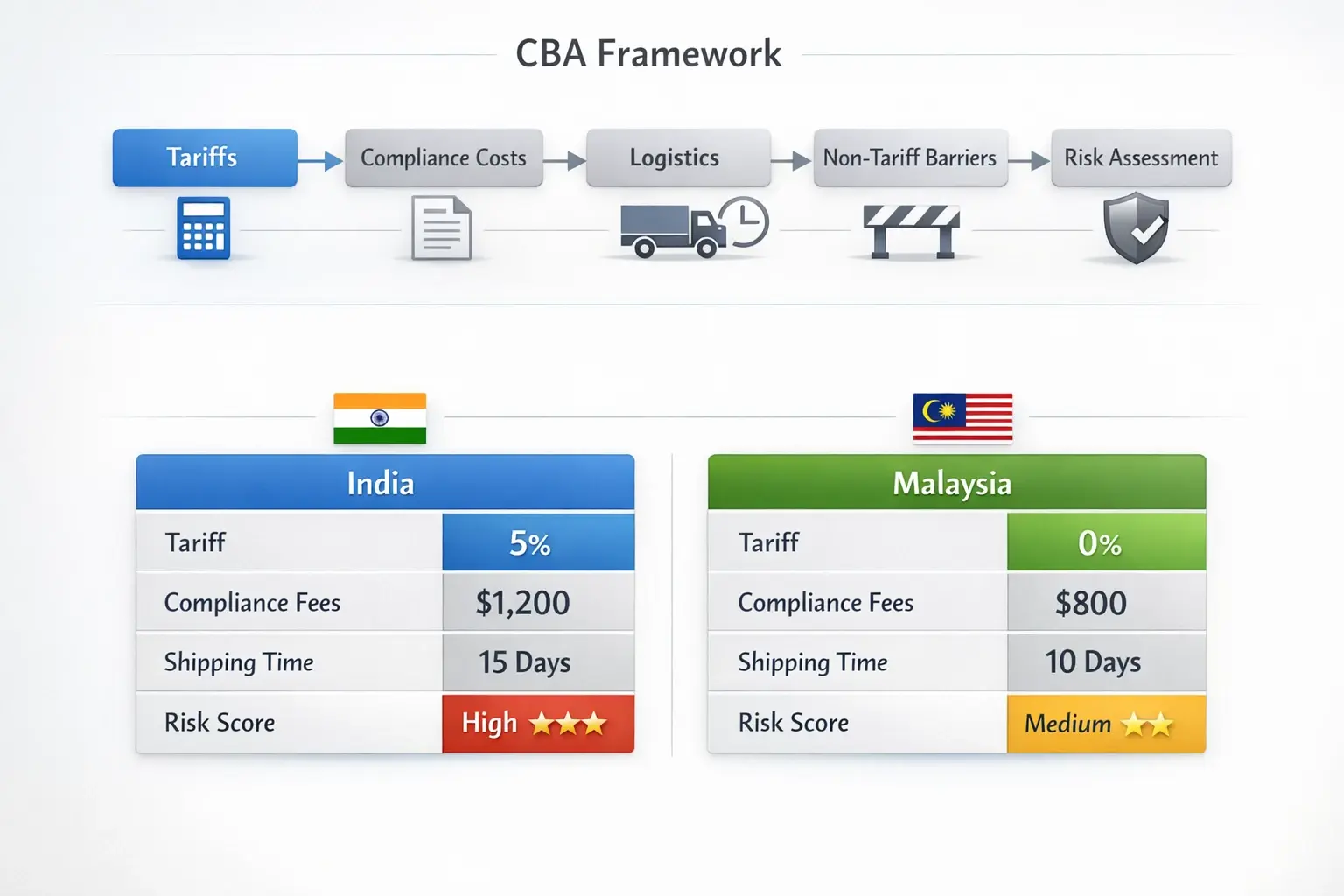
Now, let’s put it all together. Here is a practical, step-by-step framework to move from theory to a decision.
Step 1: Quantify the Tariff Savings (The “Benefit”)
- Identify the HS Code: Find the specific Harmonized System (HS) code for your product.
- Look Up the Tariffs: Use the EU’s official TARIC database to find the current “third country” tariff rate.
- Calculate the Savings: Based on the India-EU FTA’s proposed tariff elimination, calculate the annual savings based on your import volume. For Malaysia, use the current tariff rate until a new FTA is enacted.
- Example: If you import €2 million of a chemical with a 6.5% tariff, the India-EU FTA could represent a direct saving of €130,000 per year.
Step 2: Calculate the Total Landed Cost (The “Cost”)Don’t stop at the product price. Your analysis must include:
- FOB Price: The price of the goods from the supplier.
- Logistics: Ocean freight, insurance, and inland transportation costs from both India and Malaysia.
- Compliance Costs: The costs associated with REACH registration, CE marking validation, and creating compliant documentation (SDSs, COAs). This can vary significantly between suppliers.
- Duties & Taxes: Even with an FTA, there may be other taxes like VAT.
Step 3: Evaluate the Non-Financial Factors (The Risks & Strategic Value)This is where analysis becomes an art. Assign a score or qualitative assessment to factors like:
- Supplier Reliability: What is the supplier’s track record for quality and on-time delivery? (Request references and third-party audits).
- Supply Chain Resilience: How diversified is the country’s manufacturing base? What are the geopolitical risks?
- Communication & Service: How responsive is the supplier? Do they understand Western business standards and documentation requirements?
- Quality Control: What is the cost and feasibility of conducting on-site batch testing and pre-shipment inspections?
By plugging in real numbers and honest assessments, you can build a powerful decision-making tool that compares the true cost and benefit of sourcing from each country.
Your Questions Answered: FTA Sourcing FAQ
Q1: What is the most immediate impact of an FTA for a procurement manager?
The most immediate and tangible impact is the reduction or elimination of import tariffs, which directly lowers your landed cost and can improve your company’s profit margins or allow for more competitive pricing in the EU market.
Q2: How do I know if my product is covered by the India-EU FTA?
You need to know your product’s HS code. Once the agreement is finalized, official government and EU trade websites will publish detailed annexes listing the tariff reduction schedules for every HS code covered by the FTA.
Q3: Are FTAs only about tariffs?
Not at all. Modern FTAs also tackle non-tariff barriers, such as complex customs procedures and inconsistent regulations. They also include chapters on intellectual property protection and sustainable development, creating a more predictable and secure trading environment.
Q4: If I source from India, am I automatically compliant with REACH?
No. REACH compliance is the responsibility of the EU-based importer. Your Indian supplier can provide you with technical data, but you (or your designated representative) are legally responsible for registering the chemical substances with the ECHA. This is a critical distinction.
Q5: Malaysia seems like a safer, more established option. Why take a risk on India?
While Malaysia has a strong manufacturing track record, the scale and depth of India’s chemical and industrial manufacturing base are immense. The upcoming India-EU FTA is specifically designed to unlock this potential, offering first-mover advantages to companies that build relationships and supply chains early. With the right on-the-ground partner, the perceived risks can be effectively managed.
The Way Forward: From Analysis to Action
The global sourcing map is being redrawn. Free Trade Agreements are not just economic policy—they are strategic tools that you, as a procurement leader, can use to build a more resilient, cost-effective, and competitive supply chain.
The analysis shows that while both India and Malaysia are viable sourcing hubs, the impending India-EU FTA is poised to offer a significant, direct financial advantage for importers of chemicals and industrial goods. However, this benefit can only be realized if it’s paired with a rigorous approach to quality assurance and regulatory compliance.
Your next step is to move from general awareness to specific application. Begin by identifying 2-3 key products in your portfolio and running them through the Cost-Benefit Analysis framework outlined above. The insights you uncover will not only clarify your sourcing strategy but will firmly establish your role as a strategic leader guiding your company through the complexities of modern global trade.