As a global sourcing manager, you’re likely feeling the pressure. The mandate is clear: diversify the supply chain, reduce reliance on single regions, and find new, reliable sources for critical raw materials. The “China +1” strategy isn’t just a boardroom buzzword; it’s your operational reality.
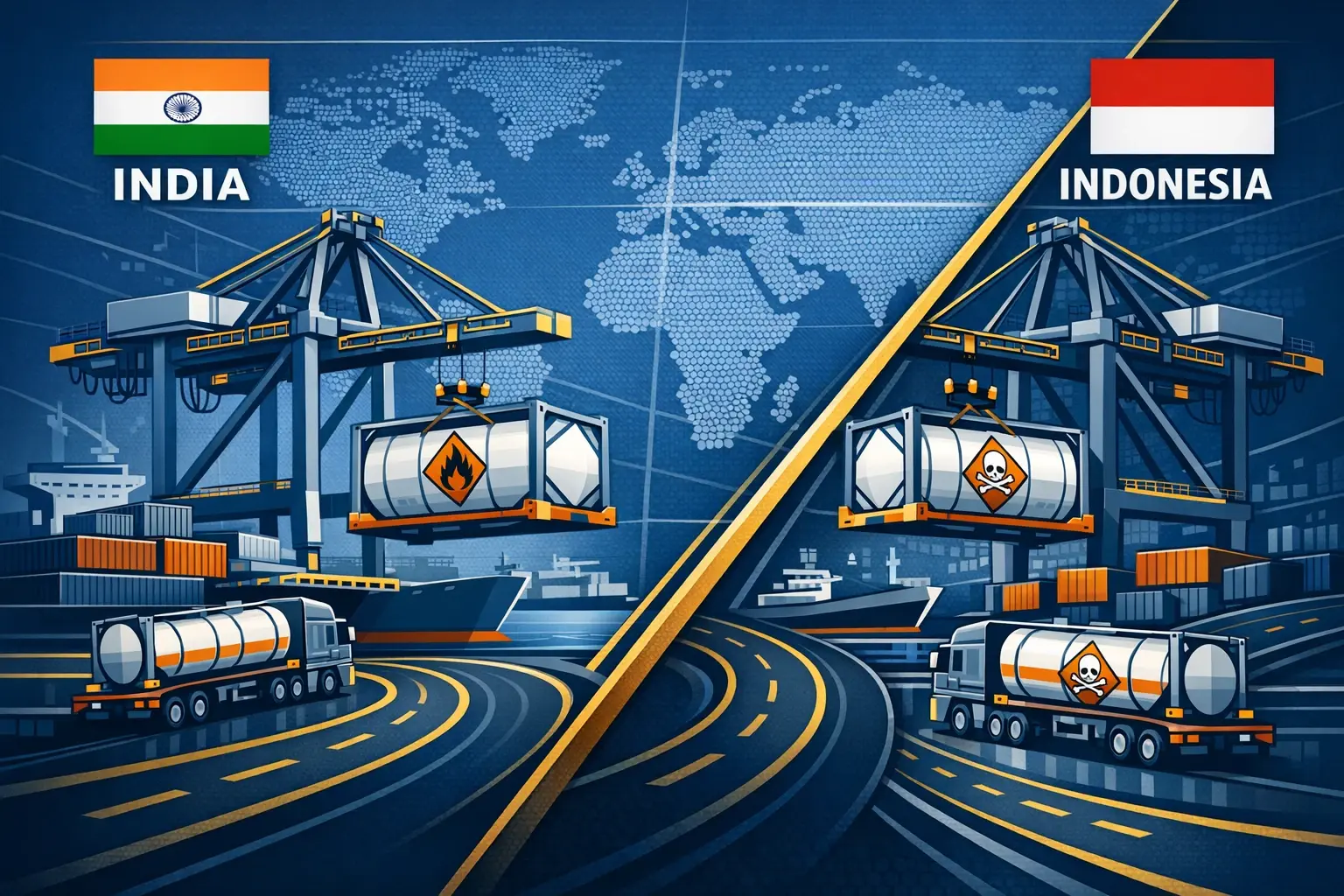
Two giants of the Asian market, India and Indonesia, have emerged as top contenders, particularly in speciality and bulk chemicals. But as you dig deeper, a critical question arises: Do they have the right infrastructure to handle your most sensitive products—bulk hazardous chemicals?
A late shipment of commodity goods is a problem. A mishandled shipment of hazardous chemicals is a catastrophe. It can lead to production shutdowns, regulatory fines, and irreparable brand damage. The difference between success and failure often lies not in the supplier’s factory, but in the complex logistical chain that connects it to your facility. This guide breaks down the essential infrastructure readiness of India and Indonesia, helping you look beyond the supplier quote and understand the true landscape of risk and opportunity.
What is “Infrastructure Readiness” for Hazardous Chemicals?
Before we compare, let’s define what we’re looking for. For bulk hazardous materials, “infrastructure readiness” goes far beyond a simple measure of ports and roads. It’s a specialized ecosystem built on four pillars:
- Port Capability: Not just the size, but the presence of dedicated berths for chemical tankers, specialized handling equipment (like non-corrosive pipelines), and robust emergency response systems.
- Dedicated Storage: Access to compliant chemical tank farms and warehouses with features like secondary containment, explosion-proof fittings, and segregated storage zones.
- Certified Transport: A reliable network of road tankers, rail cars, and coastal vessels specifically licensed and equipped to move hazardous goods safely.
- Regulatory Integration: How seamlessly the physical infrastructure integrates with customs, safety, and environmental compliance checks.
Understanding these pillars is the first step toward making a truly informed sourcing decision.
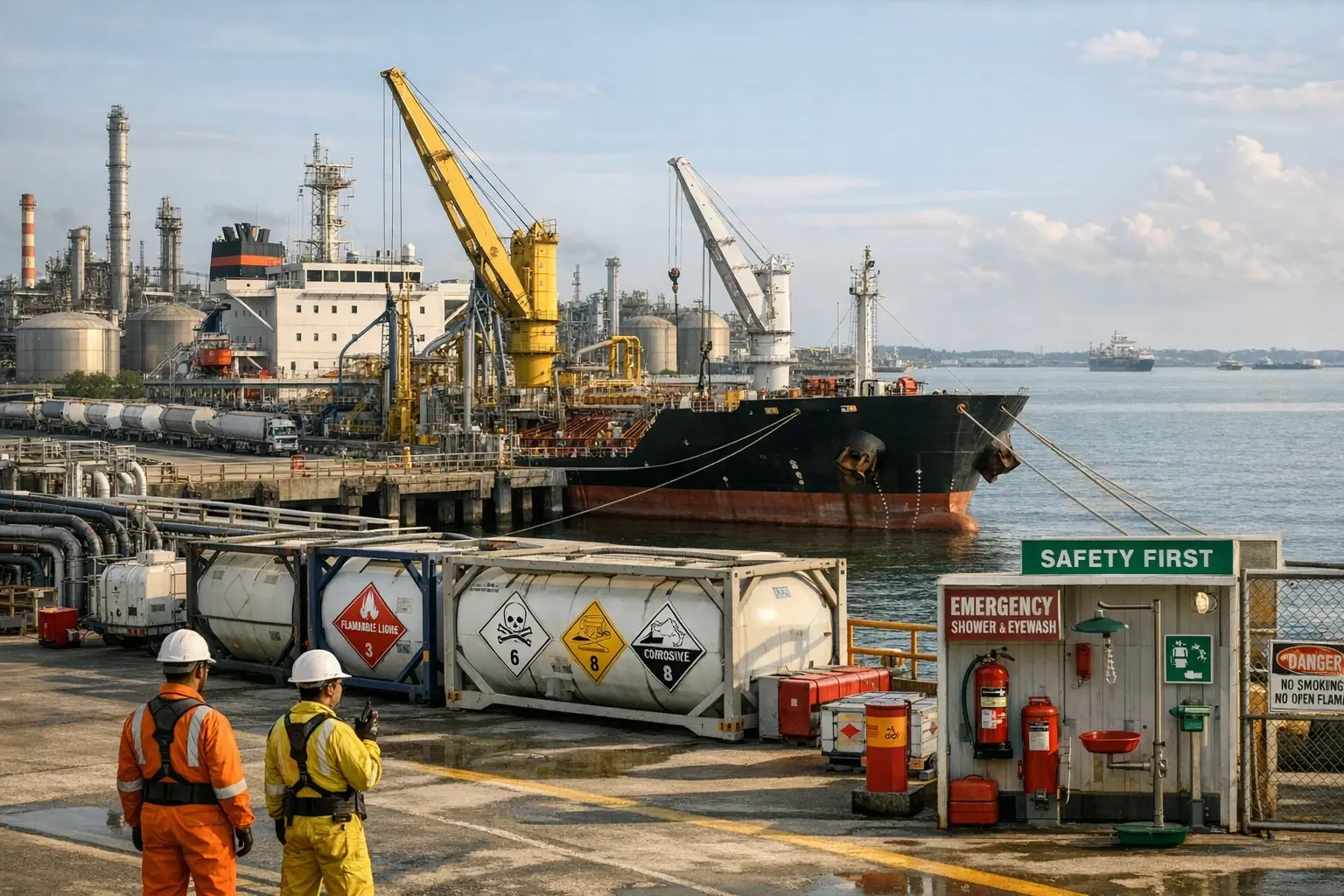
The Core Comparison: India vs. Indonesia
Both nations are making significant strides in logistics, but their approaches and current readiness reflect distinct geographical realities, economic priorities, and regulatory histories.
Port Capacity & Specialized Handling
A country’s ports are the gateway for global chemical trade. Their ability to efficiently and safely handle hazardous cargo is the most critical factor in the logistics chain.
India:India’s strategy, driven by initiatives like the Sagarmala Programme, focuses on enhancing the capacity of its 12 major ports and developing specialized terminals. Ports like Jawaharlal Nehru Port Trust (JNPT) in Mumbai, Mundra Port in Gujarat, and Chennai Port are central to its chemical export ecosystem.
- Strengths: A growing number of ports feature dedicated liquid chemical berths with specialized pipelines and vapor recovery systems. According to government reports from NITI Aayog, significant investment is being channeled into port modernization to handle higher volumes and more complex cargo. This has led to improved turnaround times for tankers in dedicated terminals.
- Challenges: While top-tier ports are world-class, infrastructure quality can be inconsistent across smaller ports. Bureaucratic hurdles can still cause delays, though digitalization is actively reducing this issue.
Indonesia:As an archipelago of over 17,000 islands, Indonesia’s port infrastructure is naturally decentralized. The government’s “Sea Toll” program aims to improve maritime connectivity between its islands. Key ports for chemical logistics include Tanjung Priok in Jakarta and Gresik in East Java.
- Strengths: Indonesia has deep experience in inter-island maritime logistics. Major ports are equipped to handle a variety of liquid bulk cargo, crucial for its palm oil and derivative industries, which share some infrastructure needs with chemicals.
- Challenges: An OECD assessment of Indonesia’s logistics sector highlights that port efficiency can be a significant bottleneck. A lack of dedicated, high-capacity chemical terminals outside of a few key hubs means hazardous cargo may compete for berthing space with other commodities, increasing wait times and handling risks.
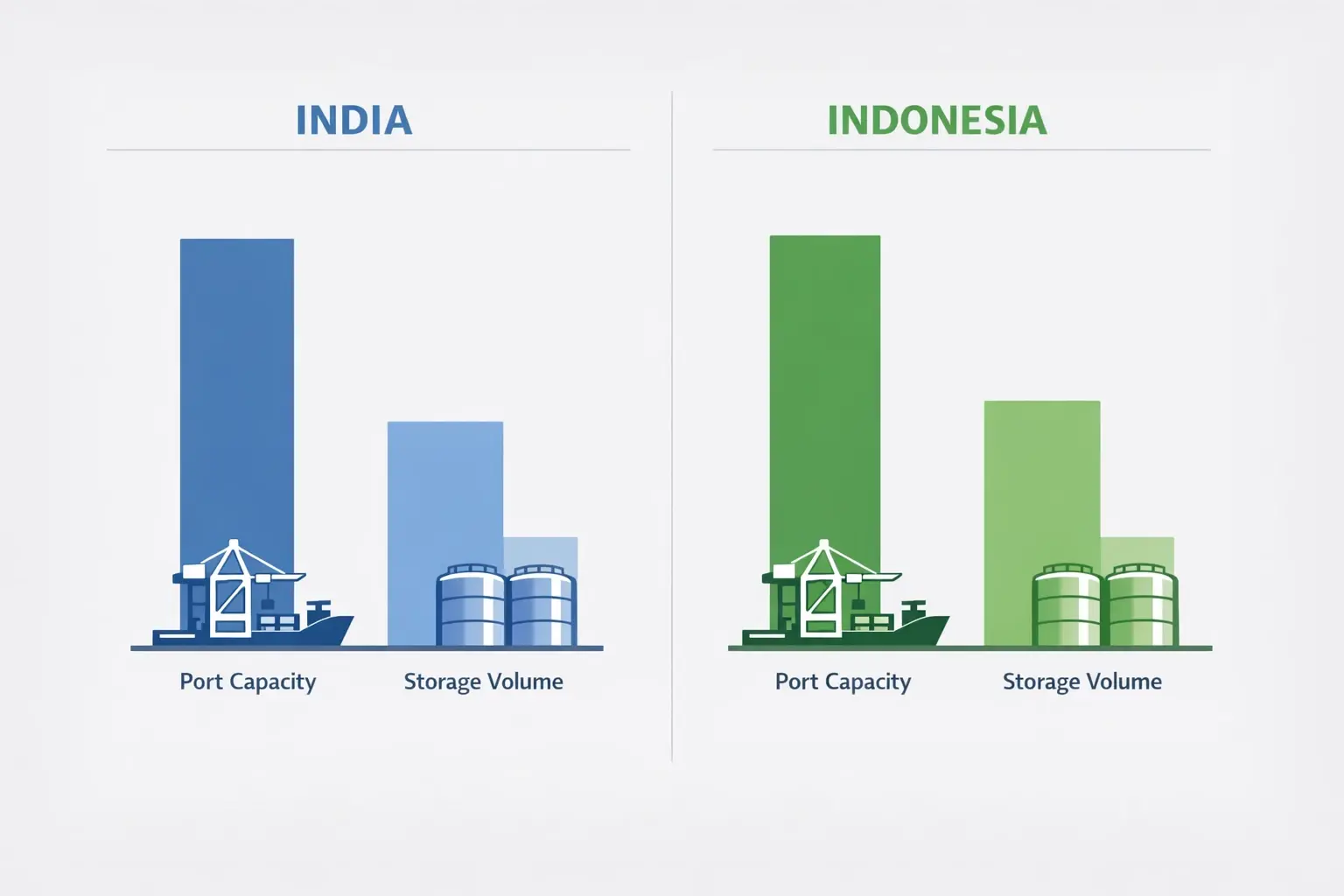
Dedicated Chemical Storage Facilities
Once off the ship, hazardous chemicals can’t just be stored anywhere. They require specialized facilities that adhere to strict safety and environmental standards.
India: Major chemical and industrial corridors, such as the Vapi-Ankleshwar belt in Gujarat and the Cuddalore-Nagapattinam region in Tamil Nadu, are supported by a growing network of dedicated chemical tank farms and hazardous-goods-compliant warehouses. These facilities are often strategically located near major ports.
- Key Feature: The emphasis is on large, consolidated storage hubs that serve extensive industrial regions. A thorough supplier qualification process often includes an audit of their proximity and access to these compliant storage facilities.
Indonesia: Indonesia’s storage infrastructure is more distributed, often located near key manufacturing zones in Java and Sumatra.
- Key Feature: While high-quality facilities exist, their capacity can be limited, and they are not as geographically widespread as in India. The archipelago nature means businesses often rely on smaller, localized storage solutions, which can vary in their adherence to international safety standards like the GHS (Globally Harmonized System).
Inland Transportation & Road Connectivity
The journey from the port to the factory, or vice versa, is where many logistical plans fall apart. This “last-mile” leg is heavily dependent on the quality of road and rail networks.
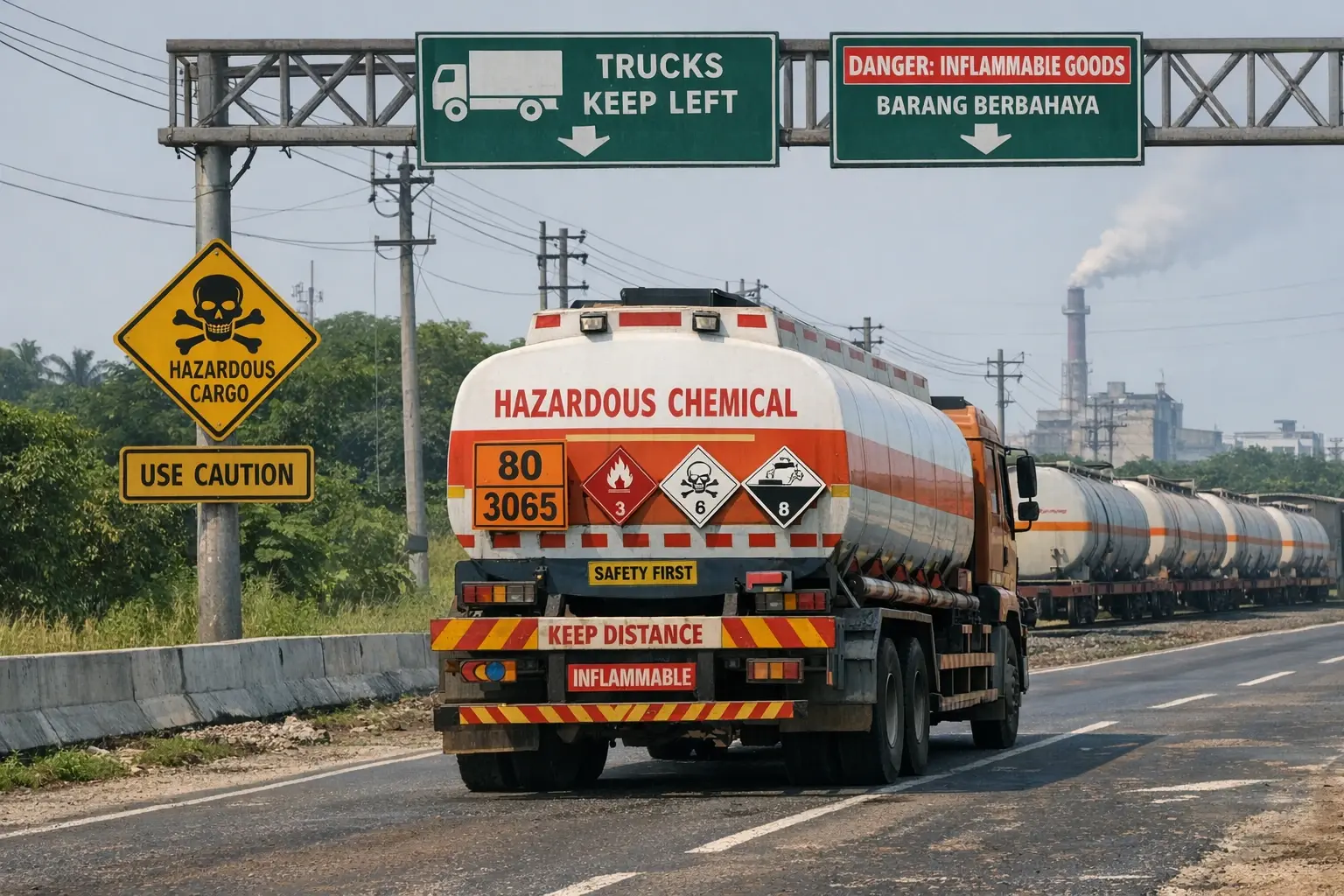
India: The Indian government’s Bharatmala Pariyojana project is a massive undertaking to build a grid of national highways and economic corridors. This has drastically improved road connectivity between major industrial hubs and ports.
- Strengths: The development of dedicated freight corridors is separating passenger and goods traffic, improving transit times and safety for hazardous material transport. The national permit system for trucks has also been streamlined.
- Challenges: While highways are improving, rural and local road quality can still be a major issue, increasing transit times and the risk of spills or damage due to poor conditions. A fragmented trucking industry can also present challenges in finding carriers with a proven track record in hazmat transport.
Indonesia: Indonesia faces the unique challenge of both overland and inter-island transport. The road network on major islands like Java is extensive but often heavily congested.
- Strengths: A well-established network of coastal shipping and ferry services is essential for moving goods between islands.
- Challenges: As highlighted in reports by Indonesia’s national library (Perpusnas), severe road congestion around major cities and ports is a primary logistical bottleneck. For bulk hazardous chemicals, this not only causes delays but also significantly increases safety risks, as tankers may be stuck in traffic for extended periods. The need for multi-modal transport (truck-to-ferry-to-truck) adds complexity and potential points of failure to the export logistics chain.
The Bigger Picture: Regulation & Investment
Infrastructure doesn’t exist in a vacuum. It’s shaped by government policy, regulatory frameworks, and the overall investment climate.
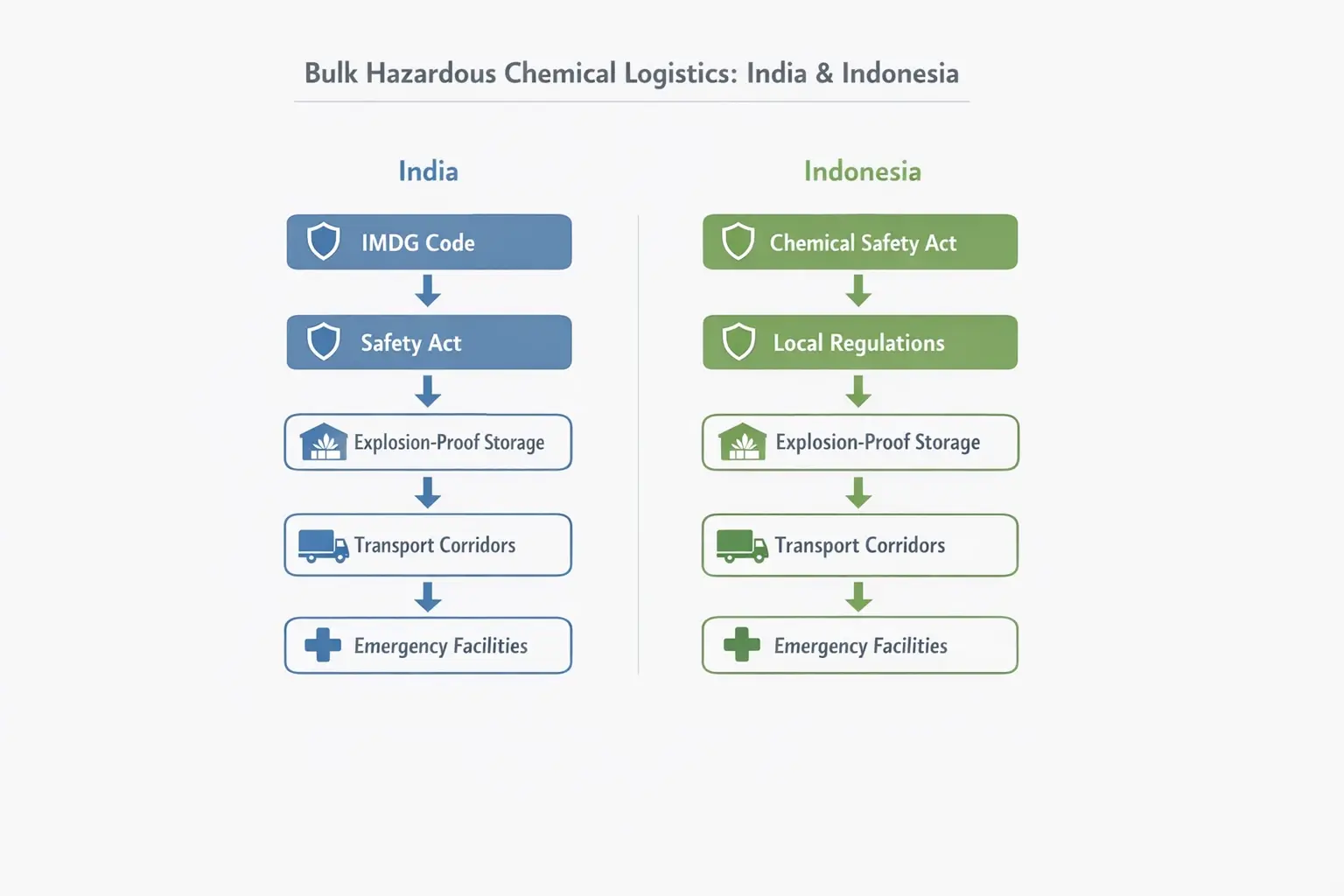
India: India has a more centralized and mature regulatory framework for hazardous materials, governed by acts like the Manufacture, Storage and Import of Hazardous Chemical (MSIHC) Rules.
- Investment Climate: The government is actively courting foreign investment in logistics and manufacturing through programs like “Make in India.” This has led to a surge in the development of world-class industrial parks and logistics hubs with integrated, compliant infrastructure. This focus makes the country a strong candidate for businesses looking to execute a custom procurement strategy for specialty chemicals.
Indonesia: Indonesia’s regulatory landscape can be more complex to navigate due to the division of authority between national and provincial governments.
- Investment Climate: The government’s focus on developing its National Strategic Projects is a positive sign, but as the OECD notes, regulatory barriers can sometimes slow down infrastructure investment. Navigating this environment requires deep local knowledge and strong on-the-ground partnerships.
Conclusion: Making the Right Choice for Your Supply Chain
So, which country is better? The answer isn’t a simple one—it depends entirely on your specific needs, risk tolerance, and sourcing strategy.
- Choose India if: Your primary need is access to a large, consolidated landmass with rapidly improving and integrated national infrastructure. You value a more centralized regulatory environment and are sourcing from one of the country’s major, well-connected industrial corridors.
- Choose Indonesia if: Your supply chain can leverage its strengths in maritime and inter-island logistics. You are sourcing products (like oleochemicals) that are already well-integrated into its existing port infrastructure and have a partner who can navigate its decentralized logistics and regulatory landscape.
Ultimately, diversifying your chemical supply chain into either country requires more than just a good price. It requires a partner with boots-on-the-ground expertise who understands the nuances of infrastructure, regulation, and local business culture. The “readiness” of the infrastructure is only half the equation; the other half is the readiness of your team and partners to navigate it.
Frequently Asked Questions (FAQ)
What exactly are “bulk hazardous chemicals”?
This term generally refers to chemicals shipped in large quantities (e.g., in tankers, ISO tanks, or large drum shipments) that are classified as hazardous under international conventions like the IMDG Code. This can include flammable liquids, corrosive substances, toxic materials, and other regulated chemicals used in industrial processes.
Why can’t I just use a standard logistics provider for hazardous chemicals?
Standard logistics providers often lack the specific licenses, certified equipment (e.g., spark-proof forklifts, grounded tankers), and trained personnel required to handle hazardous materials. Using a non-specialized provider can lead to compliance violations, accidents, and severe penalties.
What is the IMDG Code and why does it matter?
The International Maritime Dangerous Goods (IMDG) Code is the global standard for safely shipping dangerous goods by sea. Compliance is mandatory. It dictates everything from how chemicals must be classified and packaged to what documentation is required and how they should be stowed on a vessel. A failure to comply can result in your shipment being rejected at the port.
How do monsoon seasons affect chemical logistics in India and Indonesia?
Monsoon seasons (roughly June-September in India, November-March in Indonesia) can severely impact logistics. Heavy rains can flood roads, cause landslides, and lead to port closures or delays in loading/unloading. A robust logistics plan must account for these seasonal disruptions with contingency plans and flexible scheduling.