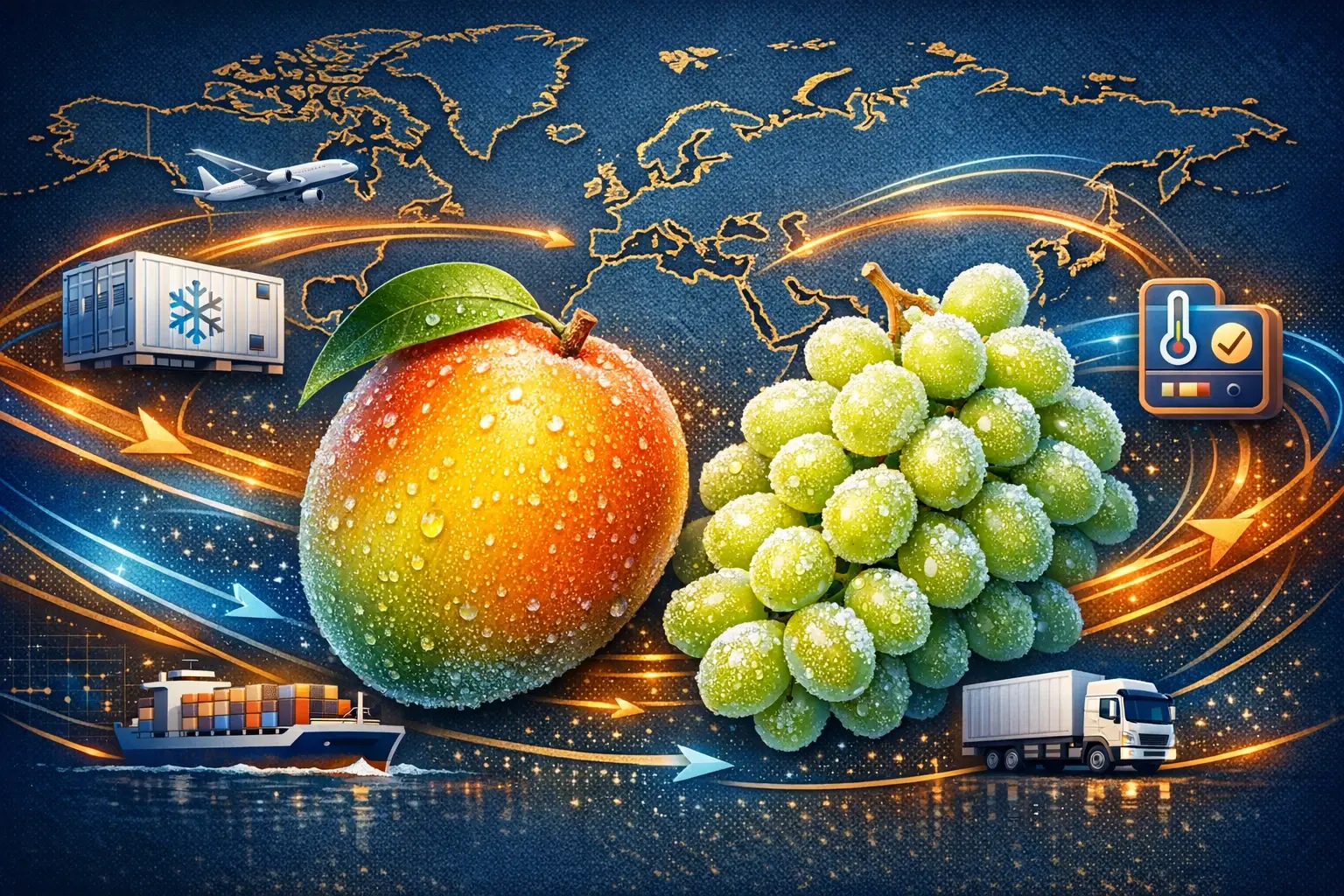
Imagine this: a container of fragrant, perfectly ripe Alphonso mangoes leaves a farm in Ratnagiri, destined for a premium grocery store in New York. But when the container is opened weeks later, the sweet aroma is gone, replaced by the unmistakable signs of decay. The entire shipment is a loss. What went wrong?
The answer almost always lies in a single, invisible failure: a broken cold chain.
For international businesses looking to tap into India’s vibrant agricultural market—a sector poised for explosive growth—understanding cold chain management isn’t just a logistical detail. It’s the critical difference between profit and loss, between building a brand on quality and facing costly rejections. India’s diverse climate produces some of the world’s most sought-after fruits, vegetables, and seafood, but getting that produce to global markets in pristine condition requires a mastery of temperature control.
This guide will walk you through the essentials of building an unbroken cold chain for your Indian food exports, transforming a major operational risk into your greatest competitive advantage.
What Exactly Is a Cold Chain? The Science of Staying Fresh
At its core, a cold chain is an uninterrupted, temperature-controlled supply chain. Think of it as a relay race where the baton is the ideal temperature, and it must be passed seamlessly from one runner to the next without ever being dropped.
This chain consists of several critical links:
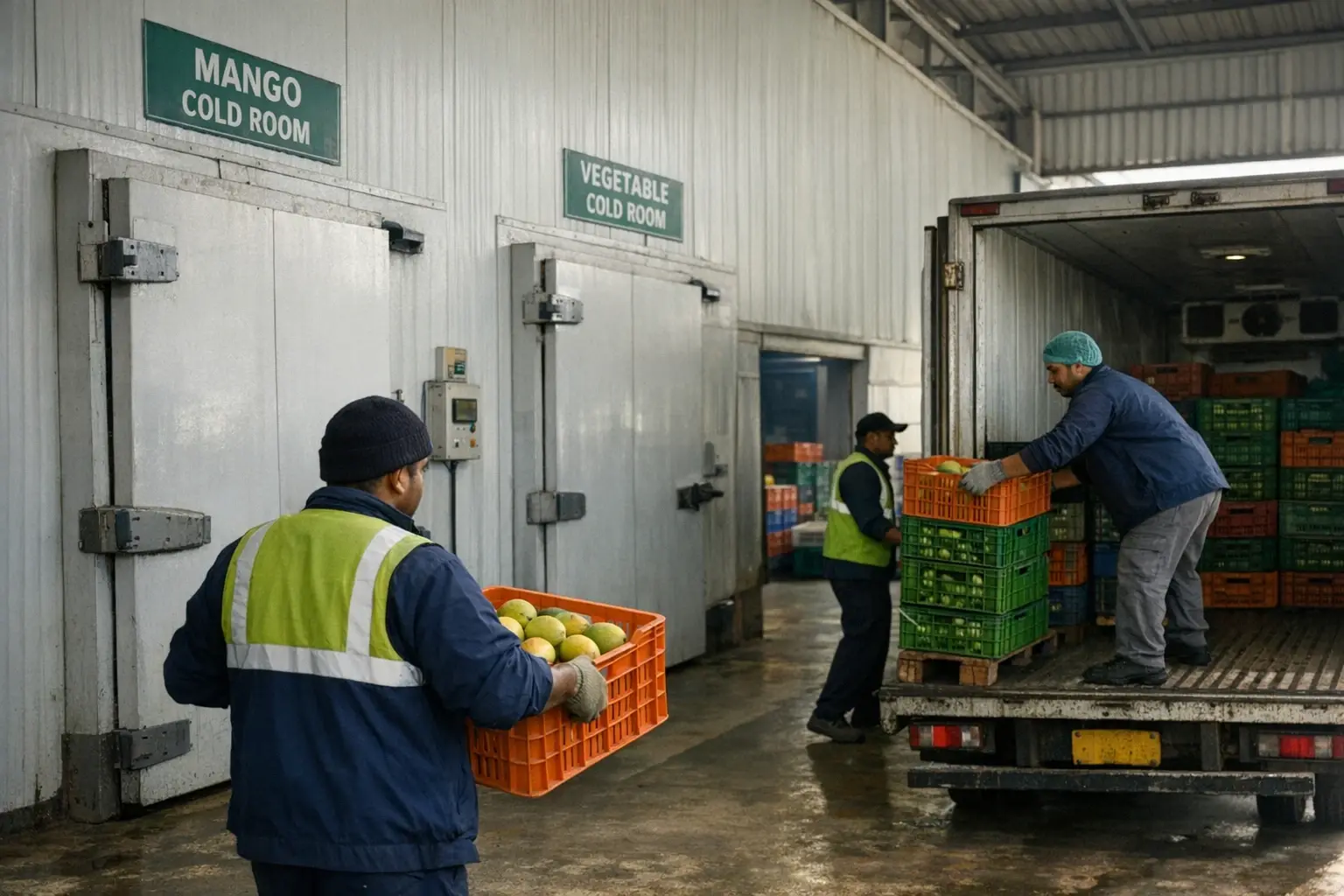
- Pre-cooling: Rapidly lowering the product’s temperature immediately after harvest to slow down deterioration.
- Cold Storage: Storing the goods in a temperature-controlled facility before transport.
- Refrigerated Transport: Using reefer trucks, containers, or air freight to move the product while maintaining temperature.
- Monitoring & Handling: Using technology and proper protocols to track temperatures and handle goods at every transfer point.
Why is this so vital? Once harvested, fruits and vegetables are still living organisms. They respire, ripen, and eventually decay. Lowering the temperature slows this process dramatically. For seafood and dairy, it’s even more critical—improper temperatures can lead to rapid bacterial growth and serious food safety risks.
Each product has its own “happy place” when it comes to temperature and humidity. For instance, Indian grapes thrive at around 0°C, while mangoes prefer a warmer 12-13°C to avoid chilling injuries. Some produce, like apples and bananas, release ethylene gas, a natural ripening agent that can cause other nearby produce to spoil faster. A well-designed cold chain accounts for these specific needs from the very beginning.
Designing Your Cold Chain: From Indian Farm to Global Fork
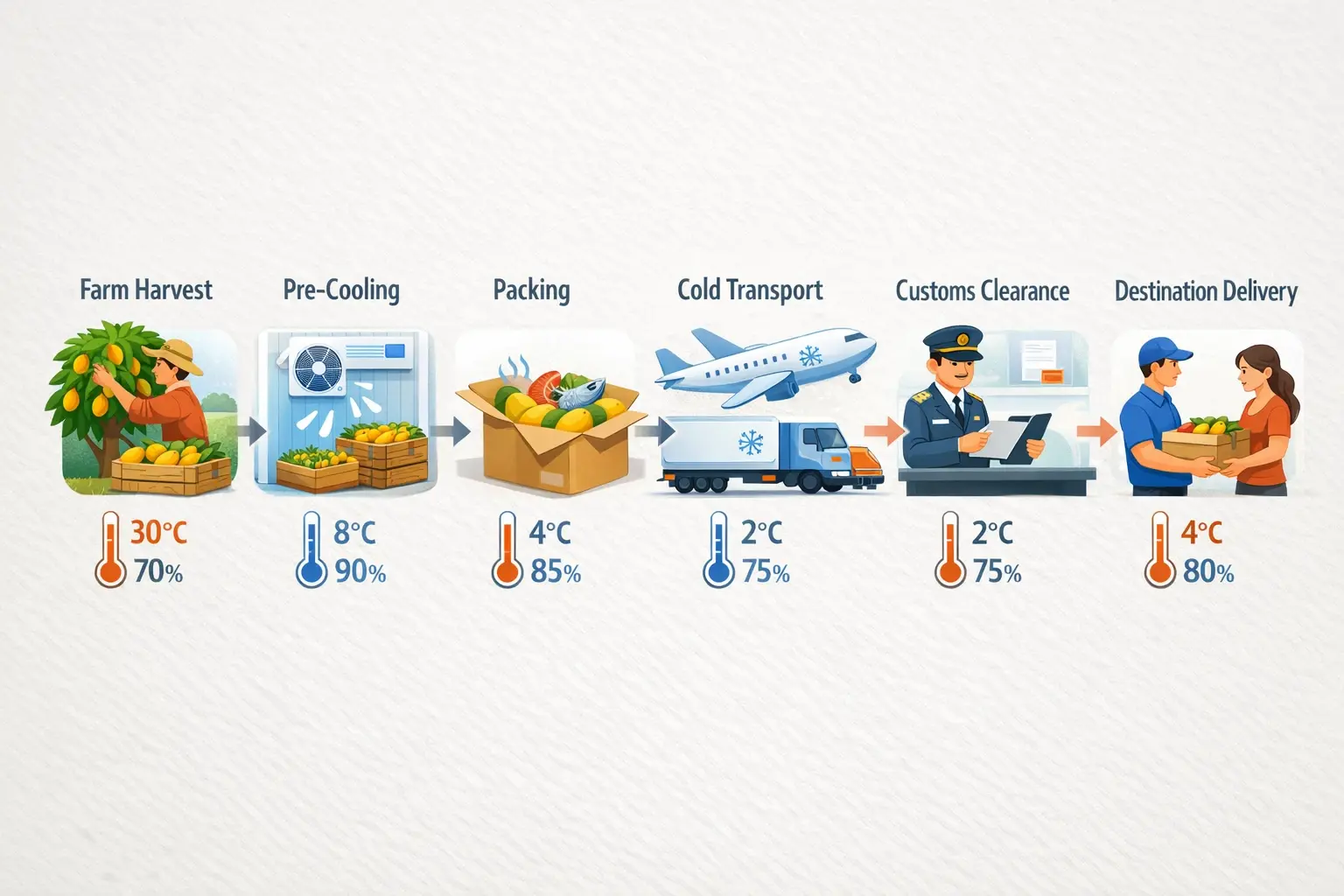
Building a resilient cold chain for Indian exports involves navigating a unique landscape of opportunities and challenges. Here’s how to think about the key stages.
Stage 1: The First Hour is a Golden Hour (Pre-Cooling)
The cold chain doesn’t start at the port; it starts in the field. The time between harvesting and pre-cooling is the most critical period. For every hour a product sits in the field’s heat, it loses a significant portion of its shelf life.
Best Practice: Work with suppliers who have on-farm or near-farm pre-cooling facilities. This simple step is one of the most effective ways to preserve quality and is a non-negotiable for high-value perishables.
Stage 2: Choosing the Right Transport
The mode of transport depends on your product’s shelf life, value, and destination.
- Sea Freight: Cost-effective for larger volumes and products with a longer shelf life (e.g., pomegranates, potatoes). Requires meticulous planning and reliable refrigerated containers (“reefers”).
- Air Freight: Essential for highly perishable, high-value goods like berries, fresh seafood, or leafy greens. It’s faster but significantly more expensive, and temperature control on airport tarmacs can be a major risk point.
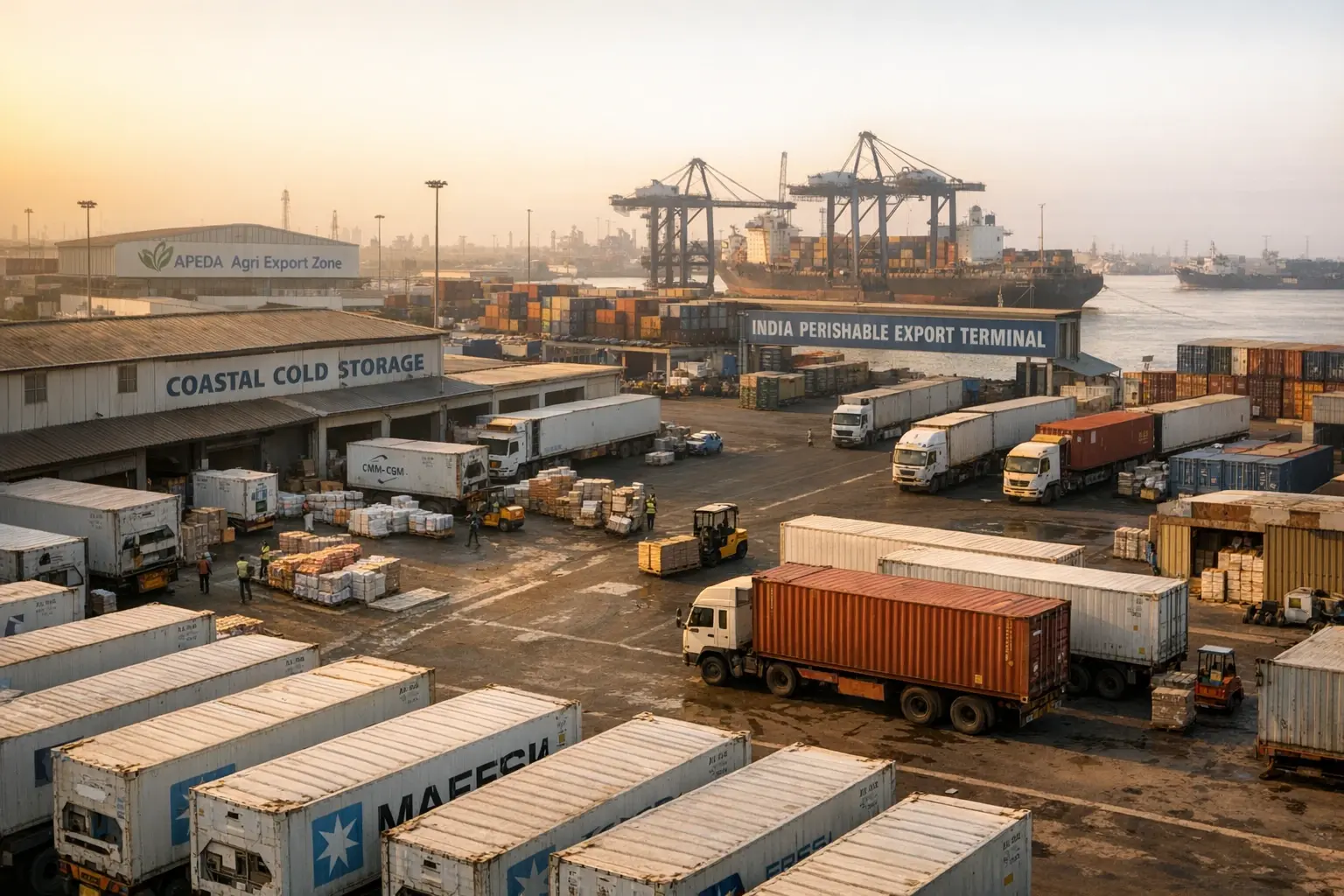
Exporter Beware! A common mistake is failing to account for “last mile” challenges. India’s logistics network can be fragmented. A product might travel perfectly in a reefer truck on a national highway but face temperature fluctuations while being transferred on smaller, non-refrigerated vehicles to reach a port or airport.
Stage 3: Technology as Your Insurance Policy
You can’t be in the container, but technology can. Modern cold chains rely on a suite of tools to provide end-to-end visibility.
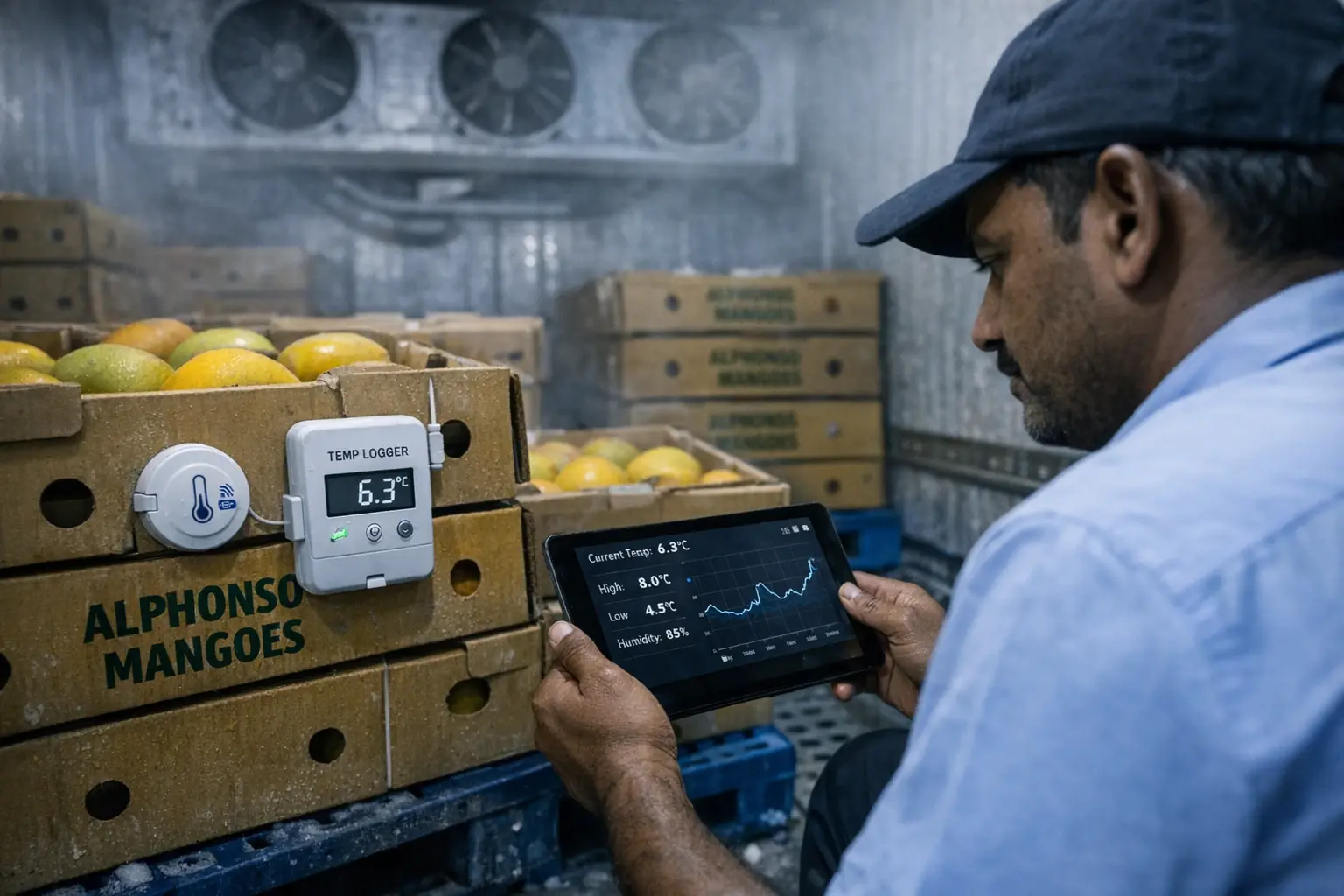
- Data Loggers: Small devices placed inside shipments that record temperature at set intervals. They provide a complete history upon arrival, proving the cold chain was maintained.
- IoT Sensors: These go a step further, providing real-time data on temperature, humidity, and even container door status. You can get an alert on your phone the moment a temperature deviates, allowing for intervention before a shipment is ruined.
This isn’t just about fancy gadgets; it’s about risk management. This data is your proof of quality control and your protection in disputes.
Navigating the Rules: Compliance and Quality Management
A perfect product that gets stuck in customs is still a total loss. Your cold chain strategy must be integrated with your quality and regulatory compliance plan.
- Indian Regulations: Bodies like APEDA (Agricultural and Processed Food Products Export Development Authority) and FSSAI (Food Safety and Standards Authority of India) set standards for exports.
- International Standards: Your destination country has its own rules. The US has FDA requirements, while the EU has strict food safety laws. Your documentation, packaging, and labeling must meet these standards.
- Quality Management Systems: The principles of cold chain management are a core component of food safety systems like HACCP (Hazard Analysis and Critical Control Points). Maintaining the cold chain is a “Critical Control Point” that, if it fails, renders the product unsafe or of poor quality.
Successfully managing this regulatory web means having clear, accurate documentation that travels with the shipment, proving both product origin and temperature integrity.
The Path Forward: Turning Challenges into Opportunities
While India has made massive strides in developing its cold chain infrastructure, challenges like inconsistent power supply, fragmented logistics, and skill gaps remain. However, for a savvy procurement leader, these challenges highlight the need for a strategic approach.
Instead of trying to manage dozens of separate vendors, successful importers partner with on-the-ground experts who can manage the entire process—from vetting suppliers with proper pre-cooling facilities to ensuring the final container is sealed at the right temperature.
An unbroken cold chain is more than a process; it’s a promise. It’s a promise to your customers that the product they receive will be as fresh, safe, and high-quality as the day it was harvested. By mastering the principles of cold chain management, you can unlock the immense potential of Indian food exports and build a resilient, profitable, and trustworthy supply chain.
Frequently Asked Questions (FAQ)
What is cold chain management?
Cold chain management refers to the process of managing and maintaining a specific low-temperature range for products throughout the entire supply chain—from the point of harvest or production to the final consumer. It involves pre-cooling, refrigerated storage, and refrigerated transport.
Why is the cold chain so critical for Indian food exports?
India’s tropical and subtropical climate means that perishable goods can spoil very quickly after harvest. A robust cold chain is essential to slow down this natural decay, preserve nutritional value, ensure food safety, and meet the high-quality standards of international markets. It directly impacts shelf life and the financial viability of exporting.
What are the main components of an effective cold chain?
The key components are:
- Pre-cooling facilities near farms to rapidly remove field heat.
- Cold storage warehouses for temporary storage before shipping.
- Refrigerated vehicles (reefer trucks and containers) for transport.
- Temperature monitoring devices (data loggers, IoT sensors) for visibility and control.
How do I manage the cold chain for different types of produce?
Every product has unique requirements. Fruits like mangoes need moderate cooling (12-13°C), while vegetables like peas require near-freezing temperatures (around 0°C). Some products are sensitive to ethylene gas. The key is to work with experts who understand the specific post-harvest needs of each commodity and can design a customized cold chain solution.
What are the biggest challenges to maintaining a cold chain in India?
The primary challenges include a fragmented logistics network (especially in rural areas), inconsistent power supply impacting storage facilities, high energy costs, and a lack of uniform quality standards across all suppliers. Overcoming these requires strong on-the-ground partnerships and rigorous supplier vetting.