If you’re a sourcing manager in the chemical industry, the last few years have felt like a high-stakes game of chess played on a spinning board. Just when you think you have a stable supply chain, geopolitical shifts send you scrambling. The US-China trade war wasn’t just a headline; for many, it was a direct hit to production lines, budgets, and peace of mind.
This disruption, however, has cracked open a door of opportunity for a new manufacturing powerhouse to step into the spotlight: India.
But the story isn’t as simple as “stop buying from China, start buying from India.” The reality is a complex landscape of shifting tariffs, fierce competition, and hidden challenges. For procurement leaders, understanding this new terrain is the first step toward building a truly resilient and competitive supply chain.
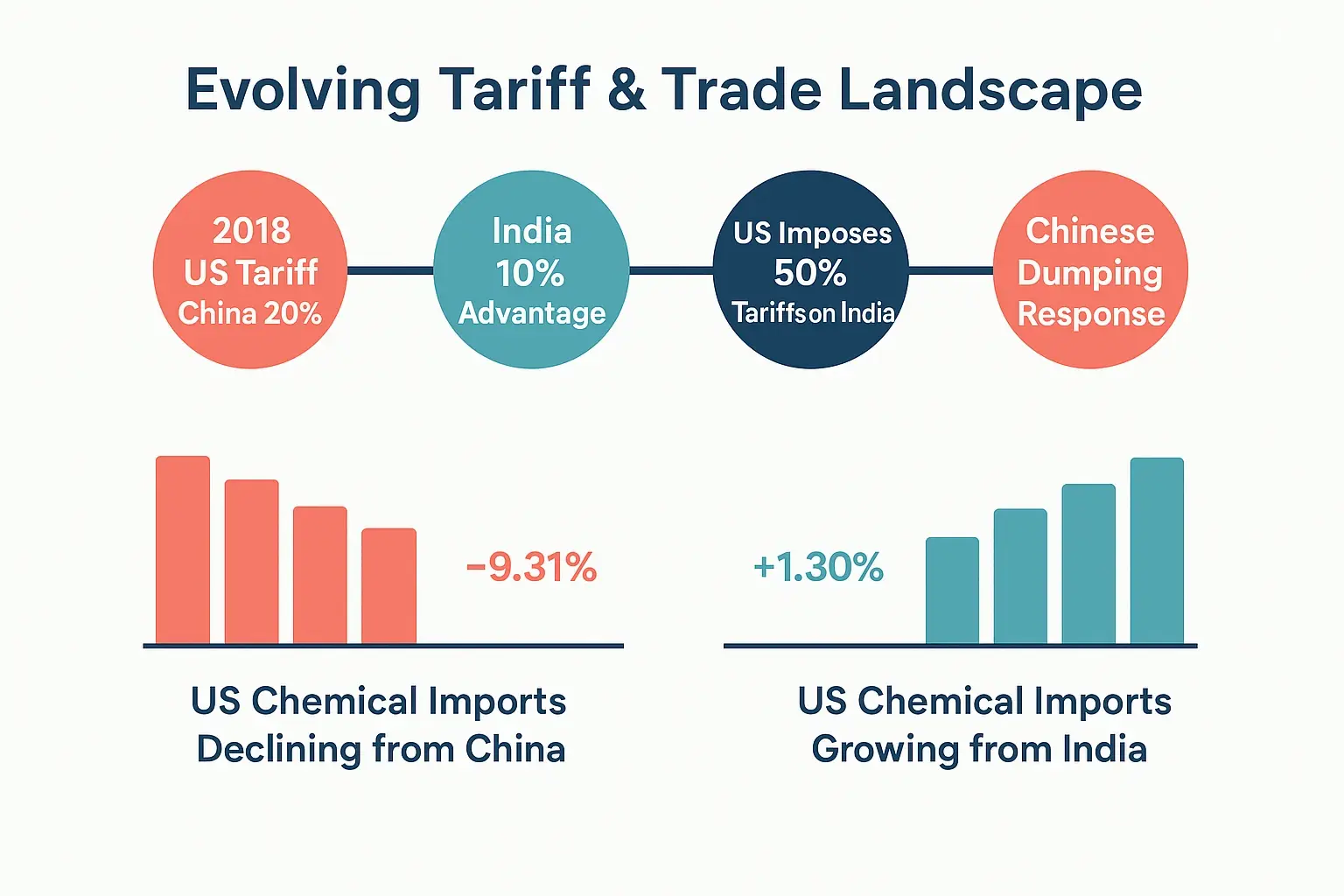
This visualization presents the chronological US-China-India tariff events alongside trade import trends, clarifying how India’s chemical exports gained and faced challenges within tariff dynamics.
Decoding the Tariff Turmoil: A Quick Primer
It all started when the U.S. imposed tariffs on a wide range of Chinese goods, including hundreds of chemical products. The goal was to rebalance trade, but the immediate effect was a supply chain earthquake. Suddenly, the landed cost of critical Chinese raw materials skyrocketed for American and European companies.
The logical next step for many was to look for alternatives. And with its massive manufacturing base and skilled workforce, India seemed like the perfect answer.
While US chemical imports from China saw a compound annual decline of -9.31% post-tariffs, imports from India saw a modest growth of +1.30%. It wasn’t a floodgate, but it was a clear signal that the map was being redrawn.
The Shifting Sands: India’s Evolving Advantage
The initial opportunity for India was straightforward. With a 20-25% tariff slapped on Chinese chemicals, Indian producers instantly gained a significant price advantage. But anyone in global procurement knows things are never that simple for long.
An “Aha Moment”: It’s Not a One-Way Street
The biggest misconception is that the benefit for India is permanent and universal. The reality is far more nuanced:
- Reciprocal Tariffs: The trade war wasn’t a one-sided affair. The U.S. eventually imposed tariffs on certain Indian products as well, eroding some of the initial cost advantage. This turned a simple price calculation into a complex strategic decision.
- The China Factor: China didn’t just stand by. With demand from the U.S. shrinking, Chinese manufacturers began looking for other markets, sometimes leading to oversupply and price drops in other regions. This “dumping” effect can create intense price pressure, making it difficult for Indian companies to compete purely on cost.
- Domestic Dependencies: It’s a lesser-known fact that India’s chemical industry itself relies on China for certain key starting materials and intermediates. This interconnectedness means that disruptions in China can still have a ripple effect on Indian production.
So, while the macro trend points toward India, success lies in understanding where the real, sustainable advantages are.
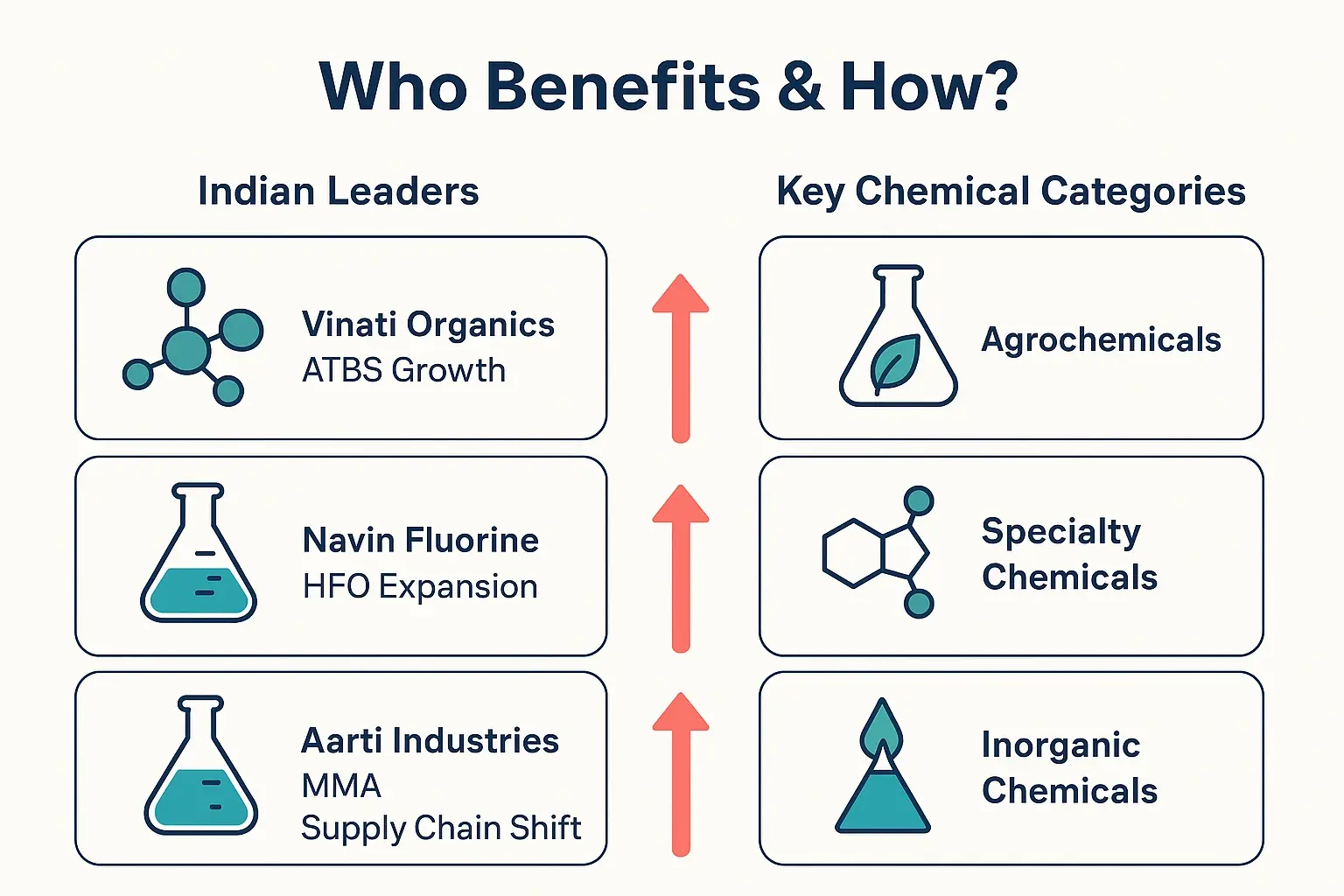
This grid illustrates leading Indian chemical firms and their associated chemical categories gaining export growth amid the trade tariff shifts.
Where India Is Truly Winning: A Look at Specific Categories
The real opportunity isn’t across the board; it’s concentrated in specific specialty and performance chemical categories where Indian companies have built deep technical expertise and competitive moats.
- Specialty Chemicals: Companies like Vinati Organics, a key producer of Acrylamido tertiary-butyl sulfonic acid (ATBS), have seen strong demand. This is a niche product where global supply is concentrated among a few players.
- Fluorochemicals: Navin Fluorine has benefited from its expertise in complex fluorination, a highly specialized field crucial for agrochemical and pharmaceutical industries.
- Benzene Derivatives: Aarti Industries has leveraged its vertically integrated model for products like nitro chlorobenzene and dichlorobenzene, giving it a cost and quality advantage that is difficult to replicate.
The lesson is clear: The most successful diversification strategies focus on specific chemical value chains where Indian suppliers offer a compelling mix of quality, reliability, and technical prowess—not just a temporary price advantage.
Navigating the New Map: A Strategic Framework for Buyers
For procurement and supply chain leaders, this new environment demands a shift from reactive cost-cutting to proactive strategy. It’s about building a diversified, resilient sourcing network that can weather future storms.
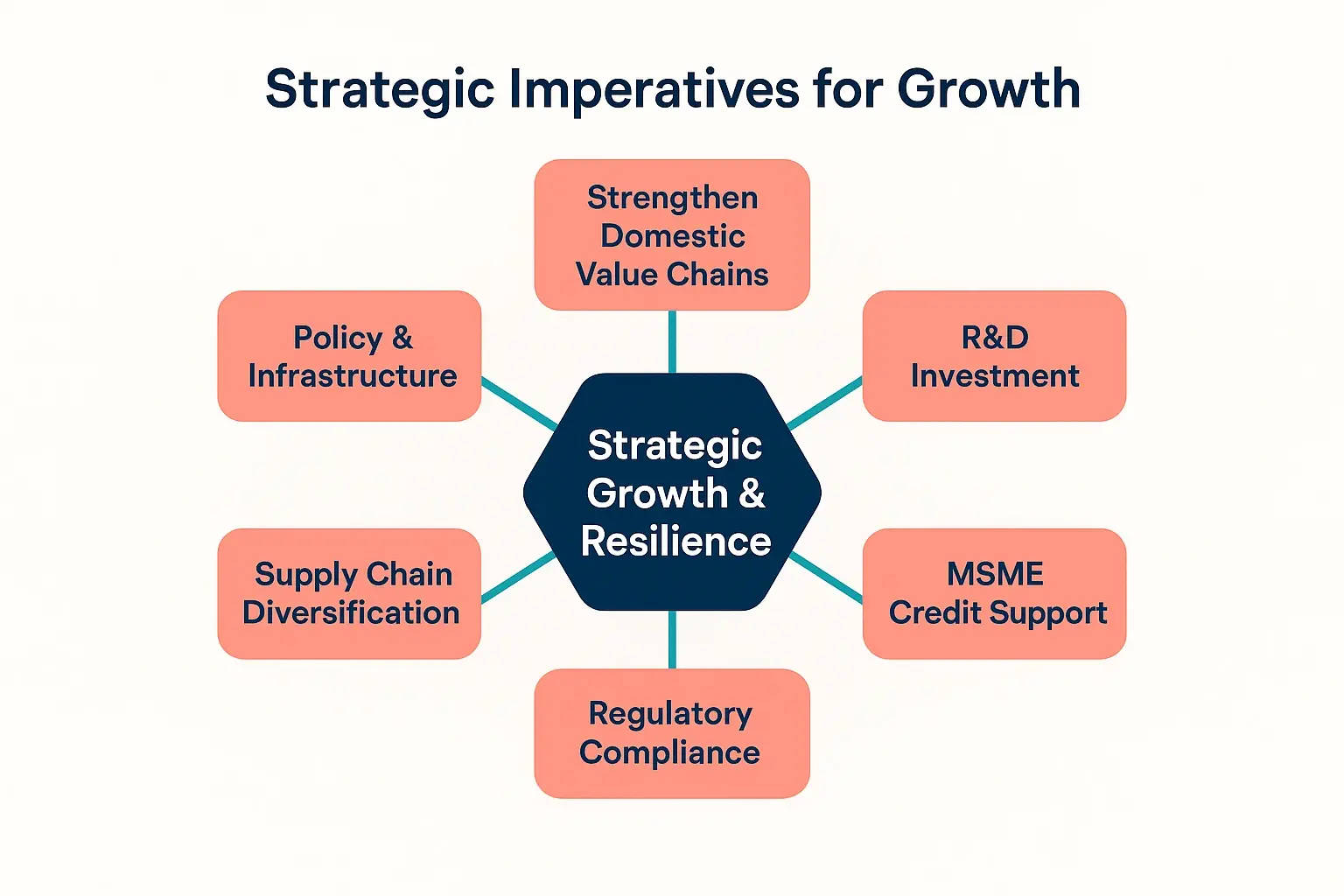
This visual framework outlines key strategies Indian manufacturers and buyers should implement to strengthen competitiveness and navigate tariff challenges.
For International Buyers: Diversifying with Confidence
Making India a successful part of your “China +1” strategy requires moving beyond a simple RFQ process. Here’s what leading procurement teams are focusing on:
- Go Beyond the Datasheet: True confidence comes from a rigorous supplier qualification process. This means on-the-ground audits, not just paper trails. You need to verify manufacturing capabilities, ethical standards, and financial stability. A partner who understands both Western expectations and the local Indian context is invaluable here.
- Prioritize Quality and Consistency: The biggest fear in switching suppliers is a drop in quality that could shut down a production line. Implementing a robust quality assurance program, including batch testing and pre-shipment inspections, is non-negotiable. Ensure potential suppliers can consistently meet your specs and provide comprehensive Certificates of Analysis (COA) and Safety Data Sheets (SDS).
- Demand Landed-Cost Transparency: The initial quote is just one part of the equation. Hidden fees, duties, and complex freight charges can quickly erase any perceived savings. Work with a partner who can provide a clear, all-inclusive landed cost, covering everything from factory gate to your facility door, including expert handling of export logistics.
Frequently Asked Questions (FAQ)
How did the US-China trade war start affecting the chemical industry?
The impact began when the U.S. government implemented Section 301 tariffs, which included a long list of chemicals and raw materials imported from China. This directly increased the cost for U.S. companies to buy these goods, forcing them to either absorb the cost, pass it on to consumers, or find alternative, non-Chinese suppliers.
Is sourcing chemicals from India always cheaper now?
Not necessarily. This is a common myth. While the initial tariffs on China created a price advantage for India, factors like reciprocal tariffs on Indian goods, domestic logistics costs in India, and competitive pricing from China in other markets can make the calculation complex. The true value often lies in specialty chemicals where India has a technical edge, leading to a better total cost of ownership when quality and reliability are factored in.
What are the biggest challenges when diversifying a chemical supply chain to India?
The primary challenges include qualifying and vetting new suppliers from afar, ensuring consistent quality control and batch-to-batch consistency, navigating complex international logistics and customs for hazardous materials, and overcoming potential communication or cultural barriers. These are why many companies choose to work with a sourcing partner with a strong on-the-ground presence in India.
Which specific chemical sectors in India have benefited the most?
The biggest gains have been in specialty chemicals, agrochemicals, dyes and pigments, and certain organic chemicals. The key is that these are often value-added sectors where Indian manufacturers have invested heavily in R&D and have established strong, globally competitive production capabilities.
The Road Ahead: Building a Smarter, Stronger Supply Chain
The US-China trade tensions didn’t just create a problem; they accelerated a necessary evolution in global sourcing. The future doesn’t belong to the cheapest supplier, but to the most resilient and reliable supply chain.
India has emerged as a vital player in this new landscape, offering a powerful combination of scale, skill, and specialization. For procurement leaders, the opportunity is immense—but it requires a strategic approach. Understanding the nuances of the market, focusing on quality and transparency, and finding the right partners on the ground are the keys to successfully redrawing your own sourcing map.
Exploring a custom procurement strategy tailored for the Indian market is the critical next step in turning this global shift into your competitive advantage.